CM Dhami pays tribute to Goswami Tulsidas on Jayanti
Synopsis
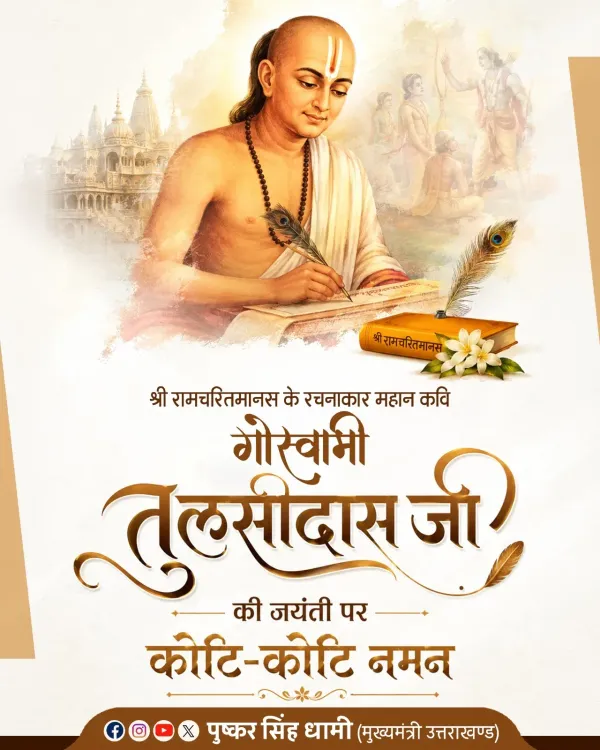
Uttarakhand CM Pushkar Singh Dhami marked Tulsidas Jayanti on 19 August 2026 by quoting the iconic Chitrakoot doha from the Ramcharitmanas and honouring the 16th-century poet-saint's legacy of bringing Ram's ideals to the masses.
Key Takeaways
Goswami Tulsidas Jayanti was observed on 19 August 2026 , with CM Dhami offering a public tribute on X.
Dhami quoted the celebrated doha beginning 'Chitrakoot ke ghat par' , one of the most recognised verses from the Tulsidas tradition.
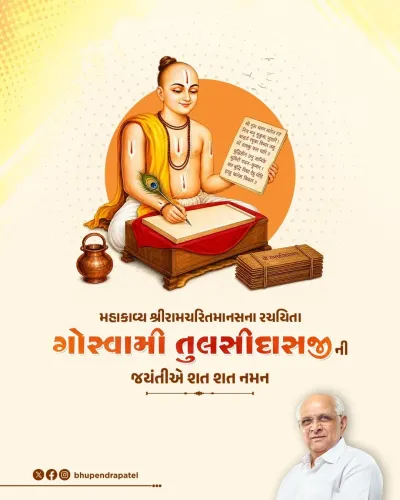
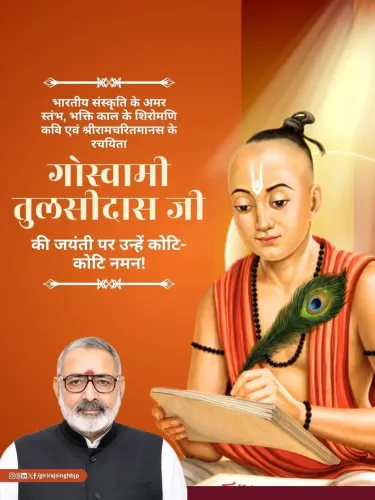
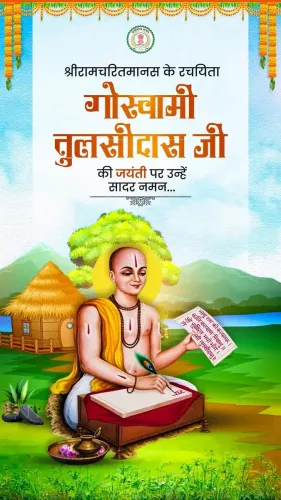
Tulsidas, a 16th-century poet-saint, composed the Ramcharitmanas in Awadhi, making the ideals of Lord Rama accessible to common people.
The tribute highlighted the values of dharma, truth, sacrifice, and duty as embodied in the Ramcharitmanas.
Chitrakoot , the pilgrimage site linked to Rama's exile, is the setting of the doha Dhami chose to open his message.
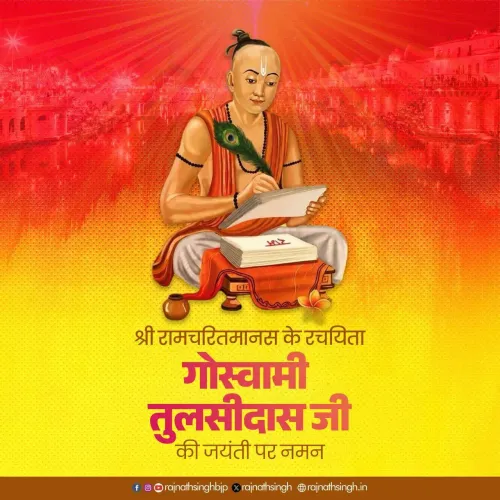
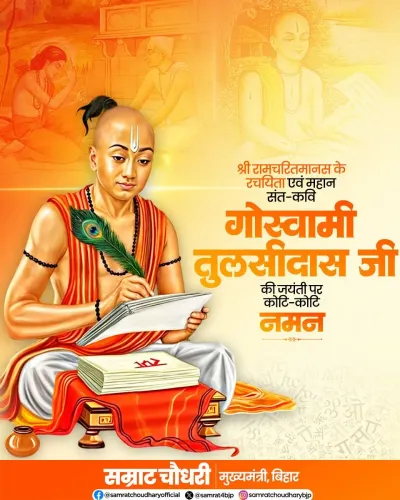
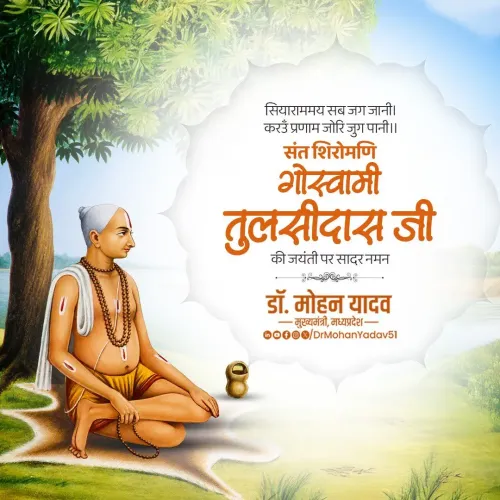
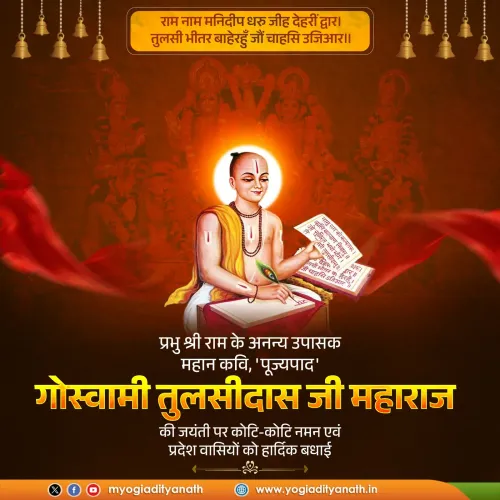
On the birth anniversary of the revered poet-saint Goswami Tulsidas, Uttarakhand Chief Minister Pushkar Singh Dhami offered a tribute on Wednesday, 19 August 2026, invoking the timeless verse that opens at the ghats of Chitrakoot — the very pilgrimage ground where Tulsidas is said to have composed some of his most enduring lines.
Dhami quoted the celebrated doha — 'Chitrakoot ke ghat par, bhai santan ki bheer / Tulsidas chandan ghise, tilak kare Raghuveer' ('At the ghats of Chitrakoot, a gathering of saints assembled; Tulsidas ground the sandalwood, and Lord Raghuveer himself applied the tilak') — before offering his salutations, describing Tulsidas as a great saint and poet who brought the ideals of Maryada Purushottam Prabhu Shri Ram to ordinary people through the Ramcharitmanas.
The poem that carried Ram to every household
Tulsidas, the 16th-century Awadhi poet-saint, composed the Ramcharitmanas at a time when Sanskrit texts placed sacred knowledge beyond the reach of common people. By rendering the story of Lord Rama in the vernacular Awadhi tongue, he made the ideals of dharma, truth, sacrifice, and duty accessible to millions across North India — a literary democratisation of devotion that still shapes religious and cultural life five centuries later.
The doha Dhami chose is among the most recognisable in the entire corpus: it places Tulsidas in humble service, grinding sandalwood while Ram himself performs the act of blessing. The image captures the devotional inversion at the heart of the bhakti tradition — the deity serving the devotee's labour with grace.
Chitrakoot's place in the Rama story
Chitrakoot, the pilgrimage site straddling Uttar Pradesh and Madhya Pradesh, holds a central place in the Ramayana narrative as the forest refuge where Rama spent a significant period of his exile. Its ghats remain active centres of pilgrimage and recitation, and the site carries particular resonance whenever the Ramcharitmanas is invoked in public discourse.
Indian leaders across generations have marked the anniversaries of medieval bhakti poets — Tulsidas, Kabir, Mirabai — through public statements, a tradition that reflects the enduring hold these figures have on North Indian cultural identity. For Uttarakhand, a state whose economy is deeply tied to pilgrimage and whose districts host major Ramayana-linked sites, such observances carry both spiritual and civic weight.
Five hundred years on, Tulsidas still sets the terms of the conversation about Ram — and on his Jayanti, the Chief Minister of one of India's most sacred-geography states made sure the verse echoed once more.
Point of View
Reinforcing a cultural-nationalist identity that links governance to Hindu literary heritage. The choice of the Chitrakoot doha — evoking Ram's direct presence at a sacred ghat — is deliberate: it places the Chief Minister of a pilgrimage-economy state in symbolic alignment with the state's spiritual geography. For Uttarakhand, where temple towns and Ramayana-linked sites drive significant tourist and pilgrim footfall, such messaging also carries a soft economic subtext. The tribute is ceremonial in form but consistent in its ideological signalling.
NationPress
3 Oct 2026
Frequently Asked Questions
When is Tulsidas Jayanti celebrated?
Tulsidas Jayanti is celebrated on the Saptami tithi of the Shravana month in the Hindu calendar, which fell on 19 August 2026 this year. It marks the birth anniversary of the poet-saint Goswami Tulsidas.
Who was Goswami Tulsidas?
Goswami Tulsidas was a 16th-century Awadhi poet-saint best known for composing the Ramcharitmanas , a vernacular retelling of the Ramayana that brought the ideals of Lord Rama — dharma, truth, and duty — to ordinary people across North India.
What is the Chitrakoot doha quoted by CM Dhami?
The doha — 'Chitrakoot ke ghat par, bhai santan ki bheer / Tulsidas chandan ghise, tilak kare Raghuveer' — describes a scene at the ghats of Chitrakoot where Tulsidas grinds sandalwood and Lord Rama himself applies the tilak, symbolising divine grace upon the devotee's humble service.
What is the Ramcharitmanas?
The Ramcharitmanas is an epic devotional poem composed by Tulsidas in the Awadhi language. It retells the story of Lord Rama and is one of the most widely read and recited texts in North Indian Hindu tradition, emphasising values of dharma, sacrifice, and righteous conduct.
Why did Uttarakhand CM Pushkar Singh Dhami post about Tulsidas Jayanti?
CM Dhami posted a tribute as part of the longstanding tradition among Indian leaders of publicly honouring medieval bhakti poets on their birth anniversaries. Uttarakhand, as a state with deep pilgrimage ties and Ramayana-linked sacred sites, has particular cultural resonance with the Tulsidas tradition.