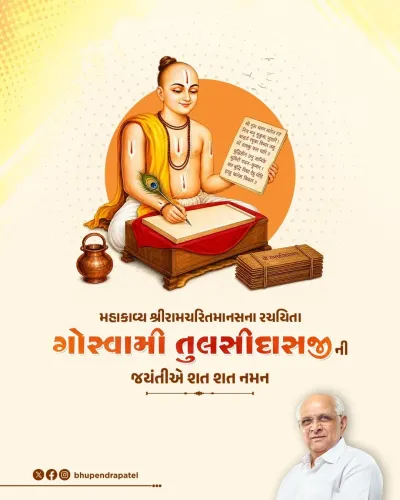
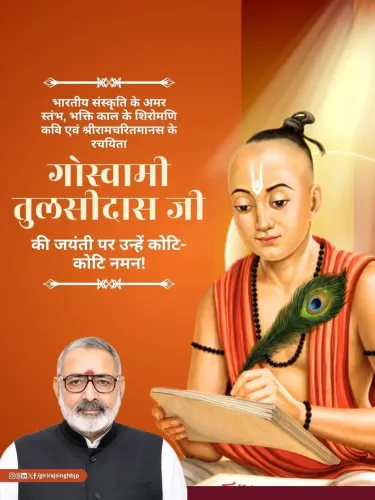
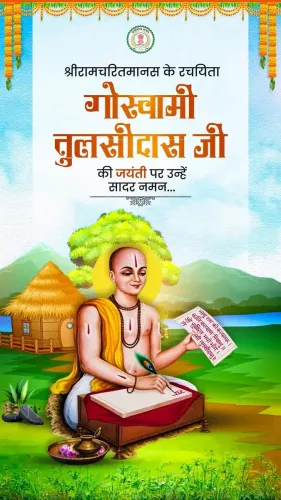
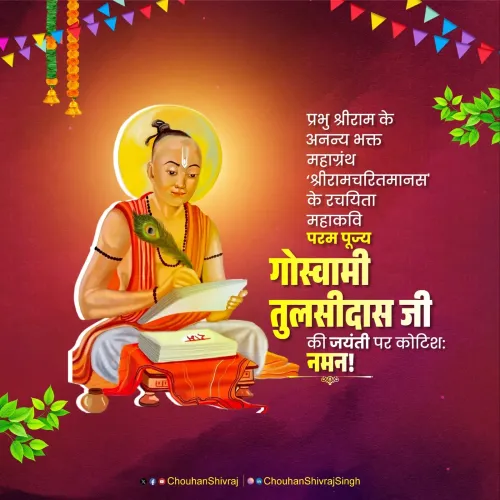
Amit Shah pays tribute to Goswami Tulsidas on his Jayanti
Synopsis
Union Home Minister Amit Shah marked Tulsidas Jayanti on 19 August 2026 by honouring the 16th-century Awadhi saint-poet whose Ramcharitmanas democratised Ram bhakti and continues to inspire ideals of duty, devotion, and righteous conduct across India.
Key Takeaways
Union Home Minister Amit Shah paid tribute to Goswami Tulsidas on his Jayanti on 19 August 2026 .
Tulsidas composed the Ramcharitmanas in Awadhi in the 16th century , making the story of Ram accessible beyond Sanskrit scholarship.
Shah's tribute highlighted the values of bhakti (devotion), seva (service), and dharma (righteousness) that Tulsidas enshrined in his work.
The Home Minister specifically cited maryada, kartavya, and sadachar — dignity, duty, and righteous conduct — as the poet's enduring gift to society.
The tribute is part of a recurring BJP pattern of publicly acknowledging medieval Bhakti and Sant poets as pillars of India's civilisational heritage.
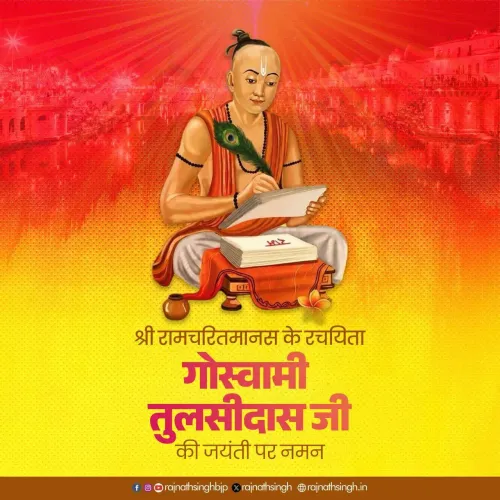
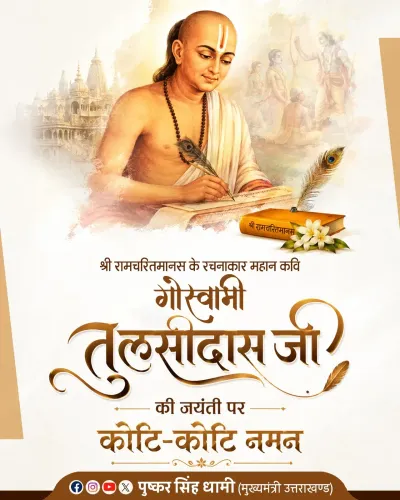
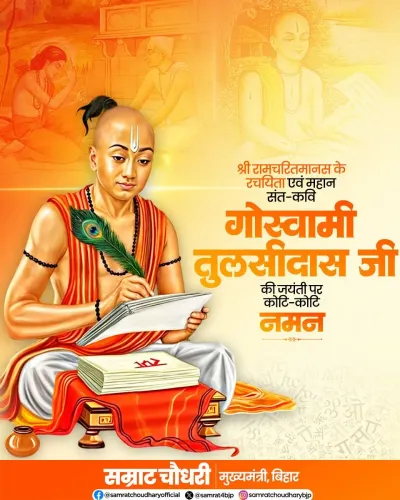
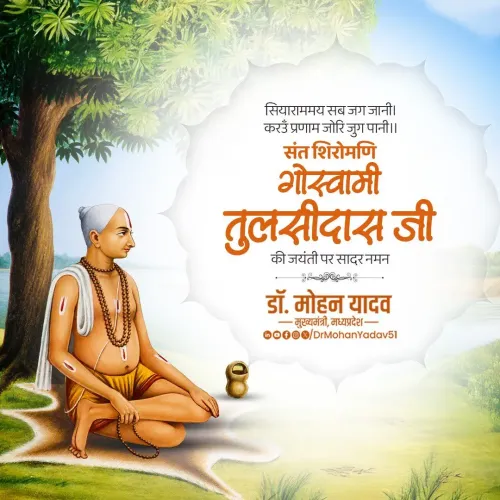
Five centuries after he set quill to paper, Goswami Tulsidas still commands reverence at the highest levels of Indian public life. On Wednesday, 19 August 2026, Union Home Minister Amit Shah marked Tulsidas Jayanti with a tribute on X, honouring the saint-poet whose Shri Ramcharitmanas reshaped devotional culture across the subcontinent.
Shah's post, written in Hindi, offered salutations to the 'mahan sant evam mahakavya Shri Ramcharitmanas ke rachayita' — 'the great saint and composer of the epic Shri Ramcharitmanas' — and described how Tulsidas carried the life-values and ideals of Lord Shri Ram to every person, delivering an immortal message of devotion, service, and righteousness to humanity.
The poet who brought Ram into every home
Born in the 16th century, Goswami Tulsidas composed the Ramcharitmanas in Awadhi, the vernacular spoken by ordinary people across northern India, rather than in Sanskrit, the language of scholars. That single choice democratised the story of Ram. Households that could never access Sanskrit texts could now sing, recite, and internalise the epic — and millions still do.
The Ramcharitmanas is not merely a religious text; it is a living cultural architecture. Its verses underpin the annual Ramlila performances staged across hundreds of towns, shape the moral vocabulary of everyday Hindi speech, and remain a touchstone for debates on duty, ethics, and governance.
BJP's recurring acknowledgement of Bhakti tradition
Shah's tribute fits a consistent pattern among BJP leaders of publicly honouring medieval Bhakti and Sant poets — figures such as Kabir, Mirabai, Surdas, and now Tulsidas — whose works are seen as foundational to Hindu devotional identity. These acknowledgements serve both a cultural and a political grammar: they position the party as custodian of a civilisational heritage that cuts across caste and region.
The Home Minister's message specifically highlighted three virtues the saint's literature continues to inspire: maryada (dignity), kartavya (duty), and sadachar (righteous conduct) — a triad that resonates as much in contemporary governance discourse as it does in theology.
Half a millennium on, a poet who wrote in a dialect of the people still sets the terms of the conversation. That is legacy measured not in years but in living practice.
Point of View
Cross-caste reverence. By foregrounding virtues like maryada and kartavya, the tribute subtly frames Ram-bhakti not just as religion but as a civic ethic — a move that broadens its political resonance. The pattern of such tributes, consistently issued by senior leadership, signals a deliberate effort to project the party as the institutional memory-keeper of India's Bhakti tradition. Whether cultural ministries follow with programmatic events around this anniversary will indicate how deep the commitment runs beyond social-media acknowledgement.
NationPress
4 Oct 2026
Frequently Asked Questions
Who was Goswami Tulsidas?
Goswami Tulsidas was a 16th-century Awadhi poet and saint best known for composing the Ramcharitmanas, a vernacular retelling of the Ramayana that popularised Ram bhakti across northern India.
What is the Ramcharitmanas?
The Ramcharitmanas is an epic poem written by Tulsidas in the Awadhi language. It retells the story of Lord Ram and is one of the most widely read and recited texts in the Hindu devotional tradition.
When is Tulsidas Jayanti celebrated?
Tulsidas Jayanti marks the birth anniversary of Goswami Tulsidas and is observed annually, typically falling in the month of Shravan according to the Hindu calendar.
Why did Amit Shah pay tribute to Tulsidas?
Union Home Minister Amit Shah posted a tribute on X on 19 August 2026 on the occasion of Tulsidas Jayanti, honouring the saint-poet's contribution to devotional literature and his message of duty, service, and righteous conduct.
What values did Tulsidas promote according to Amit Shah?
According to Shah's post, Tulsidas promoted bhakti (devotion), seva (service), and dharma (righteousness), and his literature continues to inspire society toward maryada (dignity), kartavya (duty), and sadachar (righteous conduct).