HP CM Office Links Kishau Dam Deal to BBMB Arrears

Synopsis
Himachal Pradesh has conditioned its agreement on the Kishau Dam project on Haryana filing a Supreme Court affidavit clearing BBMB arrears, with central government support also required. The CM's Office posted the ultimatum on 18 November 2026, signalling Shimla's pressure is yielding results.
Key Takeaways
The Chief Minister's Office of Himachal Pradesh confirmed on 18 November 2026 that BBMB arrears are directly linked to the Kishau Dam project agreement.
Himachal Pradesh has demanded that Haryana file a sworn affidavit in the Supreme Court of India committing to release the arrears before any Kishau deal is signed.
The Government of India's explicit support is a co-condition Shimla has set alongside Haryana's affidavit.
The Bhakra Beas Management Board was established under the Punjab Reorganisation Act, 1966 to manage shared river infrastructure among northern states.
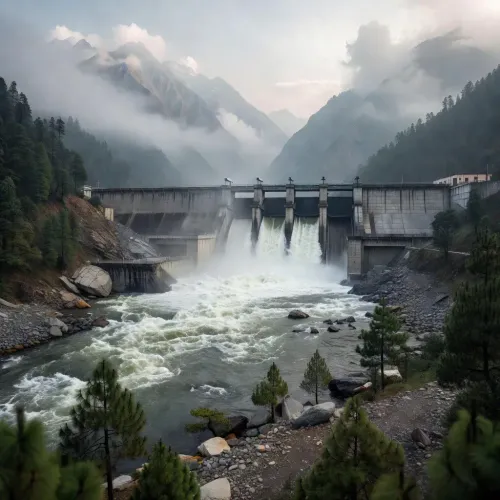
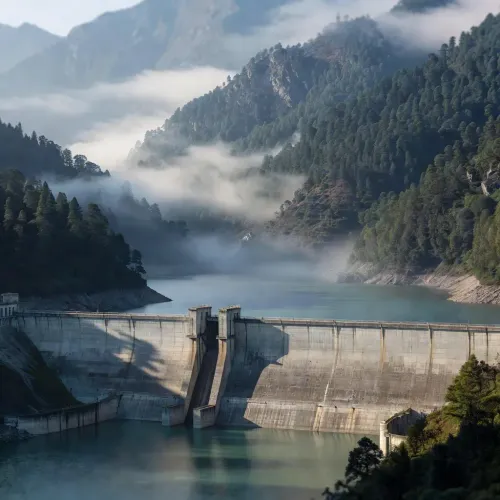
The Kishau Dam is a proposed multipurpose project on the Yamuna river involving Himachal Pradesh, Uttarakhand, Haryana, and other states.
Himachal Pradesh's demand for a court affidavit rather than a bilateral promise reflects a strategy to make any commitment legally enforceable.
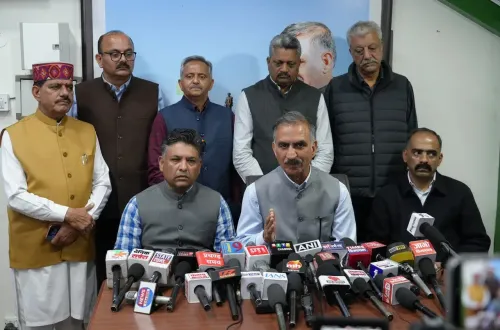
Himachal Pradesh has drawn a hard line in India's most consequential inter-state water standoff: no Supreme Court affidavit from Haryana, no deal on the Kishau Dam project. The Chief Minister's Office of Himachal Pradesh made that linkage explicit on Wednesday, 18 November 2026, posting on X that the state's pressure on the Bhakra Beas Management Board (BBMB) arrears issue is inseparable from Haryana's willingness to commit — in court — to releasing those dues.
The post states directly: 'एरियर जारी करने को यदि हरियाणा सरकार सुप्रीम कोर्ट में एफिडेविट नहीं देगी और भारत सरकार समर्थन नहीं करेगी, तो हिमाचल सरकार भी किशाऊ बांध परियोजना के समझौता के लिए तैयार नहीं होगी' — meaning: if Haryana does not file an affidavit in the Supreme Court on releasing the arrears, and if the central government does not extend support, Himachal Pradesh will not agree to the Kishau Dam project agreement. The statement ends on a note of quiet confidence — 'our pressure is working' — signalling that Shimla believes the leverage is producing results.What the BBMB Arrears Row Is Actually About
The Bhakra Beas Management Board, established under the Punjab Reorganisation Act, 1966, manages the shared river valley infrastructure — dams, canals, and power assets — that northern states inherited after Punjab's reorganisation. Revenue sharing and cost apportionment among member states have remained a persistent friction point for decades. Himachal Pradesh, as the upstream riparian state hosting the physical infrastructure, has long argued that dues owed to it through the BBMB framework remain uncleared by downstream states, particularly Haryana.
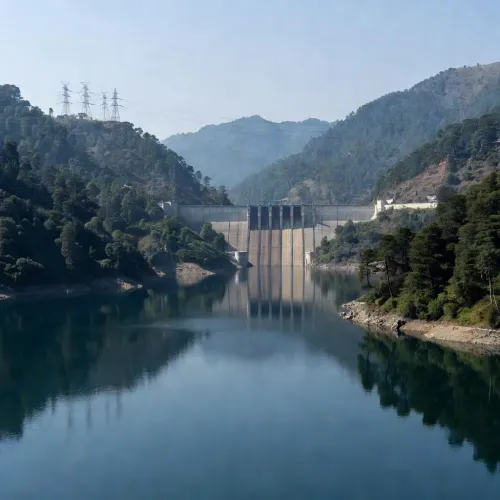
The arrears in question are specifically tied to the Kishau Dam project, a proposed multipurpose hydropower and irrigation scheme on the Yamuna river that involves cost and benefit sharing among Himachal Pradesh, Uttarakhand, Haryana, and other states. Shimla's position is unambiguous: it will not formalise any agreement on Kishau until the financial backlog is settled — and settled transparently, before the Supreme Court of India.
Why Shimla Is Demanding a Court Affidavit, Not Just a Promise
The demand for a Supreme Court affidavit rather than a bilateral assurance is deliberate and strategically significant. Inter-state water and revenue agreements in India's Himalayan basin have a long history of verbal commitments that dissolve once projects are sanctioned. By insisting that Haryana government file a sworn statement in the country's apex court, Himachal Pradesh is seeking a legally enforceable commitment — one that cannot be quietly walked back after the Kishau agreement is signed.
The Government of India's role is equally crucial. Shimla has made central support a co-condition, recognising that inter-state disputes of this scale require federal facilitation to hold. Without New Delhi explicitly backing the arrears-first framework, Himachal Pradesh signals it has no reason to unlock its cooperation on a dam that significantly benefits downstream states.
A Pattern Written Across Himalayan River Basins
This standoff is not unique. Upstream Himalayan states conditioning major project approvals on clearance of long-pending dues from joint boards is a recurring dynamic in India's federal water governance. What makes the Kishau situation sharper is the scale of the project, the number of states involved, and the fact that the Supreme Court has already been drawn into the orbit of this dispute — making a judicial resolution more plausible than a purely political one.
The next critical marker: whether Haryana files the affidavit, and whether the Centre formally endorses the sequencing Shimla is demanding. Until that happens, one of Himachal Pradesh's most significant proposed infrastructure partnerships stays frozen — by design.
Point of View
Shimla is raising the political cost for both Haryana and New Delhi of leaving the arrears unresolved. The tactic also reveals how federal infrastructure projects in India's Himalayan belt are increasingly held hostage to unresolved financial grievances from earlier joint-board frameworks like the BBMB. If the formula works here, it may set a template for how smaller hill states bargain with larger plains neighbours on future river-basin agreements.
NationPress
18 Nov 2026
Frequently Asked Questions
What are the BBMB arrears that Himachal Pradesh is demanding from Haryana?
The arrears refer to pending financial dues owed through the Bhakra Beas Management Board framework that Himachal Pradesh says Haryana has not cleared, specifically in connection with the Kishau Dam project on the Yamuna river. The exact quantum has not been officially disclosed.
What is the Kishau Dam project and which states are involved?
The Kishau Dam is a proposed multipurpose hydropower and irrigation project on the Yamuna river. It involves cost and benefit sharing among Himachal Pradesh, Uttarakhand, Haryana, and other states in northern India.
Why is Himachal Pradesh asking Haryana to file a Supreme Court affidavit?
Himachal Pradesh wants a legally binding commitment rather than a political promise. A Supreme Court affidavit would be enforceable by the apex court, preventing Haryana from backing out of the arrears commitment after the Kishau Dam agreement is signed.
What is the Bhakra Beas Management Board (BBMB)?
The BBMB was set up under the Punjab Reorganisation Act of 1966 to manage shared dams, canals, and power infrastructure among northern states including Himachal Pradesh, Haryana, Punjab, and Rajasthan.
What role does the central government play in the Kishau Dam dispute?
Himachal Pradesh has made the central government's explicit support a co-condition for agreeing to the Kishau Dam project, recognising that New Delhi's backing is essential to enforce the arrears-first framework in a multi-state federal dispute.