MP CM Mohan Yadav Clears 200 MW Floating Solar, 800 MW Battery Storage at Omkareshwar
Synopsis
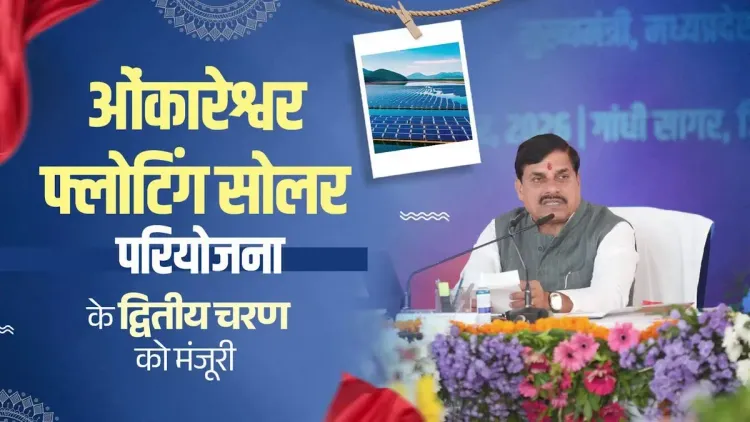
Madhya Pradesh has approved a 200 MW floating solar project and an 800 MW battery storage system at Omkareshwar on the Narmada. CM Dr. Mohan Yadav says the dual project will leverage water resources and push the state toward energy self-reliance.
Key Takeaways
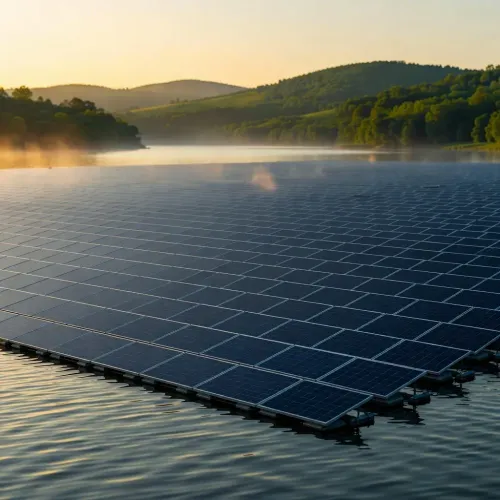
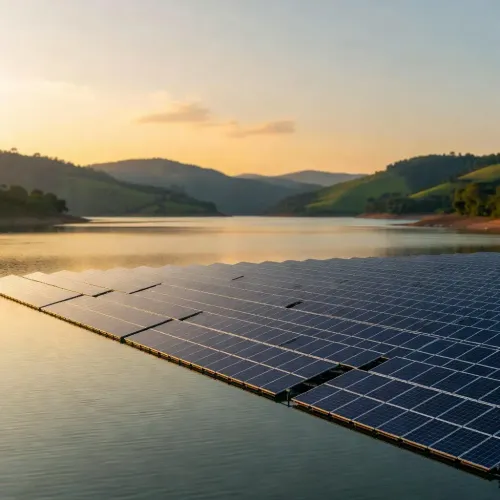
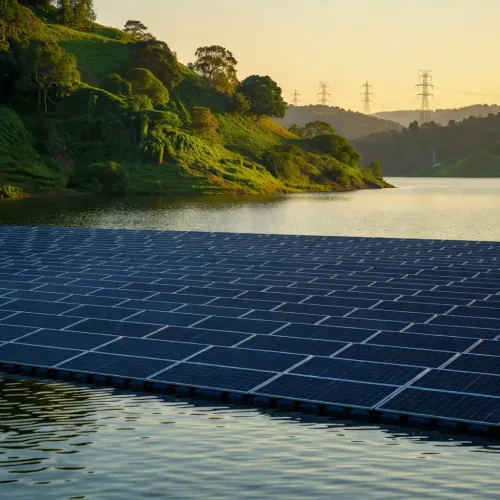
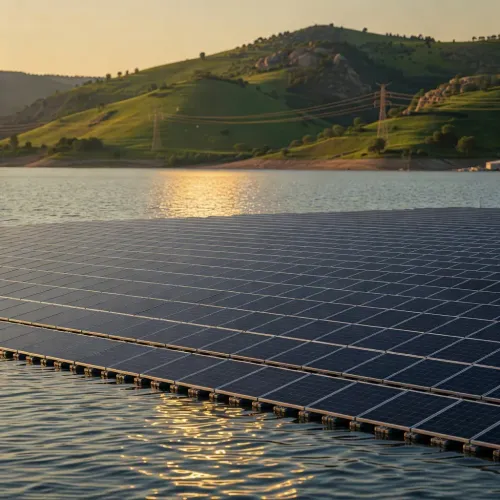
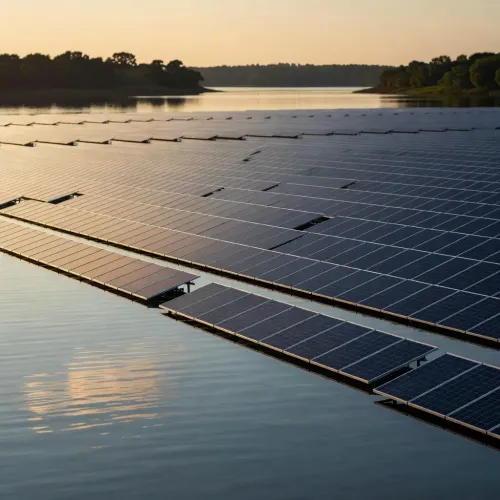
200 MW floating solar project approved at Omkareshwar , Khandwa district, with solar panels to be laid directly above the reservoir surface.
800 MW battery storage system approved alongside, designed to store and dispatch solar power on demand — addressing the core intermittency challenge.
Mohan Yadav described the initiative as making Madhya Pradesh more aatmanirbhar (self-reliant) in energy.
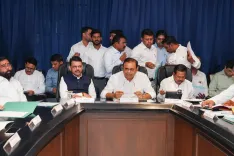
Announcement was made at a cabinet meeting in the Gandhi Sagar region on 18 November 2026 .
Floating solar on reservoirs avoids land acquisition conflicts and reduces water evaporation — a dual environmental benefit.
Tender issuance by Madhya Pradesh state power utilities is the next key milestone to watch.
Solar panels on water, power stored at scale — Madhya Pradesh just greenlit one of India's most ambitious renewable energy combinations. The Chief Minister's Office of Madhya Pradesh announced on Wednesday, 18 November 2026 that a 200 megawatt floating solar project and an 800 megawatt battery storage project at Omkareshwar have received formal government approval.
Chief Minister Dr. Mohan Yadav framed the twin approvals as a move toward energy self-reliance, stating that by laying solar panels above the water surface at Omkareshwar, the state would make 'better use of water resources while making the state more self-reliant (aatmanirbhar) in the energy sector.' The announcement came under the hashtag #GandhiSagarCabinetMP, signalling it was part of a cabinet meeting held in the Gandhi Sagar region.
Why Omkareshwar's Reservoir Makes the Perfect Solar Canvas
Omkareshwar, a town in Khandwa district on the banks of the Narmada river, sits at the foot of one of Madhya Pradesh's major dams. That reservoir is now set to double as an energy farm. Floating solar installations — arrays of photovoltaic panels mounted on pontoons above a water body — have emerged as a sharp solution to one of renewable energy's oldest headaches: land. India's land acquisition conflicts have stalled dozens of ground-mounted projects. Water surfaces sidestep that fight entirely.
There is a secondary benefit that rarely makes the headline but matters enormously in central India's heat: floating panels reduce water evaporation from the reservoir below. Less evaporation means more water retained for irrigation and domestic supply — a critical gain in a region that depends heavily on the Narmada basin.
800 MW of Storage — The Number That Changes the Equation
The 800 MW battery storage system is, by any measure, the more strategically significant half of this package. Solar generation is intermittent — it peaks at noon and disappears at sunset. Without storage, every megawatt of solar capacity is essentially a promise that breaks the moment clouds gather or night falls. An 800 MW battery bank turns that promise into a guarantee, allowing the state to dispatch clean power on demand.
Indian states racing toward national 2030 renewable energy targets have found this intermittency gap to be their sharpest obstacle. Madhya Pradesh's decision to pair the floating solar build-out with large-scale storage is a signal that the state is not just counting capacity — it is engineering reliability. The next milestones to watch: tender issuance by Madhya Pradesh's state power utilities and the first grid integration dates.
MP's Wider Push for Energy Independence
Dr. Mohan Yadav, who took charge as Chief Minister in December 2023, has repeatedly positioned energy self-reliance as a cornerstone of the state's infrastructure agenda. India's solar push has roots in the Jawaharlal Nehru National Solar Mission launched in 2010, which set the template for state-level grid-connected solar ambitions. Madhya Pradesh's Omkareshwar announcement fits squarely into that national arc — but the battery storage scale and the floating-panel format push it beyond routine scheme milestones.
Power consumers across the state stand to gain if the project delivers on its grid-integration promise. Renewable energy developers will be watching the tender process closely. One thing is already clear: Madhya Pradesh is no longer just sitting on its river wealth — it is building power from it.
Point of View
Not just installed capacity on paper. For CM Mohan Yadav, the project also serves a political logic: energy self-reliance is a durable, cross-partisan sell in a state that has historically struggled with rural power supply. The real test arrives when tenders hit the market and developers put real numbers on what this costs to build.
NationPress
18 Nov 2026
Frequently Asked Questions
What is the Omkareshwar floating solar project in Madhya Pradesh?
It is a 200 MW solar power project in which photovoltaic panels will be installed on pontoons floating above the reservoir at Omkareshwar on the Narmada river, approved by the Madhya Pradesh government on 18 November 2026 .
What is a floating solar project and why is it built on water?
A floating solar project mounts solar panels on water surfaces instead of land, avoiding land acquisition disputes, reducing water evaporation from reservoirs, and often achieving better panel efficiency due to the cooling effect of the water below.
Why is the 800 MW battery storage component important?
Solar power is intermittent and stops generating at night or under cloud cover. An 800 MW battery storage system captures excess daytime generation and releases it on demand, making the entire solar project far more reliable for grid supply.
Who approved the Omkareshwar solar and storage project?
The project was approved by the Madhya Pradesh state cabinet and announced by Chief Minister Dr. Mohan Yadav at a cabinet meeting in the Gandhi Sagar region on 18 November 2026 .
What is the current status of the project and when will it be built?
As of November 2026, the projects have received cabinet approval. The next steps involve issuance of project tenders by Madhya Pradesh state power utilities, followed by construction and grid integration milestones. No specific commissioning date has been announced.