Pralhad Joshi: Cabinet clears PM Surya Sarovar Yojana
Synopsis
The Union Cabinet has approved PM Surya Sarovar Yojana, targeting 5,000 MW of floating solar PV on India's reservoirs, paired with 10,000 MWh of storage and ₹28,500 crore in investment — a structural push toward India's 500 GW non-fossil fuel goal by 2030.
Key Takeaways
The Union Cabinet approved Pradhan Mantri Surya Sarovar Yojana (PM-SSY) on 31 July 2026 , announced by Union Minister Pralhad Joshi .
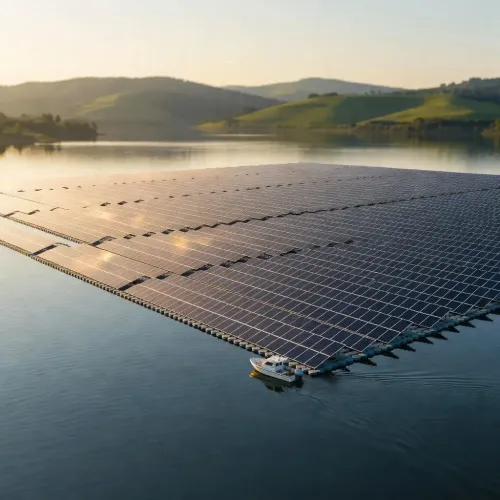
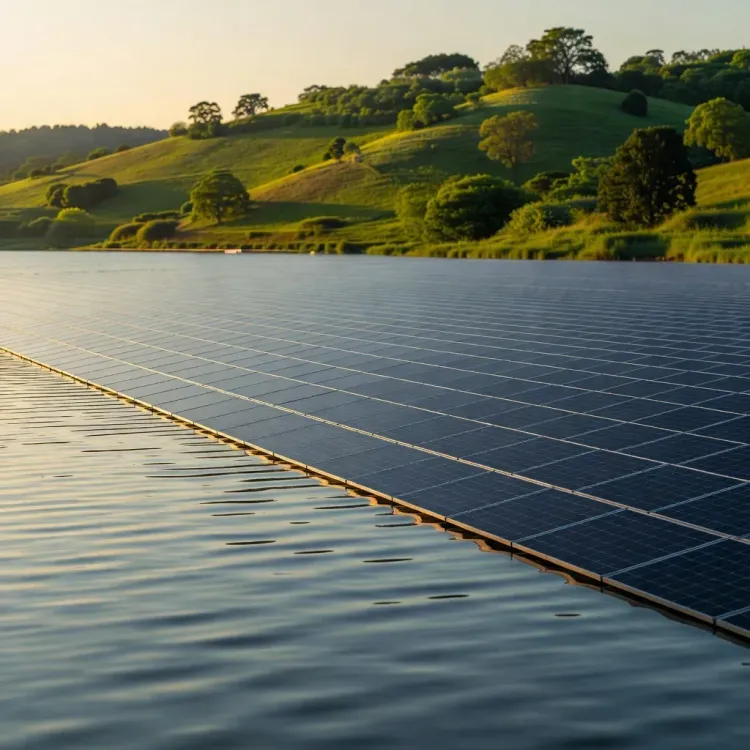
The scheme targets 5,000 MW of floating solar PV capacity installed on India's reservoirs and water bodies.
It includes 10,000 MWh of Energy Storage Systems — an unusually large storage component for a single solar scheme.
Expected investment is ₹28,500 crore , signalling national-scale rollout rather than a pilot programme.
PM-SSY builds on India's floating solar pilots since 2018 and supports the 500 GW non-fossil fuel target by 2030 pledged at COP26.
The scheme is framed under the Atmanirbhar Bharat and Viksit Bharat agendas, with an implicit push for domestic solar equipment manufacturing.
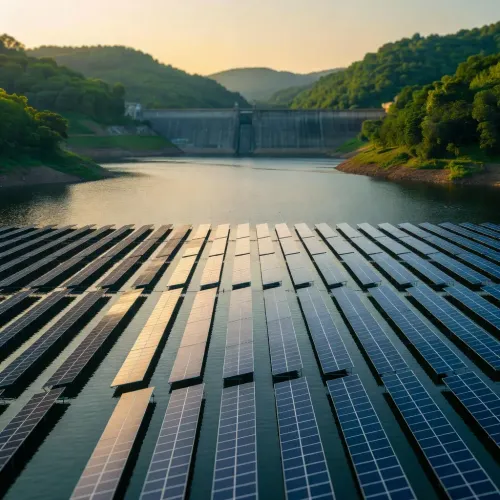
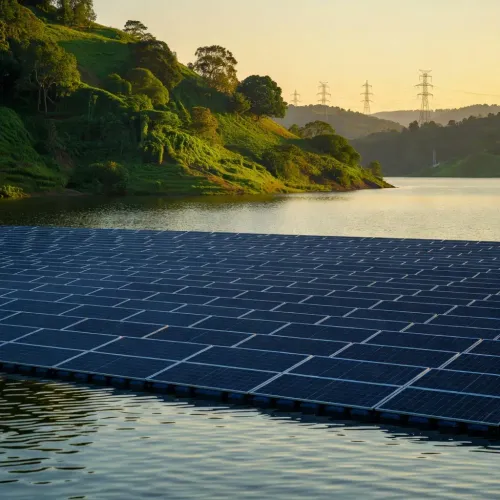
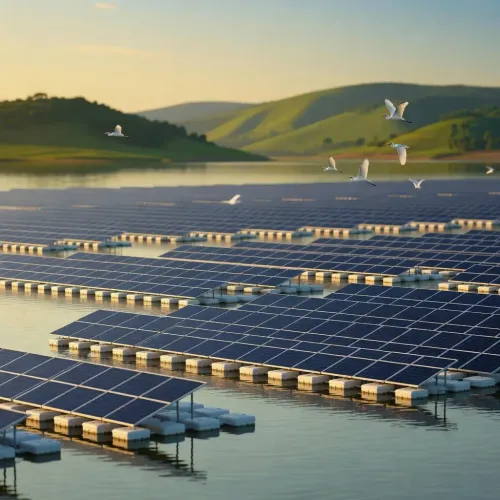
India's reservoirs are about to pull double duty — storing water and generating clean power. Union Minister Pralhad Joshi announced on Friday, 31 July 2026 that the Union Cabinet, chaired by Prime Minister Narendra Modi, has approved the Pradhan Mantri Surya Sarovar Yojana (PM-SSY), a flagship scheme to deploy floating solar panels across the country's water bodies at a scale never attempted before.
What PM-SSY actually commits to
The scheme sets a target of 5,000 MW of floating solar photovoltaic capacity, backed by 10,000 MWh of Energy Storage Systems — a pairing designed to smooth out the intermittency that has long been solar power's Achilles heel. The expected investment stands at ₹28,500 crore, signalling that this is not a pilot but a programme built for national scale.
Joshi framed the approval as the beginning of 'a new era of clean energy' (स्वच्छ ऊर्जा के एक नए युग की शुरुआत), one that taps the 'untapped potential' of India's vast network of reservoirs and inland water bodies — terrain that has no competing agricultural or residential claim.
Why floating solar, and why now
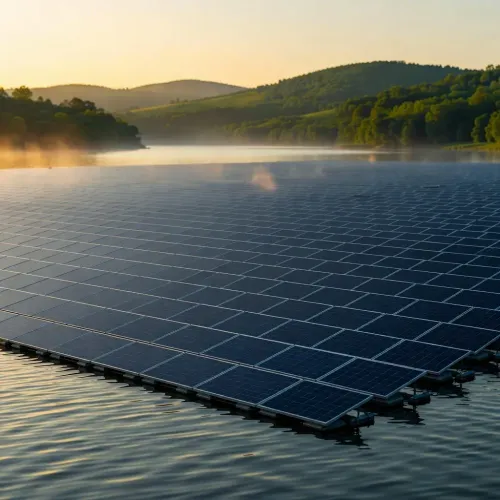
India's land constraint has been the quiet chokepoint of its solar ambitions. Since pilot projects began on reservoirs in 2018, floating solar has offered a workaround: panels on water cool more efficiently than on land, reducing output losses, while the water surface beneath loses less to evaporation. PM-SSY industrialises that logic at a national level.
The policy lineage is long. India's National Solar Mission launched in 2010 and was revised in 2015 to target 100 GW of solar by 2022. At COP26 in 2021, the government raised the stakes further — a commitment to 500 GW of non-fossil fuel capacity by 2030. PM-SSY is the latest structural brick in that wall, sitting alongside existing schemes like PM-KUSUM that have already brought solar to farmland and irrigation infrastructure.
The Atmanirbhar thread running through it
Joshi explicitly tied the scheme to #ViksitBharat — the government's 'Developed India' vision — and to energy self-reliance. That framing is deliberate: the Ministry of New and Renewable Energy, which Joshi heads alongside Consumer Affairs, has pushed domestic manufacturing of solar equipment as a parallel priority. A 5,000 MW floating solar rollout creates significant downstream demand for Indian-made panels, mounting hardware, and storage systems.
The immediate watch-point is execution: state-wise tenders and the selection of reservoir sites for the first tranche of capacity will determine whether the scheme moves at the speed its targets demand.
India has set the coordinates. Now comes the hard part — filling them with sunlight.
Point of View
Now given Cabinet-level weight and a defined investment envelope. Pairing 5,000 MW of generation with 10,000 MWh of storage in a single scheme signals a maturation in policy design — previous solar schemes rarely bundled storage at this scale. For Minister Joshi, the approval consolidates his ministry's position as the engine of India's energy transition, while the Atmanirbhar framing keeps domestic manufacturing interests firmly in the political coalition behind it. The real test will be whether state utilities and reservoir-owning agencies can move fast enough to absorb the capital.
NationPress
14 Sept 2026
Frequently Asked Questions
What is Pradhan Mantri Surya Sarovar Yojana?
PM Surya Sarovar Yojana (PM-SSY) is a newly approved Union Cabinet scheme to install 5,000 MW of floating solar photovoltaic capacity on India's reservoirs and water bodies, backed by 10,000 MWh of energy storage and an investment of ₹28,500 crore.
What is floating solar power and how does it work?
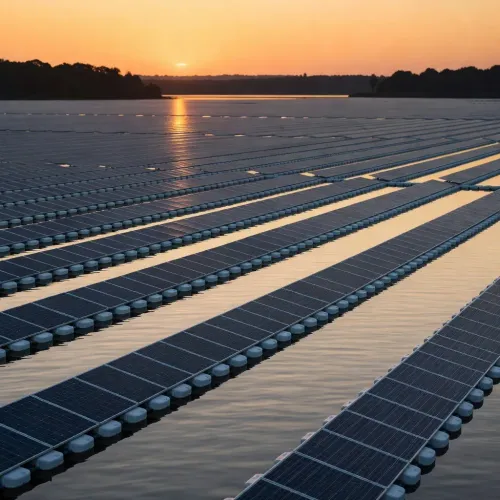
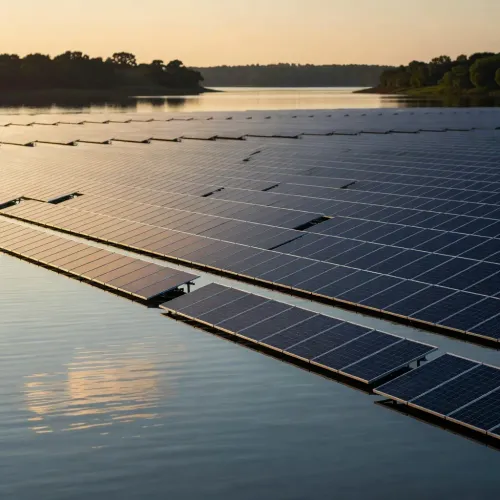
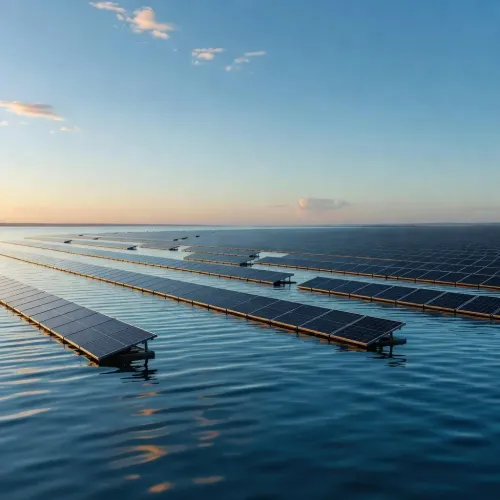
Floating solar involves mounting photovoltaic panels on platforms that float on water bodies such as reservoirs. The panels generate electricity while the water beneath keeps them cooler than land-based installations, improving efficiency and reducing water evaporation.
Who approved PM-SSY and when?
The Union Cabinet, chaired by Prime Minister Narendra Modi, approved PM-SSY. Union Minister Pralhad Joshi announced the decision on 31 July 2026.
How does PM-SSY fit India's 2030 renewable energy targets?
India committed at COP26 in 2021 to achieving 500 GW of non-fossil fuel capacity by 2030. PM-SSY's 5,000 MW floating solar target contributes directly to that goal, complementing existing schemes like PM-KUSUM.
What happens next after Cabinet approval of PM-SSY?
The immediate next steps involve the Ministry of New and Renewable Energy issuing state-wise tenders and identifying specific reservoir sites for the first tranche of floating solar installations under the scheme.