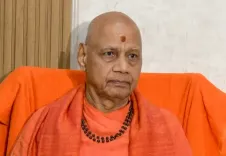
Giriraj Singh Backs PM Surya Sarovar Yojana, 5,000 MW Floating Solar Push
Synopsis
The Union Cabinet has approved PM Surya Sarovar Yojana with a ₹5,070 crore budget to develop 5,000 MW of floating solar capacity and at least 10,000 MWh of energy storage, advancing India's 500 GW non-fossil fuel target and energy security goals.
Key Takeaways
The Union Cabinet approved the PM Surya Sarovar Yojana (PM-SSY) on July 31, 2026 .
The scheme carries a budgetary outlay of ₹5,070 crore .
Target: 5,000 MW of floating solar projects deployed on water bodies.
A mandatory 10,000 MWh energy storage component is built into the scheme.
Floating solar addresses India's land-acquisition bottleneck for utility-scale renewable projects.
PM-SSY advances India's 500 GW non-fossil fuel target by 2030 and net-zero goal by 2070 .
India's push to power itself without burning the planet just cleared a significant cabinet hurdle. Union Textiles Minister Giriraj Singh announced on Friday, July 31, 2026 that the Union Cabinet has approved the PM Surya Sarovar Yojana (PM-SSY) — a scheme designed to float solar panels on water bodies and pair them with large-scale energy storage, addressing two of renewable energy's most stubborn problems at once: land scarcity and intermittency.
Posting in Hindi, Singh called it 'swachh urja aur urja suraksha ki disha mein ek mahatvapurn pahal' — 'an important initiative towards clean energy and energy security.' The numbers behind the initiative are substantial: a budgetary outlay of ₹5,070 crore, a generation target of 5,000 megawatts of floating solar capacity, and a mandatory energy storage component of at least 10,000 MWh — enough to keep power flowing after the sun goes down.
Why Water, Why Now
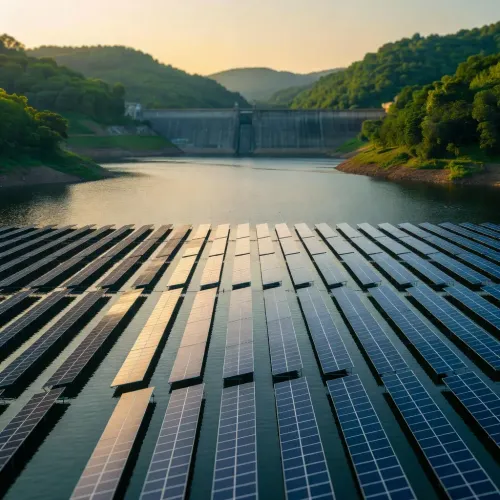
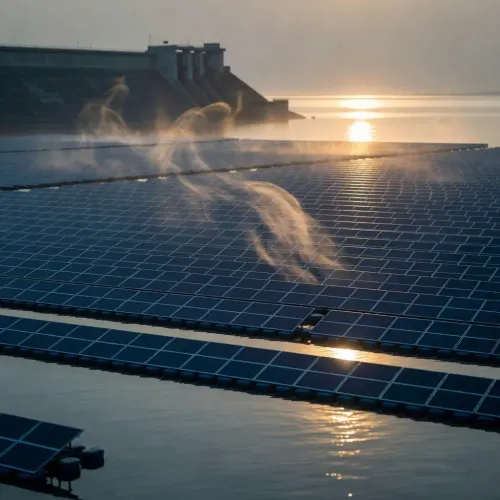
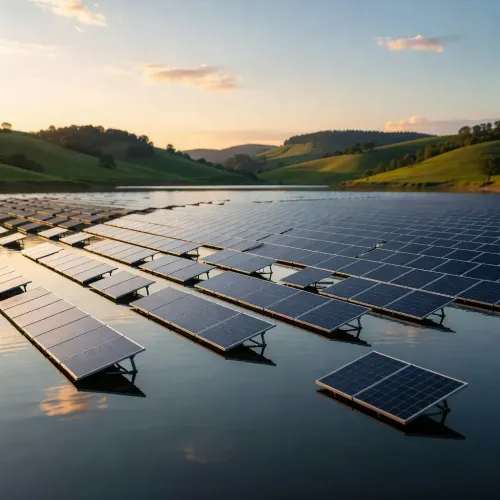
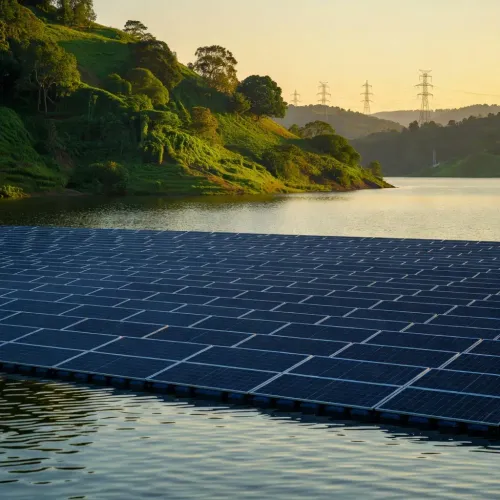
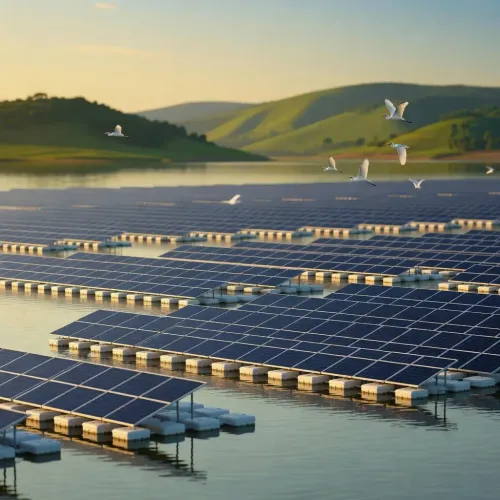
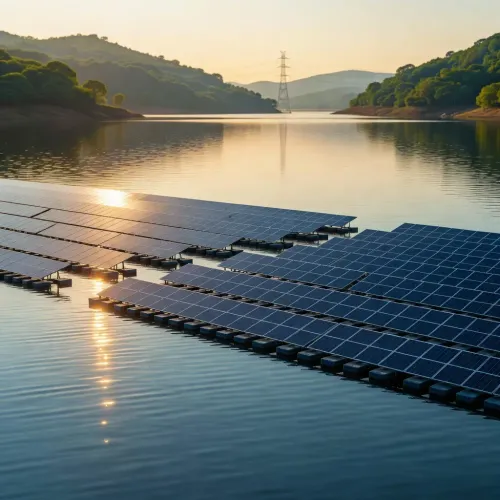
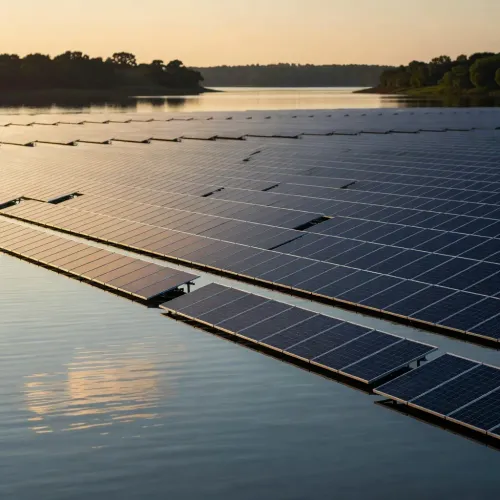
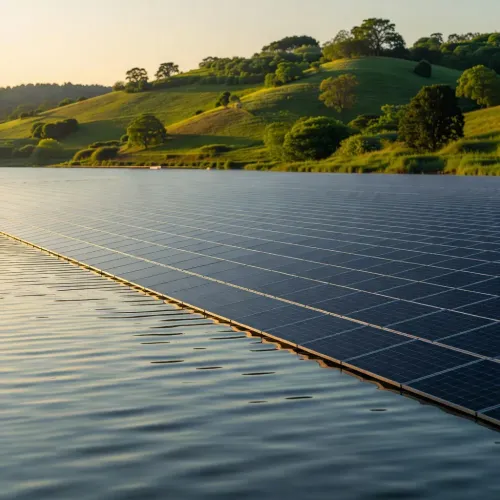
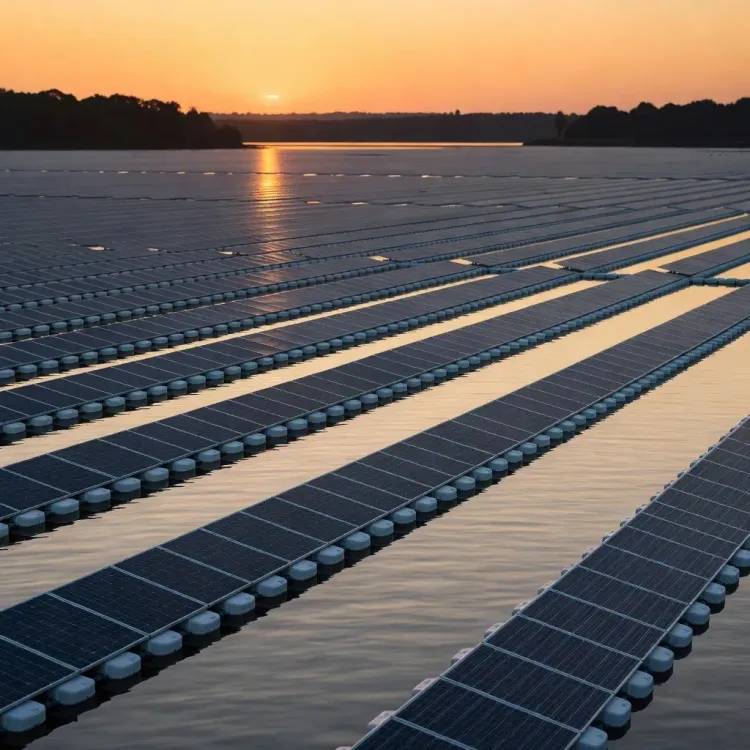
Floating solar is not a novelty — India has been experimenting with it for years — but PM-SSY appears to be the most structured federal push yet. The logic is straightforward: India's reservoirs, irrigation canals, and water treatment ponds cover millions of hectares that sit idle above the waterline. Panels mounted on pontoons generate electricity while simultaneously reducing water evaporation, a dual benefit that resonates especially in drought-prone states.
Land acquisition has historically been one of the biggest bottlenecks for utility-scale solar in India. By moving generation onto existing water infrastructure, PM-SSY sidesteps that conflict almost entirely — a practical workaround as the country races toward its 500 GW non-fossil fuel target by 2030.
Storage as the Real Headline
The 10,000 MWh storage mandate embedded in the scheme may be the more consequential number. Solar generation peaks at noon; demand peaks in the evening. Without storage, every megawatt of solar capacity is only partially useful. Requiring battery or pumped-hydro storage to be co-developed alongside generation signals a policy maturation — a shift from chasing installed-capacity headlines toward building a grid that actually delivers reliable power.
This emphasis echoes the direction of recent renewable policy updates that have increasingly stressed storage integration to manage the inherent intermittency of wind and solar. India's net-zero commitment by 2070 makes that storage buildout non-negotiable at scale.
A Thread Back to Solar Mission Roots
PM-SSY joins a lineage of federal solar schemes stretching back to the Jawaharlal Nehru National Solar Mission of 2010, which first put large-scale solar on the national agenda, and the PM-KUSUM scheme of 2019, which decentralised solar to farmers and rural grid connections. Each iteration has expanded both ambition and specificity. The addition of a floating-solar focus and a hard storage floor in PM-SSY represents the next step in that evolution — moving from 'install panels anywhere' to 'install them smartly, store the output, and secure supply.'
Watch for tender announcements from the Ministry of New and Renewable Energy and project allocations across states in the coming months — that is where the ₹5,070 crore will begin to take physical shape.
Point of View
000 MWh storage floor marks a qualitative shift in Indian solar policy — from raw capacity addition to dispatchable renewable power, which is what grid reliability actually demands. The floating-solar focus is a pragmatic answer to land-acquisition gridlock that has slowed ground-mounted projects for years. With the 2030 non-fossil target now inside a four-year window, the Cabinet's approval signals that the government is moving from aspirational targets to bankable, site-specific project structures. The real test will be how quickly states and developers can operationalise tenders and whether the ₹5,070 crore outlay scales with the ambition.
NationPress
15 Sept 2026
Frequently Asked Questions
What is PM Surya Sarovar Yojana?
PM Surya Sarovar Yojana (PM-SSY) is a Union Cabinet-approved scheme to develop 5,000 MW of floating solar power projects on water bodies, paired with at least 10,000 MWh of energy storage, backed by a ₹5,070 crore budgetary outlay.
What is the budget for PM Surya Sarovar Yojana?
The scheme has a budgetary provision of ₹5,070 crore.
What is floating solar and why is India investing in it?
Floating solar involves mounting photovoltaic panels on pontoons over reservoirs, canals, or ponds. India is investing in it because it generates electricity without requiring land acquisition and simultaneously reduces water evaporation from the water bodies it covers.
How does PM-SSY fit India's 2030 renewable energy target?
India aims to achieve 500 GW of non-fossil fuel power capacity by 2030. PM-SSY's 5,000 MW floating solar target contributes directly to that goal while the mandatory storage component addresses the intermittency challenge that limits solar's grid reliability.
What earlier solar schemes did India launch before PM-SSY?
India launched the Jawaharlal Nehru National Solar Mission in 2010 to scale up solar capacity nationally, followed by the PM-KUSUM scheme in 2019 to promote decentralised solar including agricultural pump sets and small grid-connected plants. PM-SSY is the next step in that policy lineage.