Wrong blood transfusion kills patient at Jalpaiguri hospital; 4 served notices

Synopsis
A dialysis patient in Jalpaiguri, West Bengal, died after allegedly receiving the wrong blood group at a government hospital — and so did a ward-mate's chances of a complication-free recovery. With four staff already served show-cause notices and a ministerial directive on the table, the case has put state-run healthcare's blood-safety protocols squarely under the microscope.
Key Takeaways
Birendranath Sharma , a kidney patient from Kachua Boalmari village , died at Jalpaiguri Medical College's Super Specialty Hospital on Wednesday, 18 November 2026 .
His family alleged he was administered A positive blood instead of his required AB positive group on Monday .
A second patient, Balin Roy , was allegedly given the wrong blood group as well; he is reportedly stable and recovering.
A three-member inquiry committee has been formed; four hospital staff — including a doctor, nurses, and a health worker — have received show-cause notices.
West Bengal Health Minister Sharadwat Mukherjee intervened after the incident came to his notice, directing authorities to act.
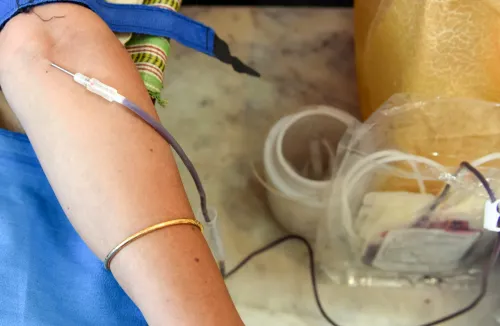
A patient died at the Super Specialty Hospital under Jalpaiguri Medical College in West Bengal's Jalpaiguri district on Wednesday, 18 November 2026, two days after he was allegedly administered blood of the wrong group, raising serious concerns over patient safety and medical supervision at state-run healthcare facilities. Hospital authorities have constituted a three-member inquiry committee, and four personnel — including a doctor, nurses, and a health worker — have been served show-cause notices.
What Allegedly Happened
According to sources, two patients were admitted to the same ward at the time of the alleged errors. Balin Roy, a resident of the Raninagar area of Jalpaiguri, and Birendranath Sharma, from Kachua Boalmari village in the district, had different blood groups — one had blood group A and the other AB positive.
Roy's family alleged that the nurse on duty administered AB positive blood to him instead of the required A group. Sharma's family, meanwhile, claimed he was given A positive blood instead of AB positive. Both patients reportedly developed complications following the alleged transfusion errors, prompting their families to lodge formal complaints with the medical college authorities.
The Patient Who Died
Birendranath Sharma, who had been suffering from kidney problems, was admitted to the hospital eight days before the incident and was undergoing regular dialysis. His condition reportedly deteriorated after the wrong blood was allegedly administered on Monday. Doctors placed him under observation as he developed multiple complications. He succumbed on Wednesday. Balin Roy is reportedly stable and recovering.
Government Response and Action Taken
The incident came to the notice of West Bengal Health Minister Sharadwat Mukherjee, who directed the hospital authorities to take immediate action. Following his intervention, show-cause notices were issued to the four hospital personnel allegedly involved. The three-member committee has begun its investigation to establish how the transfusion errors occurred and to fix accountability.
Wider Concerns Over State Healthcare Facilities
The incident has renewed scrutiny of blood bank protocols and nursing supervision standards at government hospitals in West Bengal. Blood transfusion errors — though rare when standard verification procedures are followed — are classified as a serious adverse medical event under national patient safety guidelines. Critics argue that understaffing and inadequate cross-checking mechanisms at state-run hospitals create conditions where such errors can go uncaught. This is not the first instance of alleged medical negligence at a government facility in West Bengal to trigger a ministerial directive; the pattern of reactive action over systemic reform remains a point of contention among healthcare advocates.
The inquiry committee's findings are expected to determine whether disciplinary or legal action will follow against the accused personnel.
Point of View
Not a freak accident. West Bengal's pattern of issuing show-cause notices after fatalities, without publishing audit findings or enforcing structural reform, risks repeating these outcomes. If the inquiry committee's report is not made public, the accountability exercise will amount to optics rather than oversight.
NationPress
18 Nov 2026
Frequently Asked Questions
What happened at Jalpaiguri Medical College hospital?
Two patients in the same ward were allegedly given each other's blood groups during transfusion. One patient, Birendranath Sharma, died on Wednesday after developing multiple complications; the other, Balin Roy, is reportedly stable and recovering.
Who died and what was his medical condition?
Birendranath Sharma, a resident of Kachua Boalmari village in Jalpaiguri district, died on 18 November 2026. He had been suffering from kidney problems and was undergoing regular dialysis when the alleged transfusion error reportedly occurred on Monday.
What action has been taken by the hospital and the government?
The hospital constituted a three-member inquiry committee to investigate the alleged negligence. West Bengal Health Minister Sharadwat Mukherjee directed authorities to act, following which four personnel — including a doctor, nurses, and a health worker — were served show-cause notices.
What was the specific transfusion error alleged?
Roy's family alleged that he received AB positive blood instead of his required A group, while Sharma's family alleged he was given A positive blood instead of AB positive. Both families lodged formal complaints with the medical college authorities.
What happens next in the investigation?
The three-member committee has begun its probe to determine how the alleged errors occurred and to fix responsibility. The findings are expected to decide whether further disciplinary or legal action will be taken against the accused staff.