West Bengal blood bank black-marketing: Health dept to inspect private facilities
Synopsis
A private blood bank in Kolkata's Beliaghata area ran 35 donation camps in a single day and collected 1,600 blood units — with no infrastructure to screen or store any of it. West Bengal's health department is now inspecting all private blood banks, police have arrested three hospital technicians for blood black-marketing, and the Calcutta High Court is watching the clock on the state's probe of 11 flagged facilities.
Key Takeaways
West Bengal's state health department has ordered inspections of private blood banks statewide amid widespread black-marketing of blood and plasma.
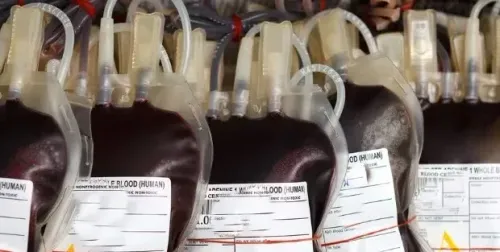
A Beliaghata-based blood bank in Kolkata conducted 35 donation camps in a single day , collecting 1,600 units of blood without adequate screening or storage infrastructure.
Medical students from a state-run college were reportedly used instead of qualified doctors at the donation camps — a violation of rules.
The West Bengal Police anti-corruption wing arrested three laboratory technicians from Panskura Super Speciality Hospital , East Midnapore , for blood black-marketing.
The Calcutta High Court has directed the health department to complete its probe against 11 private blood banks accused of selling blood and plasma illegally across state lines.
Health Minister Dr Saradwat Mukherjee has vowed legal action against those running the racket.
West Bengal's state health department has launched a fresh round of inspections targeting private blood banks across the state, following a series of black-marketing incidents involving blood and plasma that have surfaced in multiple districts. The move comes as authorities piece together a pattern of large-scale irregularities, including a single blood bank in Beliaghata, Kolkata, that reportedly conducted 35 blood donation camps in one day and collected 1,600 units of blood — far beyond any capacity it could screen or store.
What Triggered the Inspections
Officials from the state health department flagged the Beliaghata-based private blood bank after its single-day collection figures drew suspicion. When inspectors visited the facility, they found it lacked the infrastructure to either screen or preserve the volume of blood it had collected.
'Neither the entity had the requisite infrastructure to conduct the screening nor the facilities to preserve the collected blood. There comes the question of where this huge quantity of blood collected on a single day is gone. Surely, the possibilities of selling that blood at premium prices outside cannot be ruled out,' a state health department official said.
A further irregularity emerged during the investigation: instead of qualified doctors, medical students from a state-run medical college and hospital were reportedly deployed to examine donors at these camps — a practice officials confirmed is against the rules.
What the Inspections Will Cover
The health department has said inspections will assess whether private blood banks possess the requisite infrastructure for screening and preserving collected blood, and whether that infrastructure is proportionate to the volume of blood they are collecting through donation camps. The intent, officials explained, is to establish a direct audit trail between collection capacity and actual blood units gathered.
State Health Minister Dr Saradwat Mukherjee, himself a practising medical professional, warned that collecting blood beyond a bank's processing capacity also risks compromising the quality of that blood — potentially rendering it unusable and creating wastage. 'A detailed investigation on this menace is on. Whoever is behind such rackets will be identified and booked per the legal system,' he said.
Arrests and Court Directives
The inspections are not taking place in isolation. On Tuesday, the West Bengal Police's anti-corruption wing arrested three laboratory technicians attached to the state-run Panskura Super Speciality Hospital in East Midnapore district on charges of black-marketing blood.
Earlier this month, the Calcutta High Court directed the state health department to expedite its ongoing probe against 11 private blood banks accused of severe irregularities — including illegally selling blood and plasma to buyers in other states. The health department had already imposed a ban on these 11 banks from conducting donation camps anywhere in West Bengal until further orders.
One of the 11 banks challenged the ban in the Calcutta High Court. The matter came before a bench of Justice Krishna Rao, who declined to interfere with the ongoing probe but set a deadline for the department to complete its investigation.
The Broader Pattern
This is not an isolated episode. Reports of blood black-marketing have emerged from multiple corners of West Bengal, suggesting what authorities now describe as an organised racket. The combination of mass donation camps, under-equipped storage facilities, and the use of unqualified personnel points to a systemic exploitation of a public health resource. Notably, this is the first time the state has moved to inspect the infrastructure of private blood banks as a category, rather than responding to individual complaints.
With the Calcutta High Court monitoring the probe and police arrests already made, pressure on the health department to deliver results — and fast — is mounting.
Point of View
1,600 units, zero storage — is not an administrative oversight; it is a supply chain. Someone organised the camps, someone moved the blood, and someone paid for it. The health department's infrastructure audit is a necessary first step, but it addresses the visible end of the chain. The harder question is who the buyers are, and whether blood is crossing state lines systematically — a charge the Calcutta High Court is already examining against 11 banks. Using medical students as donor-screening doctors compounds the public health risk: unscreened blood entering an informal market is not just a legal problem, it is an epidemiological one. The court-set deadline is the only external accountability mechanism in play right now; without it, this probe risks the fate of many before it.
NationPress
10 Oct 2026
Frequently Asked Questions
Why is West Bengal inspecting private blood banks?
The West Bengal health department launched inspections after discovering that a private blood bank in Beliaghata, Kolkata, collected 1,600 units of blood in a single day across 35 donation camps but lacked the infrastructure to screen or store the blood. Authorities suspect the blood was sold at premium prices, constituting black-marketing.
What action has the Calcutta High Court taken on blood bank irregularities?
The Calcutta High Court directed the West Bengal health department to expedite its probe against 11 private blood banks accused of illegally selling blood and plasma to buyers in other states. Justice Krishna Rao declined to interfere with the ongoing investigation but set a deadline for its completion.
Who was arrested in the West Bengal blood black-marketing case?
Three laboratory technicians attached to the state-run Panskura Super Speciality Hospital in East Midnapore district were arrested by the West Bengal Police's anti-corruption wing on charges of black-marketing blood.
What ban has the health department imposed on the 11 flagged blood banks?
The West Bengal health department has banned all 11 private blood banks under investigation from conducting blood donation camps anywhere in the state until further orders. One of the banks challenged this ban in the Calcutta High Court, but the court did not stay the probe.
Why is collecting blood beyond capacity a public health risk?
Health Minister Dr Saradwat Mukherjee explained that collecting blood beyond a facility's processing capacity raises the risk of inadequate screening, which can result in contaminated or unusable blood entering circulation. It also creates conditions for wastage and, in black-market scenarios, the distribution of unscreened blood to patients.