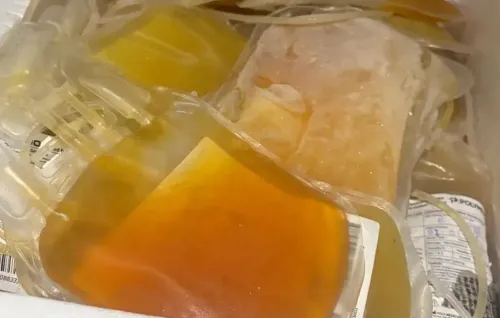
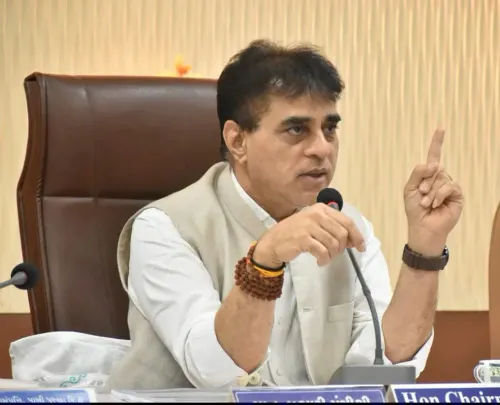
Bengal hospital staff arrested for blood black market in East Midnapore
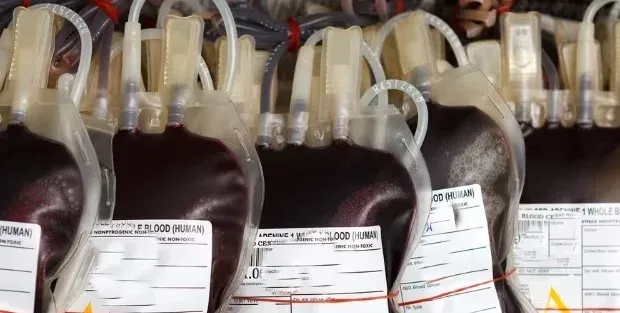
Synopsis
Three government hospital lab technicians in East Midnapore allegedly turned voluntary blood donation camps into a profit machine — buying donor cards for as little as ₹100, collecting free blood from state banks, and reselling it at premium rates to desperate patients. The arrests expose a gap in oversight that the Calcutta High Court is already pressing the state to close.
Key Takeaways
West Bengal Police's anti-corruption wing arrested three laboratory technicians from Panskura Super Speciality Hospital , East Midnapore , on 25 August .
The accused allegedly purchased blood donor cards from camp organisers for ₹100–₹150 each and collected free blood pouches from government blood banks.
The blood was then resold at premium prices to patients' families, with rarer blood types fetching higher rates.
Police suspect a larger organised racket and are interrogating the accused while monitoring blood donation camp organisers.
Separately, the Calcutta High Court has directed the state Health Department to complete its probe into 11 private blood banks accused of selling blood and plasma illegally across states.
West Bengal Police's anti-corruption wing on Tuesday, 25 August arrested three laboratory technicians attached to the state-run Panskura Super Speciality Hospital in East Midnapore district on charges of black marketing of blood. The accused allegedly exploited government blood banks and voluntary donation camps to illegally profit from blood scarcity, according to police.
How the Racket Operated
According to a state police official, the accused had devised a systematic method to exploit the blood donation network. 'Whenever they got information about any club or voluntary organisation organising blood donation camps, they used to approach the organisers and purchase donor cards from them at extremely low prices ranging from ₹100 to ₹150 for each card,' the official said.
Using these cards, the trio would collect blood pouches from government blood banks free of cost and then sell them at premium prices to families of patients in urgent need. 'The rarer the category of blood, the higher was the price,' the official added. The three accused shared the proceeds among themselves.
A Bigger Racket Suspected
Investigators believe the three arrested technicians are part of a larger organised network. The anti-corruption wing is currently interrogating the accused to uncover further links. Police have also placed under surveillance various clubs and organisations that regularly conduct blood donation camps, suspecting they may have been unwittingly — or otherwise — drawn into the supply chain.
The identities of the three accused have not yet been disclosed by police.
Calcutta High Court's Earlier Intervention
The arrests come against the backdrop of a broader crackdown on blood irregularities in West Bengal. Earlier in August 2025, the Calcutta High Court directed the state Health Department to expedite its ongoing probe into 11 private blood banks accused of severe irregularities, including illegally selling blood and plasma to other states.
The Health Department had already imposed a ban on these 11 private banks from conducting blood donation camps anywhere in the state until further orders. One of the implicated banks challenged the ban before a bench of Justice Krishna Rao, who declined to interfere in the probe but set a firm deadline for the department to complete its investigation.
What Comes Next
With the anti-corruption wing now holding three suspects and monitoring donation camp organisers, the scope of the investigation is likely to widen. The parallel High Court proceedings against private blood banks signal that authorities are under judicial pressure to act decisively. How far the alleged racket extends — and whether it connects to the private bank irregularities already under scrutiny — remains the central question for investigators.
Point of View
But those cards can apparently be bought for less than the price of a cup of tea. That loophole — not individual greed — is the real story. The simultaneous High Court pressure on 11 private blood banks suggests the problem is structural, not isolated. West Bengal's Health Department now faces a dual accountability test: close the donor-card loophole in state banks and satisfy the court on private bank oversight. Failing on either front risks normalising blood as a commodity that the poorest patients — those least able to pay the premium — simply cannot access.
NationPress
10 Oct 2026
Frequently Asked Questions
Who was arrested in the West Bengal blood black market case?
Three laboratory technicians attached to the state-run Panskura Super Speciality Hospital in East Midnapore district were arrested by West Bengal Police's anti-corruption wing on 25 August. Their identities have not yet been officially disclosed.
How did the blood black market scheme work?
The accused allegedly bought donor cards from blood camp organisers for ₹100 to ₹150 each, used those cards to collect free blood pouches from government blood banks, and then sold the blood at premium prices to families of patients in urgent need. Rarer blood groups commanded higher prices.
Do police suspect others are involved?
Yes. Investigators believe the three arrested technicians are part of a larger racket. The anti-corruption wing is interrogating the accused and has placed various blood donation camp-organising clubs and organisations under surveillance.
What is the Calcutta High Court's role in the blood bank issue?
Earlier in August 2025, the Calcutta High Court directed the West Bengal Health Department to expedite its probe into 11 private blood banks accused of irregularities including illegally selling blood and plasma to other states. Justice Krishna Rao declined to stay the probe but set a deadline for its completion.
What action has the Health Department taken against private blood banks?
The Health Department banned the 11 private blood banks under investigation from conducting blood donation camps anywhere in West Bengal until further orders. One of the banks challenged the ban in the Calcutta High Court, but the court did not interfere with the ongoing probe.