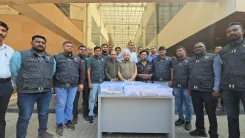
ED raids 10 premises in Thane, Nashik over human egg extraction racket
Synopsis
The ED has raided 10 hospitals and IVF centres across Thane, Baramati, and Nashik, busting a network that allegedly recruited financially vulnerable women for egg donation, used forged Aadhaar cards and PAN cards to enable repeat donations, and routed payments through shell-like proprietorship concerns — all while exposing donors to unregulated medical procedures across multiple states.
Key Takeaways
The ED searched 10 premises — hospitals and IVF centres — in Thane , Baramati , and Nashik on 16 October 2025 under PMLA, 2002 .
Cash of ₹29 lakh was seized; bank lockers and mutual fund investments were frozen.
The accused include Manjusha Wankhede and 16 others named in a chargesheet by Badlapur (East) Police Station .
Forged documents — Aadhaar cards, PAN cards, consent letters, birth certificates — were allegedly used to enable repeat egg donations and conceal donor identities.
New donor agents have been identified; the ED is probing additional modules of the network across multiple states.
The Directorate of Enforcement (ED), in a fresh crackdown on an organised human egg extraction racket, conducted search operations at 10 premises — including hospitals and IVF centres — across Thane, Baramati, and Nashik on 16 October 2025, seizing ₹29 lakh in cash and recovering digital evidence. The raids, carried out under the provisions of the Prevention of Money Laundering Act (PMLA), 2002, mark a significant escalation in a probe that now spans multiple states.
Background and Legal Trigger
The ED investigation was initiated on the basis of an FIR and a subsequent chargesheet filed by Badlapur (East) Police Station, Thane, Maharashtra. The chargesheet alleged offences of cheating and forgery under the Bharatiya Nyaya Sanhita (BNS), 2023, as well as violations of the Assisted Reproductive Technology (Regulation) Act, 2021, and the Drugs and Cosmetics Act, 1940, against Manjusha Wankhede and 16 others, according to an official statement.
How the Racket Operated
According to the ED, the network systematically recruited financially vulnerable women for human egg donation, supplying them to various IVF centres and Assisted Reproductive Technology (ART) banks through donor-supply agents operating under different proprietorship concerns. Women were offered monetary compensation, which was routed through agents engaged by the IVF centres and ART banks; the agents, in turn, received commissions for facilitating these transactions.
Critically, investigators allege that forged documents — including Aadhaar cards, affidavits, consent letters, birth certificates, PAN cards, blood-test reports, and insurance papers — were prepared and used to conceal the identities of donors, enable repeat egg donations, and falsely establish medical fitness. The women were reportedly sent to establishments across Maharashtra and other states for egg retrieval, exposing them to potential medical risks while circumventing prescribed safety protocols.
What Was Seized and Frozen
During the search operations, cash of ₹29 lakh was seized. In addition, bank lockers and mutual fund investments were frozen. Incriminating documents and digital devices containing relevant material were also recovered. The agency said it has identified multiple immovable properties and investments involving substantial amounts linked to the network.
New Leads and What Comes Next
Investigators have identified new donor agents during the course of the current searches. The ED's Mumbai Zonal Office-II said it is continuing investigation to uncover other modules of the illegal network. This case underscores mounting regulatory concern about the exploitation of women in assisted reproduction supply chains — a space that critics argue remains inadequately policed despite a dedicated legislative framework. Further arrests and asset attachments are expected as the probe widens.
Point of View
2021 was enacted precisely to prevent the commodification of egg donors and protect vulnerable women — yet the alleged scale of this network, spanning multiple states and involving forged government-issued IDs, suggests enforcement has lagged well behind the law. The money-laundering angle is also telling: the involvement of proprietorship concerns, commissions, and frozen mutual fund investments points to a professionalised supply chain, not a fringe operation. The ED's entry adds financial crime tools to what began as a state police case, but the deeper question is whether the regulatory bodies overseeing ART banks and IVF centres were monitoring compliance at all.
NationPress
22 Oct 2026
Frequently Asked Questions
What is the human egg extraction racket that the ED is investigating?
The racket allegedly involved an organised network that recruited financially vulnerable women for egg donation and supplied them to IVF centres and ART banks via paid agents. Forged identity documents were used to enable repeat donations and conceal medical histories, while women were sent across Maharashtra and other states for egg retrieval without adequate safeguards.
Where did the ED conduct its raids and what was seized?
The ED searched 10 premises — including hospitals and IVF centres — in Thane, Baramati, and Nashik on 16 October 2025. Investigators seized ₹29 lakh in cash, froze bank lockers and mutual fund investments, and recovered incriminating documents and digital devices.
Who are the accused in the human egg racket case?
The chargesheet filed by Badlapur (East) Police Station names Manjusha Wankhede and 16 others. The ED initiated its money-laundering investigation based on this FIR and chargesheet, which allege cheating, forgery, and violations of the ART (Regulation) Act, 2021, and the Drugs and Cosmetics Act, 1940.
Why is the ED involved in what appears to be a health-law violation case?
The ED stepped in because the alleged network involves financial transactions — commissions paid through agents, payments from IVF centres, and investments in immovable property — that potentially constitute proceeds of crime under the Prevention of Money Laundering Act (PMLA), 2002. This allows the agency to freeze and attach assets beyond what state police can do.
What happens next in the investigation?
The ED has identified new donor agents and multiple immovable properties linked to the network, and says it is probing further modules of the operation across states. Additional arrests and asset attachments are expected as the investigation widens.