Why Did ED Conduct Raids at 15 Locations Across Nine States?
Synopsis
In a bold move against corruption, the Enforcement Directorate has launched a nationwide operation targeting 15 locations in nine states. This crackdown focuses on private medical colleges amidst allegations of extensive fraud. Discover the details of this significant operation and what it reveals about the inspection processes by the National Medical Commission.
Key Takeaways
ED raids reveal extensive corruption in private medical college approvals.
Crucial evidence seized during the nationwide operation.
Investigation highlights a deep-rooted nexus within the health sector.
Allegations include fraudulent practices and bribery.
Significant implications for medical education integrity .
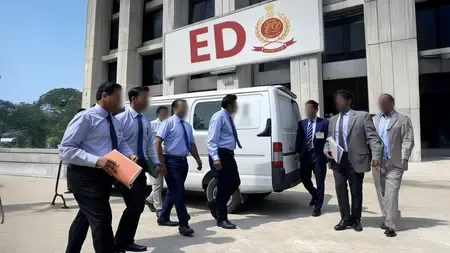
New Delhi, Nov 28 (NationPress) In a significant nationwide operation, the Enforcement Directorate (ED) has executed simultaneous searches at 15 locations spanning Andhra Pradesh, Telangana, Maharashtra, Madhya Pradesh, Chhattisgarh, Gujarat, Bihar, Uttar Pradesh, and the National Capital Territory of Delhi concerning extensive corruption linked to the inspection and approval processes of private medical colleges conducted by the National Medical Commission (NMC), officials reported on Friday.
The raids, executed under the Prevention of Money Laundering Act (PMLA), targeted seven private medical colleges: Shri Rawatpura Sarkar Institute of Medical Sciences and Research (Raipur, Chhattisgarh), Index Medical College (Indore, Madhya Pradesh), Gayatri Medical College (Visakhapatnam, Andhra Pradesh), Father Colombo Institute of Medical Sciences (Warangal, Telangana), Swaminarayan Institute of Medical Sciences and Research (Kalol, Gujarat), National Capital Region Institute of Medical Sciences (Meerut, Uttar Pradesh), and Shyamlal Chandrashekhar Medical College (Khagaria, Bihar).
This investigation into money laundering arises from an FIR filed by the Central Bureau of Investigation's Anti-Corruption Branch in New Delhi under pertinent sections of the Bharatiya Nyaya Sanhita, 2023, and the Prevention of Corruption Act, 1988.
The CBI's case has unveiled a deeply entrenched network involving key figures from private medical colleges, intermediaries, and certain public officials associated with the Union Ministry of Health and Family Welfare and the National Medical Commission.
According to the investigative authorities, the suspects illicitly disclosed confidential inspection schedules and evaluation parameters to college administrations well before the inspections.
This allowed the institutions to orchestrate extensive frauds, including employing “ghost faculty” who existed merely on paper, admitting fictitious patients to inflate bed occupancy rates, bribing NMC evaluators for favorable assessments, and temporarily relocating equipment and staff from distant hospitals to create an illusion of compliance during unexpected inspections.
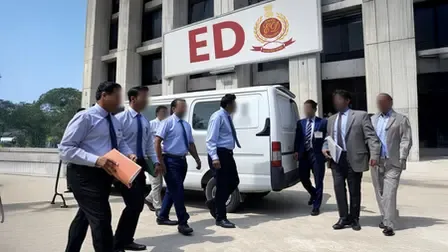
During the operations conducted on Thursday, ED teams confiscated numerous mobile devices, laptops, pen drives, servers containing digital archives, and incriminating financial documents.
Point of View
It's essential to remain focused on the implications of such corruption on medical education and public health. The actions taken by the Enforcement Directorate signal a commitment to accountability and transparency within the sector, a crucial step toward restoring the integrity of educational institutions in our nation.
NationPress
10 Oct 2026
Frequently Asked Questions
What is the reason for the ED raids?
The Enforcement Directorate conducted raids due to allegations of large-scale corruption in the inspection and approval processes of private medical colleges.
Which states were involved in the ED raids?
The raids took place in Andhra Pradesh, Telangana, Maharashtra, Madhya Pradesh, Chhattisgarh, Gujarat, Bihar, Uttar Pradesh, and Delhi.
What laws are being invoked in this investigation?
The investigation is being conducted under the Prevention of Money Laundering Act (PMLA) and relevant sections of the Prevention of Corruption Act.
What kind of fraud is being investigated?
The investigation includes allegations of staging frauds with ghost faculty, admitting fake patients, and bribing assessors for favorable reports.
What evidence was seized during the raids?
ED teams seized mobile phones, laptops, pen drives, servers, and incriminating documents related to financial transactions.