Gujarat drug bust: ₹25.65 crore heroin haul exposes Kandahar-to-Gujarat cartel
Synopsis
A cartel allegedly run by a recidivist with 45 years in cumulative sentences — already out on bail — was rebuilding its Gujarat drug network when police moved in. The ₹25.65 crore haul on the Ahmedabad-Vadodara Expressway traces back to a Kandahar supplier and a Delhi-to-Gujarat pipeline that reportedly uses women as couriers and festive season demand spikes as operational windows.
Key Takeaways
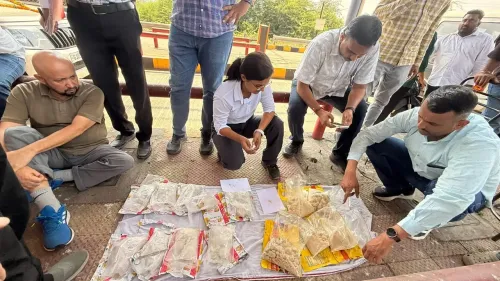
4.531 kg of heroin and 2.498 kg of mephedrone worth ₹25.65 crore were seized on the Ahmedabad-Vadodara Expressway on 21 October 2025 .
Three men arrested: Kafeel Ahmed alias Javed (alleged mastermind, South Delhi), Tifle Naukhez (South Delhi), and Mohammed Imran alias Raja (Meerut/South Delhi).
Heroin supply allegedly traced to Rahmat Gul of Kandahar, Afghanistan ; mephedrone sourced from Rajasthan .
Kafeel Ahmed carries combined prior sentences of 45 years across three narcotics cases but was reportedly out on bail.
Police are probing cross-border finance trails, possible cryptocurrency use, and coordinating with central agencies under the NDPS Act and PIT-NDPS Act .
Investigators are now pursuing named recipient Aslam of Rajkot and the broader supply and distribution chain across multiple states.
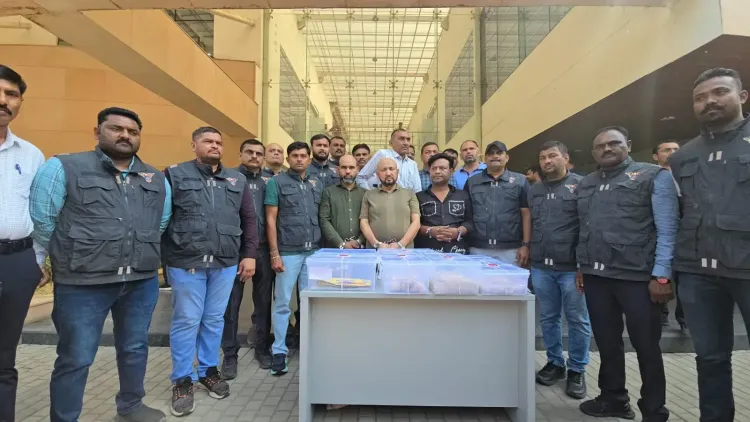
A drug trafficking network allegedly sourcing heroin from Kandahar, Afghanistan and using women and family members as cover for smaller deliveries was in the process of re-establishing its distribution chain in Gujarat when a joint police operation intercepted a vehicle on the Ahmedabad-Vadodara Expressway on 21 October 2025. The seizure — 4.531 kg of heroin and 2.498 kg of mephedrone (MD) — is valued at ₹25.65 crore in international markets.
The Seizure and Arrests
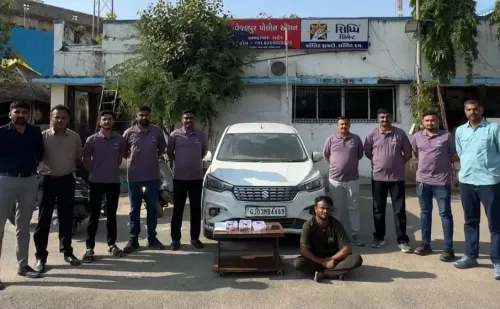
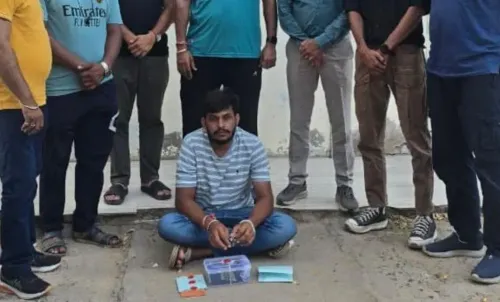
Ahmedabad and Surat Crime Branch teams intercepted a Mahindra XUV near the Ramol toll plaza on the expressway after months of coordinated surveillance. The contraband had been concealed inside packets of instant drinks and raisins. Three men were arrested at the scene: Kafeel Ahmed alias Javed, 59, and Tifle Naukhez, 44, both residents of South Delhi, and Mohammed Imran alias Raja, 42, of Meerut, Uttar Pradesh, who also held a South Delhi address.
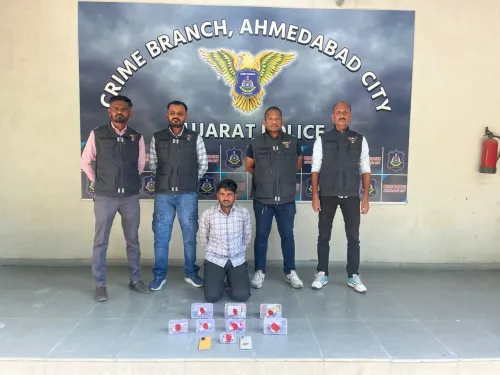
The Ahmedabad City Crime Branch placed the international market value of the seized drugs at ₹25,65,35,440. Including the vehicle and other items, the total estimated value of seized property was ₹25,71,99,340.
The Alleged Network: Kandahar to Gujarat
Police Commissioner Anupam Singh Gahlaut said the group typically deployed women and family members to move smaller narcotics quantities, insulating the principal figures from direct exposure. On this occasion, the arrested men had reportedly travelled to Gujarat in person because of the size of the consignment and their intent to rebuild local contacts after intensified police action had disrupted their operations.
The alleged supply chain originates with Rahmat Gul, identified by police as a Kandahar-based heroin source. According to officials, Tifle Naukhez allegedly procured heroin through this contact, with a supply chain intermediary delivering it at Lajpat Nagar, Delhi. Mephedrone was allegedly sourced separately from Rajasthan. Police said the drugs were destined for distribution at six or seven locations across Gujarat, with a named recipient, Aslam, identified as a resident of Rajkot.
Gahlaut noted that the consignment may have been timed for the upcoming festive season, including New Year celebrations on 31 December, as the group sought to reconnect with customers ahead of high-demand periods.
Border Routes and Drone Angle
Investigators are examining how heroin enters India, with focus on the Punjab and Rajasthan land borders. Drones have been documented as a method of cross-border narcotics delivery in northern India, though Gahlaut noted that Gujarat's marshy terrain makes aerial drops difficult. 'It is very difficult to drop [drugs] by drone in Gujarat because it is totally marshy land. Either they use the Rajasthan border or the Punjab border,' he said.
The network's interstate reach is broad: principal supply targets reportedly included Uttar Pradesh, Maharashtra, and Gujarat, while the accused had prior links to cases in Delhi, Punjab, and Rajasthan.
Accused's Prior Criminal Record
Police identified Kafeel Ahmed as the alleged mastermind of the operation, citing an extensive record in narcotics cases. According to officials, Kafeel was sentenced to 15 years in a 2014 Jaipur case involving 18 kg of charas, 20 years in a case involving 3 kg of alprazolam, and 10 years in a Gujarat case involving amphetamine — a combined sentence of 45 years, though police said he had been released on bail in those cases.
Tifle Naukhez had prior arrests in a 2014 heroin case near Amritsar, a 2019 Delhi Special Cell case involving 330 kg of heroin and Afghan nationals, and a 2021 case involving 54 kg of heroin. Mohammed Imran, who allegedly worked in catering and driving, is accused of helping transport the drugs in Tifle's vehicle.
What Investigators Are Pursuing Next
The investigation, which began when the Surat Crime Branch pursued leads from a case roughly 18 months ago, is now focused on tracing the Rajkot-based recipient Aslam, the Rajasthan source of the mephedrone, and others in the heroin supply chain. Police are also examining the network's finances — including cross-border payments and potential cryptocurrency use — under the NDPS Act and the PIT-NDPS Act, with coordination planned with central agencies and law enforcement across multiple states.
Point of View
With Gujarat and Maharashtra as key end-markets. Until financial investigations under PIT-NDPS lead to asset seizures that genuinely hurt the principals, operations like this one function as manageable risks for the network, not existential threats.
NationPress
22 Oct 2026
Frequently Asked Questions
What was seized in the Gujarat drug bust on 21 October 2025?
Police seized 4.531 kg of heroin and 2.498 kg of mephedrone from a Mahindra XUV near the Ramol toll plaza on the Ahmedabad-Vadodara Expressway. The Ahmedabad City Crime Branch valued the narcotics at ₹25,65,35,440 in international markets, with the total seized property — including the vehicle — estimated at ₹25,71,99,340.
Who are the three men arrested in the Ahmedabad drug case?
The arrested men are Kafeel Ahmed alias Javed (59, South Delhi), identified by police as the alleged mastermind; Tifle Naukhez (44, South Delhi), who allegedly procured the heroin through an Afghan contact; and Mohammed Imran alias Raja (42, Meerut/South Delhi), who allegedly assisted with transportation. All three have prior narcotics-related cases on record.
Where does the heroin in this network allegedly come from?
Police have traced the alleged heroin supply to Rahmat Gul, a resident of Kandahar, Afghanistan. According to investigators, the drug was transported into India through land borders — specifically the Punjab and Rajasthan routes — before being delivered to a distribution point in Lajpat Nagar, Delhi.
Why was the Gujarat network being rebuilt at this time?
Police Commissioner Anupam Singh Gahlaut said the accused were seeking to reconnect with local customers and revive distribution links that had been disrupted by intensified police action. The timing may also have been linked to anticipated demand during the upcoming festive season, including New Year celebrations on 31 December.
What legal action is being pursued beyond the arrests?
Investigators are examining the network's finances under the NDPS Act and the PIT-NDPS Act, including potential use of cryptocurrency for cross-border payments and assets allegedly acquired through drug proceeds. Police plan to coordinate with central agencies and law enforcement in other states to target the wider supply chain.