NCB Wins 15-Year Jail for 2 Drug Traffickers Caught at Ahmedabad Station

Synopsis
A Special NDPS Court in Ahmedabad sentenced two drug traffickers to 15 years of rigorous imprisonment after NCB officers caught them carrying 504 grams of Mephedrone off the Gujarat Express from Mumbai in November 2023 — exposing a growing synthetic drug pipeline between Maharashtra and Gujarat.
Key Takeaways
Sheikh Mohammad Sohel Abdul Kadar and Nadeem Sheikh , both residents of Ahmedabad, were sentenced to 15 years of rigorous imprisonment and fined Rs 2 lakh each by a Special NDPS Court on April 25, 2025 .
The duo was arrested by NCB Ahmedabad Zonal Unit on November 11, 2023 , at Kalupur Railway Station after arriving on the Gujarat Express (Train No.
22953) from Mumbai .
A total of 504 grams of Mephedrone (MD) — a commercial quantity under the NDPS Act — was recovered from their possession during the interception.
The conviction was backed by call detail records, travel records, hotel records, and financial transaction data , establishing a complete chain of interstate drug conspiracy.
A complaint was filed before the Special NDPS Court on May 4, 2024 , for offences under Sections 8(c), 22(c), and 29 of the NDPS Act, 1985 .
Citizens can report drug trafficking information to NCB via the MANAS Helpline at 1933 , with full confidentiality guaranteed.
A Special NDPS Court in Ahmedabad on Friday, April 25, 2025, handed down 15 years of rigorous imprisonment to two convicted drug traffickers, along with a fine of Rs 2 lakh each, marking a significant victory for the Narcotics Control Bureau (NCB), Ahmedabad Zonal Unit. The duo was arrested in November 2023 after being intercepted at one of the city's busiest transit hubs with a commercial quantity of the synthetic drug Mephedrone (MD). The verdict underscores India's hardening judicial stance on interstate narcotics networks.
How the Accused Were Caught
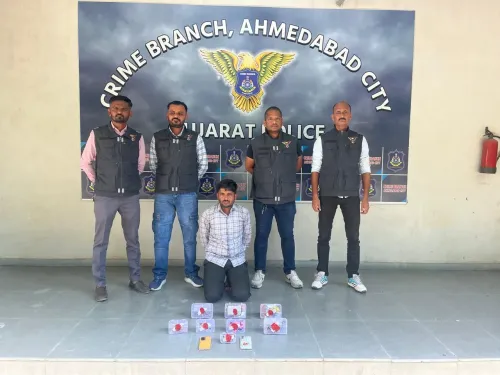
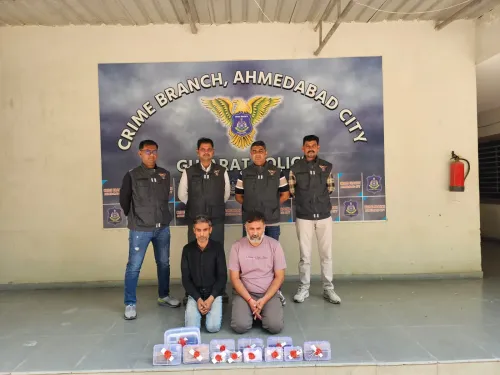
Acting on specific and credible intelligence, NCB officers intercepted the two accused — Sheikh Mohammad Sohel Abdul Kadar, a resident of Saiyed Wada, Khanpur, Ahmedabad, and Nadeem Sheikh, a resident of Golwad Lal Bunglow, Shahpur, Ahmedabad — on November 11, 2023, at Kalupur Railway Station, Ahmedabad.
The pair had arrived aboard Train No. 22953 (Gujarat Express) from Mumbai, a corridor that has increasingly drawn attention from anti-narcotics agencies as a conduit for synthetic drug movement. A search conducted in the presence of an independent Gazetted Officer led to the recovery of 504 grams of Mephedrone — classified as a commercial quantity under the NDPS Act — from their possession. Both accused were formally arrested the same day.
Evidence That Built the Case
During the investigation, both accused provided voluntary statements under Section 67 of the NDPS Act, disclosing their individual roles in the procurement and transportation of the contraband from Mumbai to Ahmedabad.
The NCB's case was further strengthened by a robust evidentiary chain comprising call detail records, travel records, hotel records, and financial transaction data, which collectively established a pattern of conspiracy and interstate drug trafficking. This multi-layered evidence strategy left little room for the defence to challenge the prosecution's narrative.
A formal complaint was filed before the Special NDPS Court, City Civil and Sessions Court, Ahmedabad, on May 4, 2024, for offences under Sections 8(c), 22(c), and 29 of the NDPS Act, 1985.
The Verdict and Its Legal Significance
After a detailed trial spanning nearly a year, the Special NDPS Court convicted both accused and sentenced them to 15 years of Rigorous Imprisonment along with a Rs 2 lakh fine each under the provisions of the NDPS Act, 1985 (as amended).
The sentencing reflects the seriousness with which Indian courts are treating synthetic drug offences. Mephedrone, commonly known as MD or meow meow, has emerged as one of the fastest-growing synthetic drugs in urban India, particularly across Gujarat, Maharashtra, and Rajasthan. Its relatively low cost and high addiction potential have made it a preferred commodity for street-level trafficking networks.
The Mumbai–Ahmedabad Drug Corridor: A Wider Pattern
This case is not an isolated incident. Gujarat has recorded a sharp rise in Mephedrone seizures over the past three years, with NCB and state ATS units flagging the Mumbai–Ahmedabad rail route as a key artery for synthetic drug movement. The Gujarat Express, in particular, has been cited in multiple drug interception cases, raising questions about whether systemic surveillance at key transit points needs to be institutionalised.
Notably, Gujarat's proximity to international maritime routes and its large port infrastructure has historically made it vulnerable to narcotics smuggling — a challenge that law enforcement agencies continue to grapple with despite high-profile seizures.
NCB's Appeal for Public Cooperation
The NCB has reiterated its appeal for active public cooperation in the ongoing fight against drug trafficking. Citizens with information related to the sale, transport, or trade of narcotics can report it through MANAS – National Narcotics Helpline at Toll-Free No. 1933. The agency has assured that the identity of all informers will be kept strictly confidential.
With this conviction secured, the NCB's Ahmedabad Zonal Unit is expected to intensify surveillance on interstate drug supply chains, particularly those leveraging the rail network between Maharashtra and Gujarat. Legal experts suggest that high-sentencing outcomes like this one serve as a critical deterrent and signal the judiciary's alignment with India's zero-tolerance policy on commercial drug trafficking.
Point of View
The recurring use of the Gujarat Express for narcotics transportation raises uncomfortable questions about whether railway surveillance infrastructure has kept pace with evolving trafficking methods. The 15-year sentence is exemplary, but the deeper challenge is dismantling the supply networks that keep replacing arrested couriers with new ones — a battle that courtroom victories alone cannot win.
NationPress
26 Sept 2026
Frequently Asked Questions
Who were the two drug smugglers sentenced by the Ahmedabad NDPS Court?
The two convicted drug traffickers are Sheikh Mohammad Sohel Abdul Kadar, a resident of Saiyed Wada, Khanpur, Ahmedabad, and Nadeem Sheikh, a resident of Golwad Lal Bunglow, Shahpur, Ahmedabad. Both were arrested by the NCB Ahmedabad Zonal Unit on November 11, 2023.
What drug was seized and how much was recovered?
NCB officers recovered 504 grams of Mephedrone (MD) from the possession of both accused — classified as a commercial quantity under the NDPS Act. Mephedrone is a synthetic stimulant drug increasingly prevalent in urban drug markets across Gujarat and Maharashtra.
What sentence did the Special NDPS Court hand down?
The Special NDPS Court in Ahmedabad sentenced both accused to 15 years of rigorous imprisonment along with a fine of Rs 2 lakh each. The conviction was secured under Sections 8(c), 22(c), and 29 of the NDPS Act, 1985.
Where were the accused caught and how did NCB nab them?
The accused were intercepted at Kalupur Railway Station, Ahmedabad, on November 11, 2023, after arriving on Train No. 22953 (Gujarat Express) from Mumbai. NCB acted on specific intelligence and conducted the search in the presence of an independent Gazetted Officer.
How can citizens report drug trafficking activity to NCB?
Citizens can report narcotics-related information through MANAS — the National Narcotics Helpline — at the toll-free number 1933. The NCB guarantees that the identity of all informers is kept strictly confidential.