Assam legislators hand over flood relief contributions to CM Fund
Synopsis
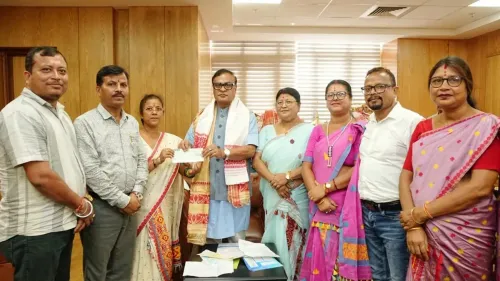
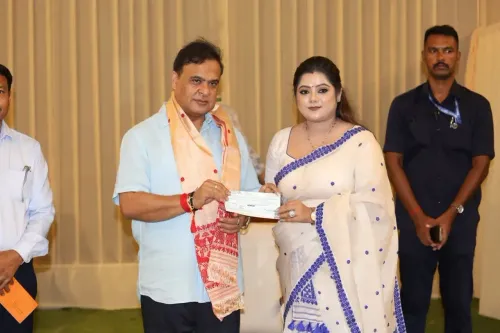
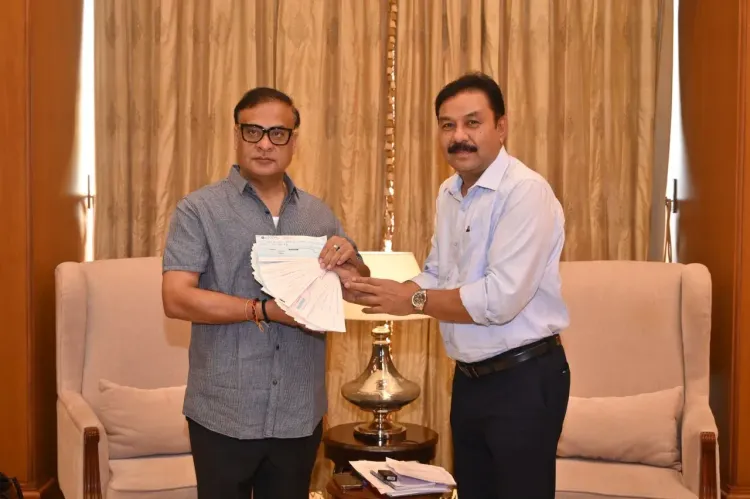
Assam's Assembly Speaker, three cabinet ministers, and two MLAs handed over contributions from individuals and institutions to the Chief Minister's Relief Fund on August 12, 2026. CM Himanta Biswa Sarma thanked the delegation for their solidarity with flood-affected families across the state.
Key Takeaways
Ranjeet Kumar Dass , Speaker of the Assam Legislative Assembly, led the delegation handing over contributions to the Chief Minister's Relief Fund .
Ministers Ashwini Ray Sarkar , Keshab Mahanta , and K.
Paul , along with MLAs Bikash Saikia and Bhupen Ray , participated in the handover.
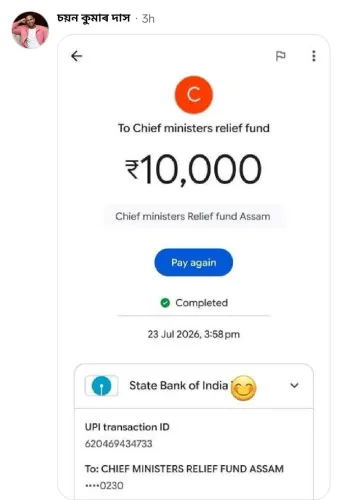
Contributions came from individuals, organisations, and institutions channelled through elected representatives.
CM Himanta Biswa Sarma expressed gratitude for the solidarity shown toward flood-affected families.
The Chief Minister's Relief Fund is Assam's primary fast-disbursement mechanism for disaster victims, activated during major flood seasons including 2022 and 2023.
When floodwaters rise across the Brahmaputra valley each monsoon season, Assam's political establishment has a well-worn ritual of solidarity — and on Wednesday, August 12, 2026, that ritual played out again. Senior legislators and ministers handed over contributions to the Chief Minister's Relief Fund, channelling donations from individuals, organisations, and institutions toward families battered by this year's floods.
Who stood at the handover — and who they represented
The delegation was led by Shri Ranjeet Kumar Dass, Speaker of the Assam Legislative Assembly — the highest constitutional officer of the state legislature. Joining him were cabinet ministers Shri Ashwini Ray Sarkar, Shri Keshab Mahanta, and Shri K. Paul, along with MLAs Shri Bikash Saikia and Shri Bhupen Ray. Together, they acted as conduits for a broader public — constituents, civic bodies, and institutions who chose to route their relief contributions through elected representatives.
CM Himanta's acknowledgement — and what the fund does
Chief Minister Dr. Himanta Biswa Sarma expressed gratitude for what the Chief Minister's Office of Assam described as 'solidarity with flood-affected families.' The Chief Minister's Relief Fund is the state's primary instrument for fast-tracking emergency assistance to disaster victims — bypassing the slower machinery of departmental budgets to reach affected households more directly. Assam governments have activated the fund during major flood seasons repeatedly, including in 2022 and 2023, making such contribution drives a recognisable feature of the state's annual disaster calendar.
The flood backdrop that makes this moment matter
Assam's geography is its vulnerability. The Brahmaputra and its tributaries swell every monsoon, inundating districts across the state and displacing hundreds of thousands of families. Elected representatives channelling donations to the relief fund is not symbolic theatre — it is one of the faster pipelines through which resources reach embankments, relief camps, and affected households. The participation of the Assembly Speaker alongside multiple ministers signals a cross-institutional push rather than a routine departmental exercise.
The real test, as always, lies ahead: how swiftly the collected funds are disbursed to the worst-hit districts, and whether supplementary budget allocations follow to address the longer tail of flood damage.
Point of View
Whose government has staked considerable political capital on disaster-response efficiency, visibly mobilising the legislature's top officer alongside the executive sends a message of coordinated state action. The broader pattern of annual contribution drives to the CM's Relief Fund also points to a structural gap: Assam's formal disaster-management budgets remain insufficient to absorb monsoon losses without supplementary public fundraising. Whether this cycle of reactive relief is eventually replaced by upstream flood-mitigation investment remains the defining policy question for the Brahmaputra valley.
NationPress
12 Aug 2026
Frequently Asked Questions
What is the Chief Minister's Relief Fund in Assam?
The Chief Minister's Relief Fund is a state-level fund used to provide fast, direct financial assistance to victims of natural disasters — particularly the annual monsoon floods — bypassing slower departmental budget processes.
Who handed over contributions to the CM Relief Fund on August 12, 2026?
Assembly Speaker Ranjeet Kumar Dass, ministers Ashwini Ray Sarkar, Keshab Mahanta, and K. Paul, and MLAs Bikash Saikia and Bhupen Ray handed over contributions on behalf of individuals, organisations, and institutions.
Who is Ranjeet Kumar Dass?
Ranjeet Kumar Dass is the Speaker of the Assam Legislative Assembly, the highest constitutional officer of the state legislature.
Why does Assam need a CM Relief Fund for floods every year?
Assam's Brahmaputra river and its tributaries flood large parts of the state every monsoon season, displacing hundreds of thousands of families. The CM's Relief Fund allows faster disbursement of emergency aid than regular government budget channels.
What did CM Himanta Biswa Sarma say about the flood relief contributions?
CM Himanta Biswa Sarma expressed gratitude to the legislators and ministers for their solidarity with flood-affected families in Assam.