2.4 Million Girls Barred from School in Afghanistan, UNESCO Warns
Synopsis
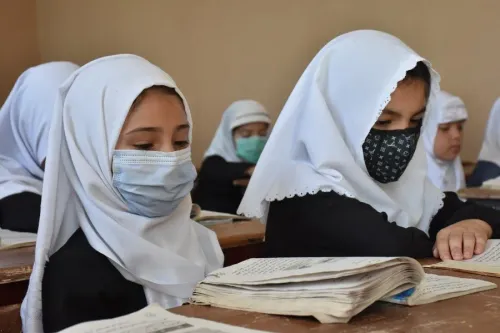
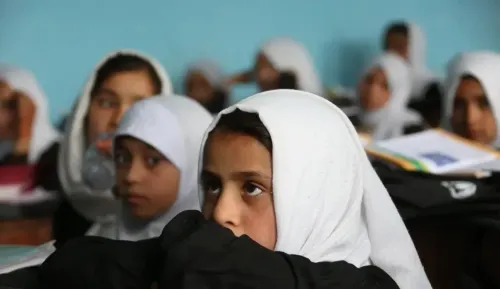
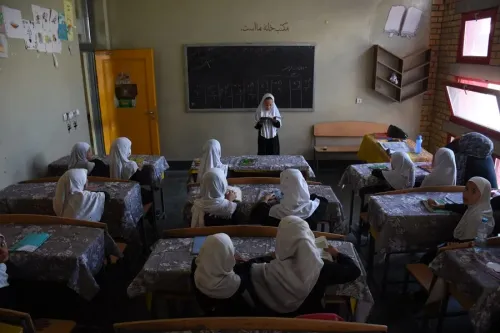
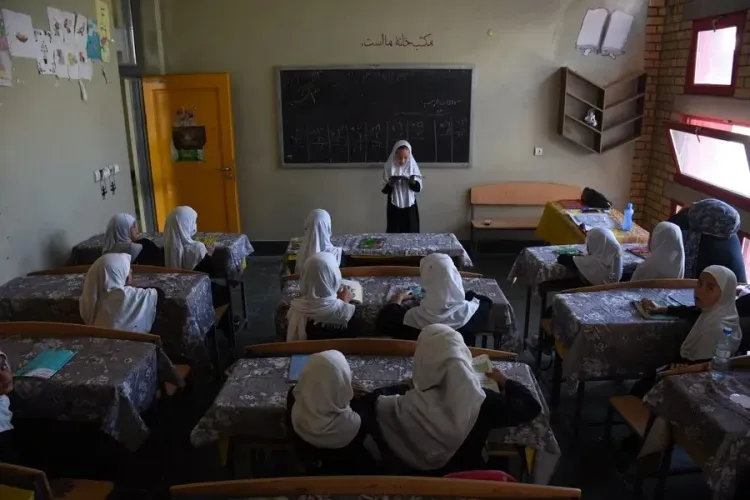
Afghanistan remains the only country in the world to formally ban girls from secondary education — a distinction UNESCO has now underscored with a stark figure: 2.4 million girls locked out of school as of 2026. Five years after the Taliban's return, nearly one million girls who had been enrolled in secondary school by 2021 have lost that access entirely, with no reversal in sight.
Key Takeaways
2.4 million girls in Afghanistan remain excluded from secondary education as of 2026 , according to UNESCO .
Afghanistan is the only country in the world to formally prohibit girls and women from education beyond the primary level.
Nearly one million girls were enrolled in secondary education by 2021 — all those gains have since been reversed by the Taliban.
The Taliban also banned female teachers from instructing boys, worsening teacher shortages nationwide.
UNESCO warns the crisis risks deepening poverty, with nearly half of Afghans already living below the poverty line.
UNESCO is offering alternative learning through community-based and literacy programmes, but says these cannot replace formal schooling.
An estimated 2.4 million girls in Afghanistan remain locked out of secondary education as of 2026, the United Nations Educational, Scientific and Cultural Organisation (UNESCO) has warned, calling the situation the most severe formal education ban in the world. The UN agency condemned the Taliban's restrictions as a grave violation of the fundamental human right to learn.
A Unique and Deepening Crisis
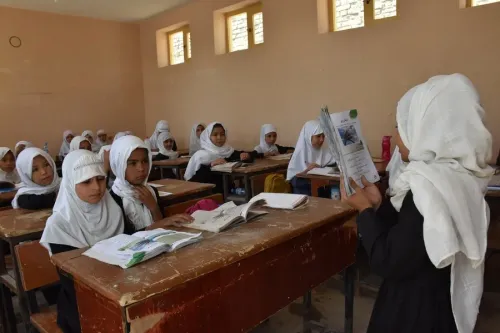
UNESCO underscored that Afghanistan is now the only country on earth to formally prohibit girls and women from accessing education beyond the primary level. The ban has been in place since 2021, when the Taliban returned to power, and has systematically reversed two decades of progress.
In a post on X, UNESCO stated: 'For five years now, Afghanistan is the only country in the world to formally prohibit access to education for girls and women beyond the primary level. As of 2026, an estimated 2.4 million girls remain excluded from secondary education. UNESCO condemns discrimination against women and girls and calls for the immediate and unconditional restoration of their right to education.'
Progress Undone in Five Years
The scale of regression is stark. Access to schooling for girls was severely limited as recently as 2001, yet by 2021, nearly one million girls had been enrolled in secondary education — a hard-won gain that has since been entirely reversed. The Taliban's takeover effectively erased a generation of educational advancement within months.
UNESCO further noted that the Taliban's decision to ban female teachers from instructing boys has compounded teacher shortages across the country, undermining the quality of education for all students — not just girls.
Economic and Social Consequences
The exclusion carries consequences far beyond the classroom. UNESCO warned that denying education to girls and women risks 'condemning Afghanistan to decades of lost potential, deepening poverty, and irreversible harm.' The agency noted that nearly half of all Afghans currently live below the poverty line, and restricting women's access to both education and employment further erodes households' ability to sustain themselves.
The impact on individual wellbeing is also severe. UNESCO flagged heightened risks of early marriage, deteriorating mental and physical health, and long-term social exclusion among girls denied formal schooling.
What UNESCO Is Doing
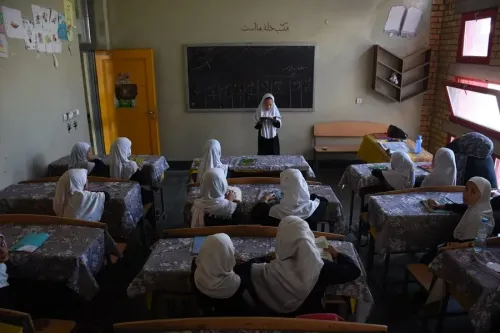
The agency said it remains committed to supporting Afghan girls and women through alternative learning pathways, including community-based education, literacy programmes, skills development initiatives, and psychosocial support. However, UNESCO was clear that these measures are not a substitute for formal schooling — they are stopgap interventions while the restrictions remain in place.
Taliban's Restrictions Since 2021
Since seizing power in August 2021, the Taliban has progressively tightened restrictions on women and girls. These include banning girls from secondary schools beyond Class 6, prohibiting women from enrolling in universities, and imposing sweeping curbs on employment and access to public spaces. UNESCO has called for the 'immediate and unconditional' reversal of all such restrictions.
With no sign of policy reversal from Kabul, the international community faces mounting pressure to find enforceable mechanisms — not just statements — to restore the rights of Afghan women and girls.
Point of View
But statements alone have not moved the Taliban in five years. The agency's own admission — that community-based alternatives 'cannot replace formal schooling' — exposes the limits of the international response. With nearly half of Afghanistan's population below the poverty line and women barred from both education and employment, the economic argument for reversal is as compelling as the moral one, yet neither has produced results. The world's silence on enforceable consequences, not its condemnations, is what the Taliban is counting on.
NationPress
26 Sept 2026
Frequently Asked Questions
How many girls are excluded from education in Afghanistan?
As of 2026, an estimated 2.4 million girls in Afghanistan remain excluded from secondary education, according to UNESCO. This makes Afghanistan the only country in the world to formally prohibit girls and women from accessing education beyond the primary level.
When did Afghanistan ban girls from secondary education?
The ban effectively began when the Taliban seized power in August 2021. Since then, girls have been prohibited from attending secondary schools beyond Class 6, and women have been barred from universities entirely.
What progress had been made before the Taliban takeover?
Access to girls' education was severely limited in 2001, but by 2021 nearly one million girls had been enrolled in secondary education — a gain of two decades that was reversed within months of the Taliban's return to power.
What is UNESCO doing to help Afghan girls?
UNESCO is supporting Afghan girls and women through community-based education, literacy and skills development programmes, and psychosocial support. The agency has acknowledged, however, that these initiatives cannot replace access to formal schooling.
What are the broader consequences of the education ban?
UNESCO warns the exclusion risks condemning Afghanistan to decades of lost economic potential and deepening poverty. It also increases the risks of early marriage and deteriorating mental and physical health among girls, while the ban on female teachers further undermines education quality for all students.