UN experts: Taliban gender repression deepens as Afghanistan nears 5-year mark
Synopsis
Five years after the Taliban retook Afghanistan, UN experts say gender-based repression has not plateaued — it has accelerated. A generation of girls has grown up without secondary school, decrees now permit domestic violence short of broken bones, and 2025 saw more public floggings than all prior Taliban years combined. The experts are now pushing for 'gender apartheid' to be codified as a distinct crime against humanity.
Key Takeaways
UN experts warned on 14 August 2026 that Taliban gender repression in Afghanistan has deepened as the country nears five years of Taliban rule.
A Taliban decree reportedly permits violence against women as long as it does not 'break bones' or 'leave obvious bruises.' In 2025 alone, more people were publicly flogged than in all previous years of Taliban rule combined.
In June 2026 , at least 30 women and girls were jailed in Herat for dress code violations; security forces killed at least two people when residents protested.
More than 17 million Afghans — over a third of the population — faced acute food insecurity last winter; nearly 4 million children were acutely malnourished.
Experts called for codification of 'gender apartheid' as a distinct crime against humanity and urged an end to forced deportations of Afghans.
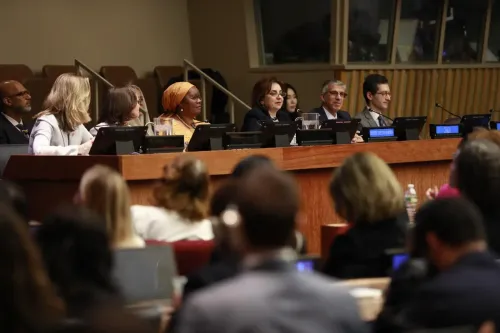
United Nations independent experts warned on 14 August 2026 that institutionalised gender-based repression has intensified under Taliban rule in Afghanistan, with mounting restrictions targeting women and girls as the country approaches nearly five years since the Taliban seized power. The statement, issued from Geneva, represents one of the starkest international rebukes of Taliban governance to date.
A Generation Locked Out of School
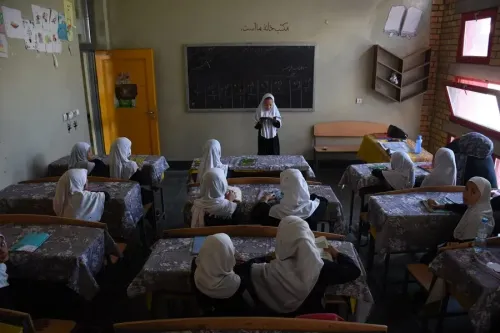
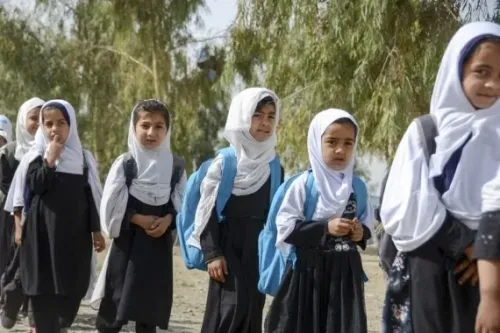
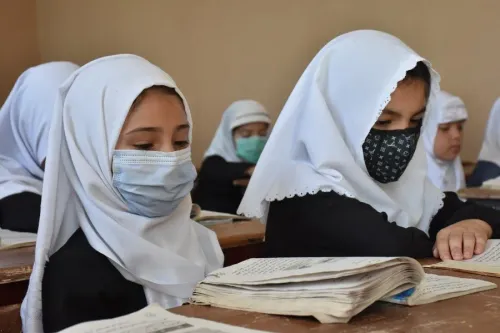
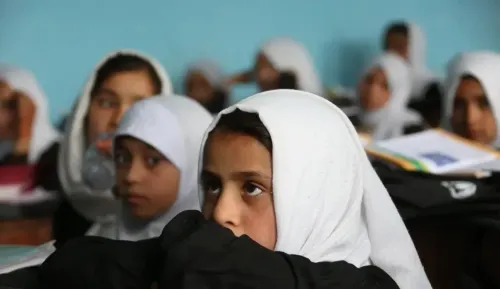
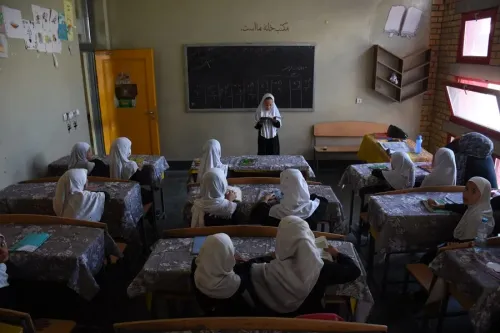
The experts drew particular attention to the toll on Afghan children. 'Five years may be a short period in the life of a country, but it is a long one in a child's life. A generation of girls has now been denied secondary education. A girl who was in grade six when the ban began is reaching adulthood without another day in school,' the experts said.
They quoted one Afghan girl directly: 'It has been five years since I was deprived of my education. It is deeply depressing to feel that you cannot move forward but are stuck where you were five years ago.' The education ban, in place since the Taliban's return to power, has effectively stripped an entire cohort of girls of their academic futures.
Crime Against Humanity and 'Gender Apartheid'
The experts reiterated their earlier legal characterisation, stating that the Taliban's 'intentional and targeted gender-based deprivation' of fundamental rights amounts to the 'crime against humanity of persecution' on gender grounds. They went further, arguing that because this repression forms part of an institutionalised system of discrimination, oppression, and domination, it can also be characterised as 'gender apartheid'.
The experts called on the global community to actively support the codification of gender apartheid as a distinct crime under international law — a push that has gained traction in some legal and diplomatic circles but has yet to achieve binding consensus.
Decrees Permitting Violence, Child Marriage
According to the experts, Taliban decrees have continued to erode the most basic protections for women. One decree on criminal court rules reportedly permits violence against women as long as it does not 'break bones' or 'leave obvious bruises.' A separate decree governing spousal separation implicitly permits child marriage and makes it extremely difficult for women and girls to escape abusive or forced unions. The experts noted these decrees also discriminate against religious minorities.
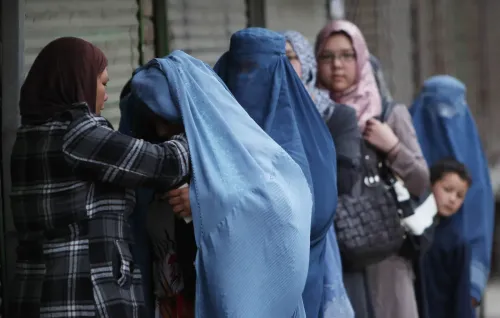
Enforcement has grown harsher as well. In 2025 alone, more people were publicly flogged than in all previous years of Taliban rule combined, according to the experts. In June 2026, at least 30 women and girls were jailed in Herat for allegedly violating the Taliban's dress code; when residents protested, security forces opened fire, killing at least two people, including a boy. Women have also reportedly been turned away from hospitals for lacking a male guardian or for their attire, the experts said.
Humanitarian Crisis Among World's Most Neglected
The experts decried a deepening humanitarian emergency, describing it as among the world's most severe and neglected. More than 17 million Afghans — over a third of the population — faced acute food insecurity during the past winter, with nearly 4 million children acutely malnourished, according to the statement. The crisis has been compounded by the loss of humanitarian funding, a faltering economy, drought, and mass returns of Afghan refugees from Pakistan and Iran.
The experts called on the international community to restore humanitarian funding and ensure that Afghan women — disproportionately harmed and largely barred from public life — can both deliver and receive assistance.
Forced Deportations and Protection Risks
The experts also warned against mass returns and forced deportations of Afghans, stating that such actions violate the international legal principle of non-refoulement. 'Afghanistan is not a safe country: mass returns and forced deportations in violation of the obligation of non-refoulement must stop, particularly for those who face heightened protection risks, including religious or ethnic minorities and LGBT persons,' they said.
With the five-year mark approaching, the experts' statement signals that international pressure on the Taliban is unlikely to ease — and that the legal and humanitarian arguments for stronger global action are growing more urgent by the month.
Point of View
Not merely headlines. Yet the gap between legal characterisation and enforcement remains vast: no binding international mechanism currently compels Taliban compliance, and the withdrawal of humanitarian funding by major donors has paradoxically weakened the West's leverage while deepening Afghan suffering. The forced deportation warning directed at Pakistan and Iran adds a regional dimension that mainstream coverage tends to underplay — those returns are feeding the very humanitarian crisis the same donors claim to be concerned about.
NationPress
28 Sept 2026
Frequently Asked Questions
What did UN experts say about Taliban rule in Afghanistan in August 2026?
UN independent experts warned on 14 August 2026 that institutionalised gender-based repression has deepened under Taliban rule in Afghanistan, as the country approaches five years since the Taliban took power. They cited education bans, decrees permitting domestic violence, mass floggings, and a worsening humanitarian crisis affecting over 17 million people.
What is 'gender apartheid' and why are UN experts calling for its codification?
Gender apartheid refers to an institutionalised system of gender-based discrimination, oppression, and domination — a legal characterisation the experts say applies to Afghanistan under Taliban rule. The experts are calling on the global community to codify gender apartheid as a distinct crime against humanity in international law, arguing that existing frameworks do not adequately capture the systematic nature of the repression.
How has Taliban enforcement of restrictions changed in recent years?
According to UN experts, enforcement has intensified significantly. In 2025 alone, more people were publicly flogged than in all previous years of Taliban rule combined. In June 2026, at least 30 women and girls were jailed in Herat for dress code violations, and security forces killed at least two people when residents protested.
How severe is the humanitarian crisis in Afghanistan?
The humanitarian crisis in Afghanistan is among the world's most severe and neglected, according to UN experts. More than 17 million Afghans — over a third of the population — faced acute food insecurity during the past winter, and nearly 4 million children were acutely malnourished. The crisis has been worsened by loss of international funding, drought, a weak economy, and mass refugee returns from Pakistan and Iran.
Why are UN experts warning against deporting Afghans back to Afghanistan?
UN experts say Afghanistan is not a safe country and that forced deportations violate the international legal principle of non-refoulement, which prohibits returning people to places where they face serious harm. They specifically flagged heightened risks for religious and ethnic minorities and LGBT persons, urging countries — particularly Pakistan and Iran — to halt mass returns.