Ahmedabad court jails Rajasthan man 15 years for designer drug smuggling
Synopsis
A Rajasthan bus driver caught carrying 185 grams of the synthetic designer drug 4-MEC on a Mandsaur-Ahmedabad route has been sentenced to 15 years' rigorous imprisonment by a Special NDPS Court in Ahmedabad — one of the more significant designer drug convictions in Gujarat, highlighting the NCB's sharpened focus on new psychoactive substances.
Key Takeaways
Dashrath Singh of Pratapgarh, Rajasthan , sentenced to 15 years' rigorous imprisonment and fined ₹2 lakh by a Special NDPS Court in Ahmedabad .
Singh was arrested on 30 January 2023 with 185 grams of 4-Methylethcathinone (4-MEC) while driving a bus from Mandsaur to Ahmedabad .
NCB filed the chargesheet on 25 July 2023 under Sections 8(c), 22(c), and 29 of the NDPS Act, 1985 .
4-MEC is a synthetic cathinone derivative classified as a dangerous psychotropic substance, with effects similar to amphetamines and high addiction potential.
The conviction is among the most significant designer drug cases decided by a Special NDPS Court in Gujarat .
A Special NDPS Court in Ahmedabad has sentenced a Rajasthan resident to 15 years' rigorous imprisonment for interstate smuggling of 185 grams of 4-Methylethcathinone (4-MEC), a synthetic psychotropic substance commonly referred to as a "designer drug", the Narcotics Control Bureau (NCB) said on Saturday, 2 May. The court also imposed a penalty of ₹2 lakh on the convicted accused.
The Arrest and Seizure
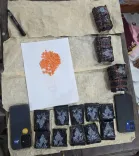
Acting on specific intelligence, officers of the NCB Ahmedabad Zonal Unit intercepted and arrested Dashrath Singh, a resident of Pratapgarh, Rajasthan, on 30 January 2023. Singh was apprehended while driving a bus on the Mandsaur-to-Ahmedabad route, at Bordi Mill Compound Parking, Hirabhai Market, Kankaria Road, Ahmedabad. Search proceedings led to the recovery of 185 grams of 4-MEC from his conscious and exclusive possession, following which he was formally arrested the same day.
Chargesheet and Conviction
The NCB filed a chargesheet before the City Civil and Sessions Court, Ahmedabad, on 25 July 2023, for offences punishable under Sections 8(c), 22(c), and 29 of the Narcotic Drugs and Psychotropic Substances (NDPS) Act, 1985. The court found Dashrath Singh guilty on all counts, handing down the 15-year rigorous imprisonment sentence along with the financial penalty.
What Is 4-MEC and Why It Is Dangerous
According to the NCB, 4-Methylethcathinone (4-MEC) is a synthetic stimulant belonging to the class of new psychoactive substances known as cathinone derivatives. It is typically found in powder or crystalline form and is abused for stimulant and euphoric effects similar to amphetamines. However, its consumption reportedly carries serious health risks, including anxiety, agitation, elevated heart rate, hypertension, and a high potential for addiction. Owing to these dangers, 4-MEC is classified as a dangerous psychotropic substance under Indian law.
NCB's Statement on the Verdict
The NCB stated that "meticulous investigation and diligent prosecution" by its Ahmedabad Zonal Unit ensured the delivery of justice, adding that the conviction reinforces the agency's commitment to protecting communities from the harmful consequences of narcotic drug abuse. Notably, this case underscores a growing enforcement focus on designer drugs and new psychoactive substances, which have increasingly surfaced in interstate drug trafficking networks across India.
Broader Context
Designer drugs such as 4-MEC often evade early detection because they are synthesised to mimic the effects of controlled substances while initially falling outside existing legal schedules. Indian enforcement agencies have stepped up scrutiny of such substances in recent years, with courts increasingly imposing stringent sentences under the NDPS Act to act as a deterrent. This conviction is among the more significant designer drug cases to be decided by a Special NDPS Court in Gujarat. The case is expected to serve as a precedent in future prosecutions involving synthetic cathinones and similar new psychoactive substances.
Point of View
Or whether enforcement will continue to play catch-up.
NationPress
1 Oct 2026
Frequently Asked Questions
Who is Dashrath Singh and what was he convicted for?
Dashrath Singh is a resident of Pratapgarh, Rajasthan, convicted by a Special NDPS Court in Ahmedabad for interstate smuggling of 185 grams of 4-Methylethcathinone (4-MEC), a designer drug. He was sentenced to 15 years' rigorous imprisonment and fined ₹2 lakh under the NDPS Act, 1985.
What is 4-MEC or 4-Methylethcathinone?
4-Methylethcathinone (4-MEC) is a synthetic stimulant belonging to the cathinone derivatives class of new psychoactive substances, commonly called designer drugs. It produces effects similar to amphetamines and carries serious health risks including anxiety, hypertension, and addiction, according to the NCB.
When and where was Dashrath Singh arrested?
Singh was arrested on 30 January 2023 at Bordi Mill Compound Parking, Hirabhai Market, Kankaria Road, Ahmedabad, while driving a bus from Mandsaur to Ahmedabad. NCB Ahmedabad Zonal Unit officers acted on specific intelligence before intercepting him.
Under which sections of the NDPS Act was Singh charged?
The NCB filed a chargesheet under Sections 8(c), 22(c), and 29 of the Narcotic Drugs and Psychotropic Substances (NDPS) Act, 1985. The chargesheet was filed on 25 July 2023 before the City Civil and Sessions Court, Ahmedabad.
Why are designer drugs like 4-MEC considered particularly dangerous?
Designer drugs are synthesised to mimic the effects of controlled substances, often evading early legal scheduling. 4-MEC specifically can cause anxiety, agitation, increased heart rate, hypertension, and carries a high risk of addiction, making it a dangerous psychotropic substance under Indian law.