CM Bhupendra Patel Visits Ognaj Anganwadi on Amit Shah's Birthday
Synopsis
Gujarat Chief Minister Bhupendra Patel visited Anganwadi Centre-6 in Ognaj, Ahmedabad, distributing ration kits to parents as part of welfare drives marking Union Home Minister Amit Shah's birthday, linking child nutrition to the Viksit Bharat vision.
Key Takeaways
CM Bhupendra Patel visited Anganwadi Centre-6, Ognaj, Ahmedabad on 22 October 2026 as part of birthday-linked welfare activities for Amit Shah .
Ration kits were distributed to parents of Anganwadi children to support child nutrition and health.
The activity falls under Integrated Child Development Services (ICDS) , a scheme running since 1975 to combat child malnutrition.
Patel linked the outreach to POSHAN Abhiyaan goals and the Viksit Bharat / Atmanirbhar Bharat national vision.
The visit reflects the BJP 's established practice of converting leaders' personal occasions into structured public-service drives.
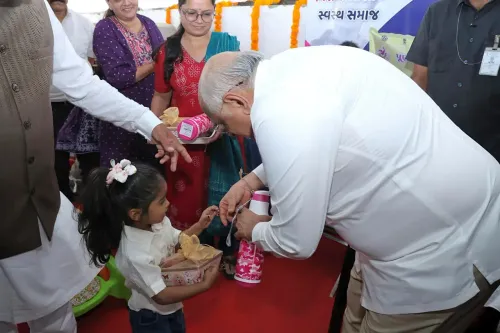
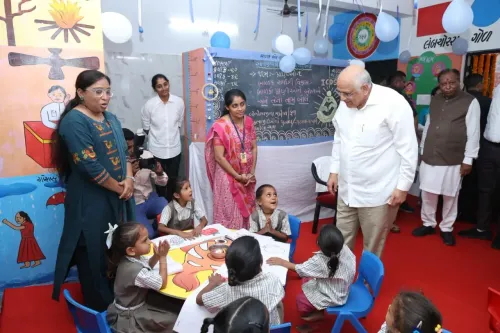
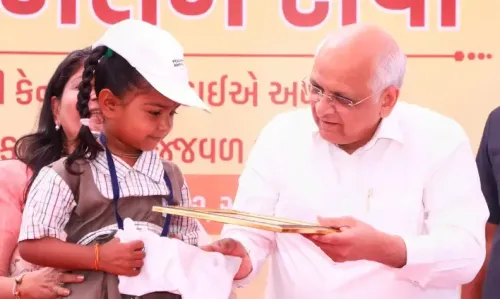
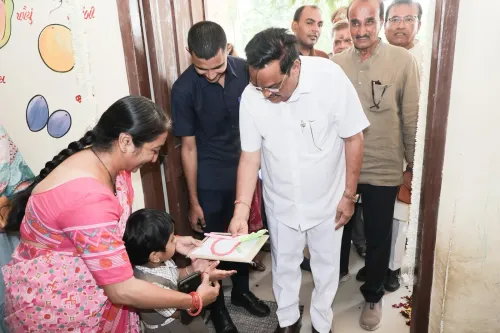
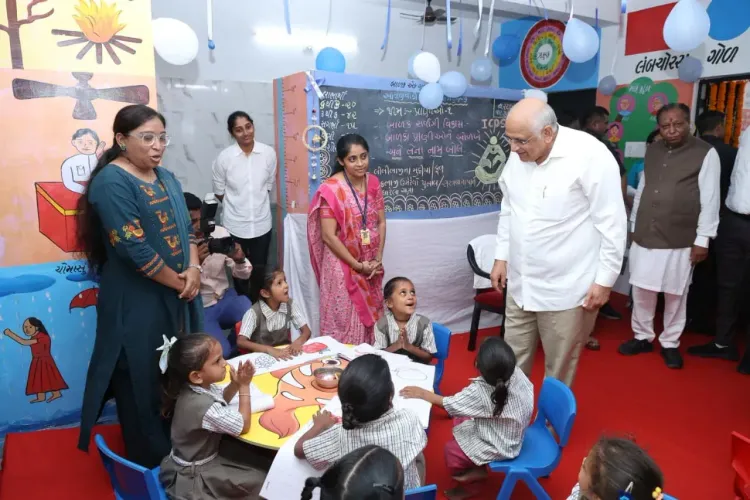
On the birthday of Union Home Minister Amit Shah, Gujarat Chief Minister Bhupendra Patel took welfare outreach to the ground level — visiting Anganwadi Centre-6 at Ognaj, Ahmedabad, on Thursday, 22 October 2026, and distributing ration kits to parents of young children enrolled there.
Patel, writing in Gujarati, explained the purpose plainly: 'બાળકોને પૌષ્ટિક આહાર મળી રહે' — 'so that children receive nutritious food and their health is preserved.' The kits were handed to parents with the express intent of ensuring that every child at the centre stays nourished and healthy.
Amit Shah's Birthday Marked Through Service, Not Celebration
The visit is part of a broader pattern among BJP leaders of channelling milestone occasions — birthdays, anniversaries — into structured welfare drives rather than conventional festivities. Patel framed the day explicitly as a 'seva utsav,' with service projects of various kinds carried out under the #HBDayAmitShah banner.
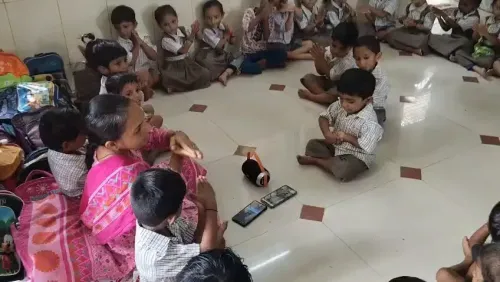
The choice of an Anganwadi as the venue carries political and programmatic weight. These centres, run under the Integrated Child Development Services (ICDS) scheme launched in 1975, are the state's frontline infrastructure for child nutrition, health monitoring, and pre-school education for children under six. Distributing ration kits through them plugs directly into an existing pipeline rather than creating a parallel event.
Nutrition as a Nation-Building Argument
Patel connected the day's activity to the larger vocabulary of Viksit Bharat and Atmanirbhar Bharat, arguing that a self-reliant India cannot be built on undernourished children. 'For building a developed and self-reliant India, it is essential that our children are well-nourished,' he wrote.
The framing echoes POSHAN Abhiyaan, the national nutrition mission launched in 2018, which set targets to reduce stunting, under-nutrition, and anaemia among children, adolescent girls, and women. Gujarat has been an active implementation state under the programme, with Anganwadi workers serving as the last-mile delivery agents for supplementary nutrition.
Patel added that welfare activities focused on child nutrition can help build 'greater social awareness about the healthy future of the coming generation' — signalling that the event was designed as much for community visibility as for direct relief.
When a state's top elected official shows up at an Anganwadi with ration kits, it puts a spotlight on infrastructure that rarely gets prime-time attention. Whether that spotlight translates into sustained policy momentum for Gujarat's nutrition indicators is the question worth watching.
Point of View
The party grounds partisan outreach in a non-partisan development goal, making it harder to critique without appearing to oppose child welfare. The move also reminds voters of the state's last-mile nutrition infrastructure at a time when Gujarat's ICDS performance remains under scrutiny in national rankings. It is soft power delivered through a ration kit.
NationPress
22 Oct 2026
Frequently Asked Questions
Why did CM Bhupendra Patel visit an Anganwadi on 22 October 2026?
CM Patel visited Anganwadi Centre-6 in Ognaj, Ahmedabad, as part of welfare service activities organised to mark the birthday of Union Home Minister Amit Shah, distributing ration kits to children's parents.
What is an Anganwadi centre and what does it do?
Anganwadi centres are government-run facilities under the Integrated Child Development Services (ICDS) scheme, providing supplementary nutrition, health check-ups, and pre-school education to children under six years of age.
What is POSHAN Abhiyaan and how does it relate to this event?
POSHAN Abhiyaan, launched in 2018, is India's flagship national nutrition mission targeting reduction of stunting, under-nutrition, and anaemia in children and women. The Anganwadi ration kit distribution aligns with the mission's last-mile delivery goals.
What is the BJP's 'seva utsav' practice on leaders' birthdays?
Several BJP leaders mark personal milestones — birthdays or anniversaries — by organising structured welfare drives such as blood donation camps, health check-ups, and food distribution, framing celebration as community service.
How does Viksit Bharat connect to child nutrition schemes?
Viksit Bharat is the government's vision of a developed India by 2047. CM Patel argued that a well-nourished child population is foundational to realising this goal, linking Anganwadi nutrition work to long-term national development.