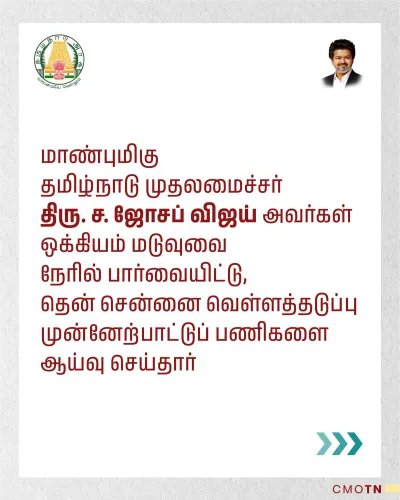
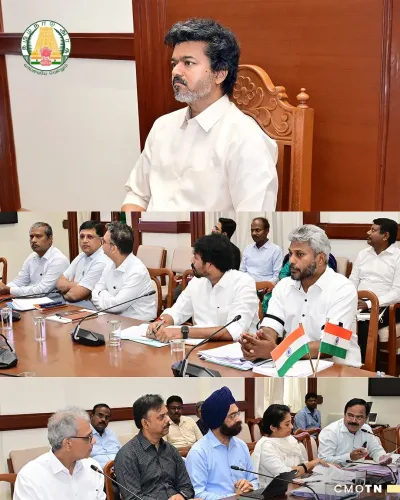
Tamil Nadu CM Vijay Reviews Northeast Monsoon Readiness at Chennai War Room
Synopsis
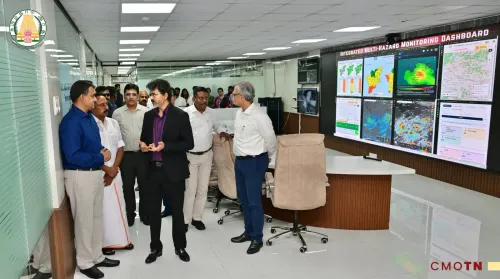
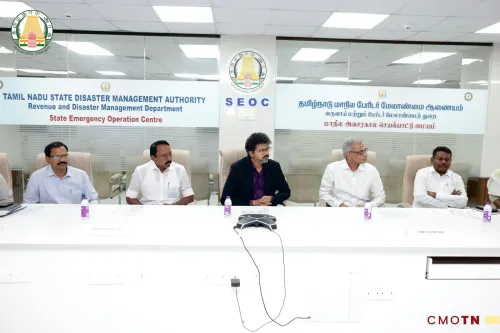
Chief Minister C. Joseph Vijay visited Tamil Nadu's State Emergency Operations Centre at Ezhilagam on 22 October 2026, inspecting Northeast Monsoon precautionary measures across districts and holding a live video conference with District Collectors to review ground-level readiness.
Key Takeaways
Joseph Vijay personally visited the State Emergency Operations Centre at Ezhilagam, Chennai on 22 October 2026 .
The inspection focused on precautionary and coordination measures in districts other than Chennai ahead of the Northeast Monsoon.
The Chief Minister conducted a video conference with District Collectors to audit preparedness in real time.
The Revenue Administration and Disaster Management Department oversees Tamil Nadu's seasonal flood response and operates the State Emergency Operations Centre.
Tamil Nadu's Northeast Monsoon season runs from October to December and is the state's primary rainy season, historically triggering flooding and cyclonic events.
Annual pre-monsoon reviews at the SEOC are established state policy; this year's was led directly by the Chief Minister.
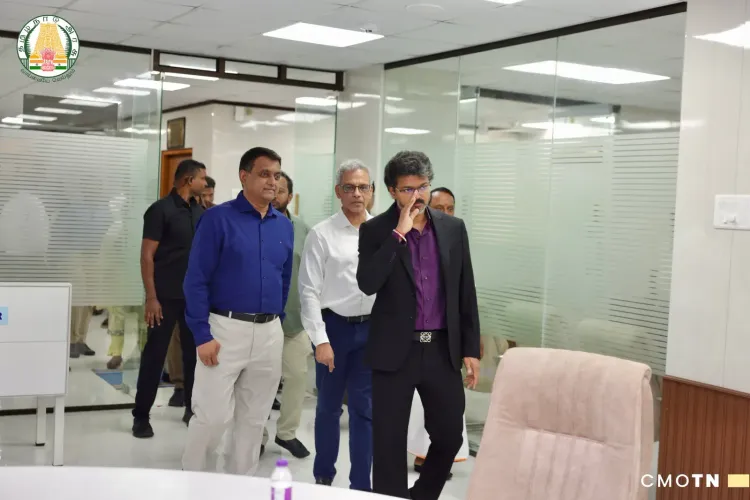
With the Northeast Monsoon bearing down on Tamil Nadu's coast, Chief Minister C. Joseph Vijay walked into the State Emergency Operations Centre at Ezhilagam, Chennai, on 22 October 2026 — not for a photo opportunity, but to stress-test the state's flood preparedness district by district.
Inside the State Emergency Operations Centre
The visit took the CM to the command hub of the Revenue Administration and Disaster Management Department, the agency that coordinates Tamil Nadu's response to seasonal flooding and cyclonic events. Vijay personally inspected the precautionary and coordination measures rolled out across districts beyond Chennai — a deliberate focus on the interior and coastal belts that can be overlooked when the capital city dominates disaster headlines.
The review did not stop at the operations room. The Chief Minister convened a video conference with District Collectors across the state to hear first-hand accounts of readiness — equipment deployed, drainage cleared, relief camps identified, communities alerted.
Why October Sets the Clock Ticking
Tamil Nadu's Northeast Monsoon, which runs from October through December, is not a routine drizzle. It is the primary rainy season for the state — the system that historically fills reservoirs, but also floods low-lying neighbourhoods, breaches rivers, and, in its worst years, paralyses cities. Each October, the state's disaster management machinery is expected to be fully activated before the first heavy bands of rain make landfall.
Successive Tamil Nadu governments have institutionalised pre-monsoon reviews at the State Emergency Operations Centre as standard operating procedure. The Chief Minister's direct inspection signals that this year's activation is being driven from the top of the political chain, not delegated to bureaucratic routine alone.
District Collectors in the Hot Seat
The video conference format matters. Holding collectors accountable in a live, recorded session with the CM present compresses the usual bureaucratic buffer — there is no room for optimistic paperwork when a district's actual readiness is being audited in real time. The emphasis on districts other than Chennai suggests an awareness that flood-prone zones outside the capital — coastal districts, delta regions, and inland low-lying areas — require equal, if not greater, attention.
What emerges from these reviews — additional resource allocations, specific precautionary orders, or emergency deployment of personnel — will define how prepared Tamil Nadu is when the monsoon peaks in November.
Point of View
Top-down accountability in disaster preparedness. The deliberate focus on districts outside Chennai reflects an acknowledgment of a long-standing criticism: that state resources and attention disproportionately cluster around the capital during monsoon emergencies. Holding District Collectors to a live video conference review compresses bureaucratic insulation and places political pressure on field officials before, not after, a disaster. In the context of Tamil Nadu's history of devastating Northeast Monsoon floods, this kind of pre-season activation from the very top is both procedurally sound and politically strategic.
NationPress
22 Oct 2026
Frequently Asked Questions
Why did Tamil Nadu CM Vijay visit the State Emergency Operations Centre?
CM C. Joseph Vijay visited the State Emergency Operations Centre at Ezhilagam, Chennai, on 22 October 2026 to personally inspect precautionary and coordination measures taken across Tamil Nadu's districts in preparation for the Northeast Monsoon season.
What is the Northeast Monsoon and why does it matter for Tamil Nadu?
The Northeast Monsoon is Tamil Nadu's primary rainy season, running from October to December. It brings heavy rainfall that fills the state's reservoirs but also causes severe flooding and cyclonic activity in coastal and inland districts.
What is the State Emergency Operations Centre in Tamil Nadu?
The State Emergency Operations Centre, located at Ezhilagam in Chennai, is the command hub of the Revenue Administration and Disaster Management Department, responsible for coordinating the state's response to floods, cyclones, and other disasters.
Did CM Vijay meet District Collectors directly during the review?
Yes. Chief Minister Vijay held a video conference with District Collectors across Tamil Nadu to hear direct accounts of the precautionary measures being implemented at the district level ahead of the Northeast Monsoon.
Is this kind of pre-monsoon review standard practice in Tamil Nadu?
Yes. Tamil Nadu governments have institutionalised annual pre-monsoon reviews at the State Emergency Operations Centre as standard operating procedure each October before the Northeast Monsoon season intensifies.