Tamil Nadu CM Vijay inaugurates hospital blocks worth ₹210 crore
Synopsis
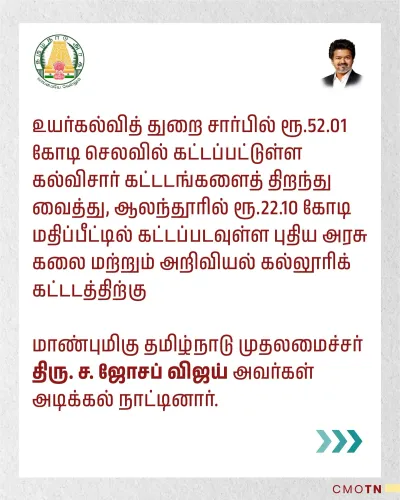
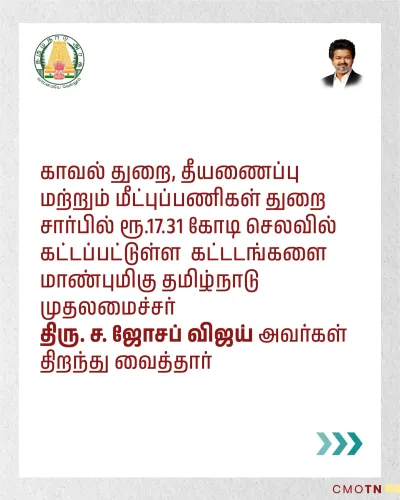
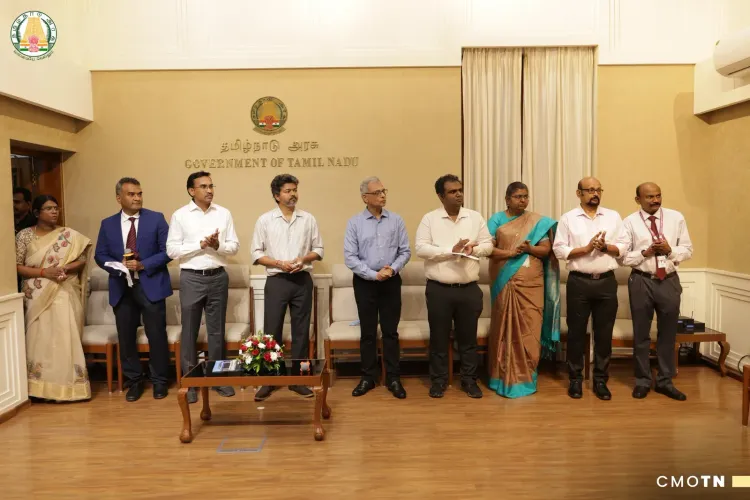
Chief Minister C. Joseph Vijay on 18 November 2026 inaugurated additional government hospital buildings and five Critical Care blocks across Tamil Nadu, built at a total cost of ₹210.14 crore, in a ceremony at the Chennai Secretariat.
Key Takeaways
₹210.14 crore spent on the latest tranche of government hospital construction in Tamil Nadu.
Five dedicated Critical Care Unit blocks inaugurated, expanding ICU-grade infrastructure beyond large urban teaching hospitals.
Additional buildings at multiple government hospitals increase general ward and outpatient capacity.
Projects executed by the Department of Health and Family Welfare , Government of Tamil Nadu.
Inauguration held by CM C.
Joseph Vijay at the Secretariat, Chennai on 18 November 2026 .
Operationalisation — staffing and equipping the new blocks — remains the key next step.
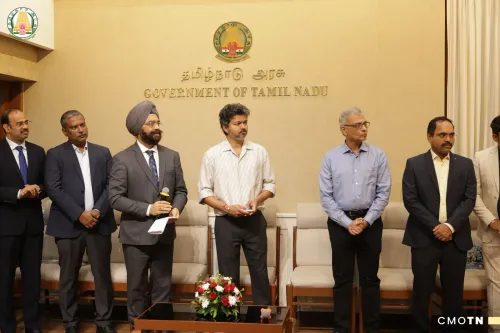
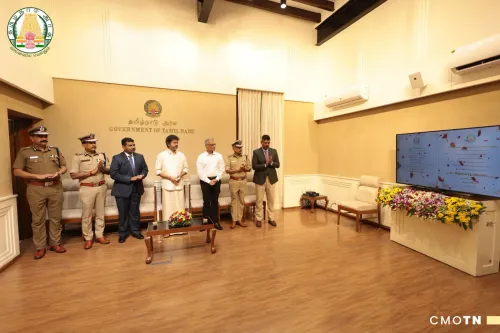
Thirty-one government hospitals across Tamil Nadu got a critical upgrade on Wednesday, 18 November 2026, as Chief Minister C. Joseph Vijay inaugurated a fresh tranche of additional buildings and five dedicated Critical Care blocks — all constructed at a combined cost of ₹210.14 crore. The ceremony was held at the Secretariat in Chennai, with the projects delivered under the Department of Health and Family Welfare.
What ₹210 crore buys in Tamil Nadu's public health network
The two categories of infrastructure inaugurated today serve distinct but complementary needs. The additional buildings expand general ward and outpatient capacity at existing government hospitals — directly addressing overcrowding that has long strained facilities in district and taluk towns. The five Critical Care Unit (CCU) blocks go further: they bring structured intensive-care infrastructure to hospitals that previously lacked dedicated ICU-grade space, a gap that becomes fatal during medical emergencies and mass-casualty events.
Critical care capacity in the public sector has historically been concentrated in large teaching hospitals in Chennai, Madurai, and Coimbatore. Pushing CCU-grade blocks into district-level government hospitals marks a meaningful step toward decentralising life-saving care.
Tamil Nadu's pattern of phased hospital construction
This inauguration fits a recognisable cadence in Tamil Nadu's health infrastructure story. The state government has periodically bundled completed construction projects — additional wards, operation theatres, and specialised blocks — into single high-visibility inauguration events. The approach lets the administration demonstrate tangible outcomes while signalling continued investment in the public health pipeline.
The Department of Health and Family Welfare, which owns and operates the state's network of government hospitals, has been the executing agency for this tranche. How quickly the new blocks are staffed with doctors, nurses, and equipment will determine whether today's ribbon-cutting translates into real patient benefit — a question that the next health budget session is expected to address.
Patients in government hospitals: who gains most
Tamil Nadu's government hospital network serves tens of millions of patients annually, the overwhelming majority from low-income and rural households for whom private healthcare is financially out of reach. Additional bed strength reduces referral pressure on already-saturated tertiary centres, while the new Critical Care blocks mean patients suffering cardiac events, strokes, or severe trauma will not automatically face a long transfer to a distant city hospital.
The scale of the investment — over two hundred crore rupees in a single inauguration — underscores the state's stated commitment to keeping public healthcare functional and expanding at the district level.
The buildings are open; the harder work of filling them with people, equipment, and round-the-clock care begins now.
Point of View
The investment is substantive, but the real policy test is downstream: whether recruitment, equipment procurement, and operational budgets keep pace with the new infrastructure. Tamil Nadu has a track record of bundling construction milestones into high-visibility events; sustained outcomes depend on the next health budget translating today's buildings into staffed, functional wards. For CM Vijay, the optics are straightforwardly positive — a large, tangible welfare delivery that cuts across income lines and geographies.
NationPress
18 Nov 2026
Frequently Asked Questions
What did Tamil Nadu CM Joseph Vijay inaugurate on 18 November 2026?
CM C. Joseph Vijay inaugurated additional buildings and five Critical Care Unit blocks constructed in government hospitals across Tamil Nadu at a total cost of ₹210.14 crore, in a ceremony held at the Chennai Secretariat.
How much did the new Tamil Nadu government hospital buildings cost?
The additional hospital buildings and five Critical Care blocks were built at a combined cost of ₹210 crore and 14 lakh rupees (₹210.14 crore).
Which department is responsible for the new hospital infrastructure in Tamil Nadu?
The projects were executed on behalf of the Department of Health and Family Welfare , Government of Tamil Nadu, which oversees the state's public hospital network.
What are Critical Care blocks in a government hospital?
Critical Care blocks house Intensive Care Units (ICUs) and high-dependency wards equipped to treat patients with severe or life-threatening conditions such as cardiac events, strokes, or major trauma — care that was previously available mainly at large urban teaching hospitals.
How does this hospital expansion benefit ordinary patients in Tamil Nadu?
The new buildings add ward and outpatient capacity to reduce overcrowding, while the five Critical Care blocks mean patients in district towns can receive intensive-care treatment locally rather than being transferred to distant city hospitals.