CM Yogi: SPOT Commandos Train With NSG, BSF in Anti-Terror Drills

Synopsis
Chief Minister Yogi Adityanath declares no terrorist can hide behind dark web or crypto wallets as Uttar Pradesh's SPOT Commandos conduct joint counter-terrorism and Counter-IED exercises with NSG, BSF and CISF, deepening inter-agency preparedness.
Key Takeaways
CM Yogi Adityanath stated that no terrorist or traitor can now hide behind the dark web or crypto wallets.
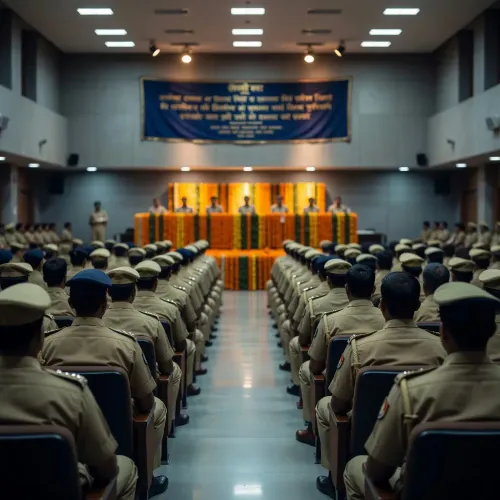
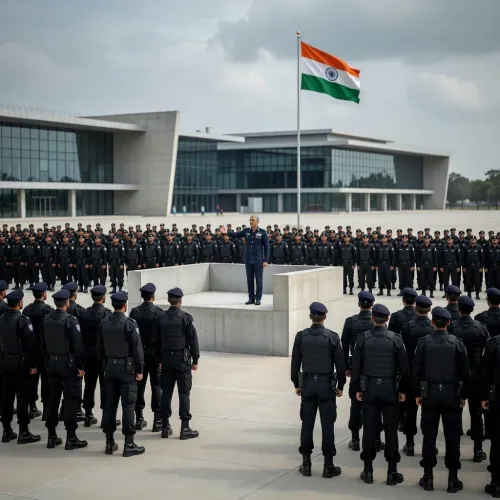
SPOT Commandos of the Uttar Pradesh Police are conducting joint exercises with NSG, BSF and CISF .
The exercises named are 'Agnipariksha' (joint counter-terrorism training) and the National Joint Counter-IED Exercise .
Joint counter-terrorism drills between state police and central forces were institutionalised after the 2008 Mumbai attacks to close inter-agency coordination gaps.
The exercises build tactical interoperability so state and central forces can respond seamlessly to real-world emergencies.
The explicit reference to dark web and cryptocurrency reflects India's broader effort to counter technology-enabled terror financing.
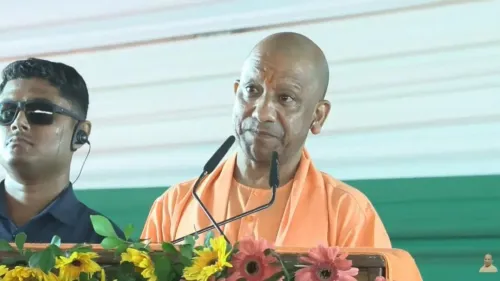
No terrorist hiding behind a dark web node or a crypto wallet is beyond reach — that is the warning Chief Minister Yogi Adityanath issued on Wednesday, 18 November 2026, as the Chief Minister's Office of Uttar Pradesh highlighted the state's intensifying counter-terrorism preparedness through joint exercises with India's elite central forces.
The post, shared by the CMO, quotes CM Yogi Adityanath directly: 'अब कोई आतंकी या देशद्रोही डार्क वेब या क्रिप्टो वॉलेट के पीछे नहीं छिप सकता' — 'No terrorist or traitor can now hide behind the dark web or a crypto wallet.' It names two specific exercises: the 'Agnipariksha' (Agnipariksha — 'trial by fire') joint counter-terrorism training exercise and the National Joint Counter-IED Exercise, both conducted with the National Security Guard (NSG), the Border Security Force (BSF), and the Central Industrial Security Force (CISF).
SPOT Commandos and the Forces They Train Alongside
The SPOT Commandos — Uttar Pradesh Police's dedicated special operations unit for high-risk counter-terrorism tasks — are at the centre of these drills. Their training partners are not incidental choices. The NSG, established in 1984, is India's apex counter-terrorism strike force. The BSF anchors border security and internal security operations, while the CISF guards critical infrastructure across the country. When a state police unit trains alongside all three simultaneously, it signals a deliberate push for interoperability — the ability to plug seamlessly into a national response grid the moment a crisis erupts.
That push has a clear historical root. Regular joint counter-terrorism and counter-IED exercises between state police and central armed police forces gained institutional momentum after the 2008 Mumbai attacks exposed dangerous gaps in inter-agency coordination. Uttar Pradesh, with its dense population, strategic geography, and history of terrorism-related incidents, has since been among the states most invested in closing those gaps.
Tech-Enabled Terror and the New Threat Vocabulary
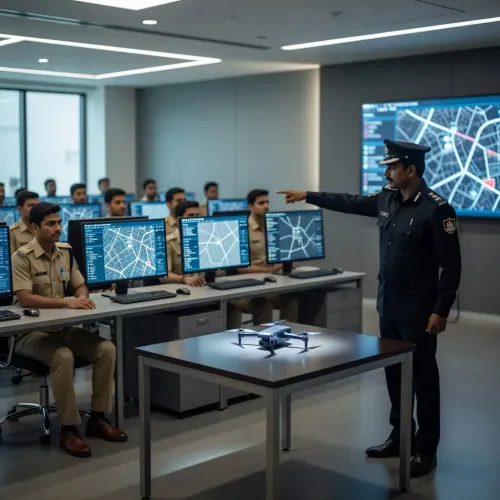
What makes CM Yogi's statement notable is the specific threat language he deploys: dark web infrastructure and cryptocurrency wallets. These are not abstract buzzwords. Indian security agencies have been expanding joint training precisely to address technology-enabled terrorism — where financing moves through decentralised digital ledgers and operational communication vanishes into encrypted anonymity. The explicit mention signals that Uttar Pradesh Police is at least rhetorically, and by implication operationally, orienting its special forces toward this evolved threat surface.
The Counter-IED dimension adds a separate but equally urgent layer. Improvised explosive devices remain among the most lethal tools available to non-state actors, and dedicated national-level exercises to counter them reflect how seriously Indian security planners treat the threat — from crowded public spaces to critical infrastructure.
What Joint Drills Actually Build
Joint exercises like Agnipariksha are designed to stress-test command chains, communication protocols, and tactical responses under simulated emergency conditions. When state commandos and central forces rehearse together repeatedly, the institutional friction that costs lives in real operations — who calls whom, which radio frequency, whose jurisdiction — gets ironed out in advance. For a state the size of Uttar Pradesh, with a population exceeding 240 million, the stakes of that preparation are proportionally enormous.
The 'trial by fire' name is apt. These drills are not ceremonial parades. They are, by design, the closest approximation to real crisis conditions that can be safely engineered — and the commandos who pass through them emerge calibrated to exactly the kind of multi-agency, high-stakes scenario that defeats under-prepared forces.
Point of View
BSF and CISF as training partners simultaneously elevates the state's security posture and implicitly aligns the UP government with the Centre's national counter-terror architecture. The 'Agnipariksha' branding carries political as well as operational weight: it projects strength to a domestic audience and communicates deterrence to adversaries. As state elections remain a fixture on India's political calendar, robust security optics in a state as electorally pivotal as UP are rarely coincidental.
NationPress
18 Nov 2026
Frequently Asked Questions
What are SPOT Commandos in Uttar Pradesh?
SPOT Commandos are a special operations unit of the Uttar Pradesh Police trained for high-risk counter-terrorism and law enforcement tasks, designed to respond to the most dangerous internal security scenarios.
What is the Agnipariksha exercise?
'Agnipariksha' — meaning 'trial by fire' — is a joint counter-terrorism training exercise involving Uttar Pradesh's SPOT Commandos and central forces including NSG, BSF and CISF, designed to build interoperability under simulated emergency conditions.
Why are NSG, BSF and CISF training with UP Police?
Joint exercises between state police and central armed police forces improve inter-agency coordination, communication and tactical response — a priority that grew sharply after the 2008 Mumbai attacks exposed dangerous gaps in India's internal security grid.
How is the dark web linked to terrorism in India?
Indian security agencies have been expanding training to counter technology-enabled terrorism, where extremists use encrypted dark web networks and cryptocurrency wallets to communicate and move funds anonymously beyond conventional financial surveillance.
What is a National Joint Counter-IED Exercise?
A Counter-IED (Improvised Explosive Device) exercise is a national-level drill that trains security forces to detect, neutralise and respond to bomb threats — one of the most lethal tools used by non-state actors against civilians and infrastructure.