CM Yogi Invokes Surgical Strike, Balakot, Op Sindoor as India's New Security Doctrine
Synopsis
Chief Minister Yogi Adityanath, quoted by the UP CMO on 18 November 2026, cited the Surgical Strike, Balakot Air Strike, and Operation Sindoor as evidence of India's shift to a proactive counter-terror doctrine under Prime Minister Narendra Modi.
Key Takeaways
The UP Chief Minister's Office posted a statement by CM Yogi Adityanath on 18 November 2026 citing three major Indian military operations.
The operations named are the 2016 Surgical Strike (following Uri attack), the 2019 Balakot Air Strike (following Pulwama attack), and Operation Sindoor .
Yogi credited PM Narendra Modi for a doctrine of delivering a 'crushing response' to every act of terrorism.
India's shift from 'strategic restraint' to calibrated cross-border retaliation has been a consistent political and security narrative since 2016 .
The statement signals that Operation Sindoor is being positioned alongside its predecessors as part of a standing counter-terror policy, not an exceptional event.
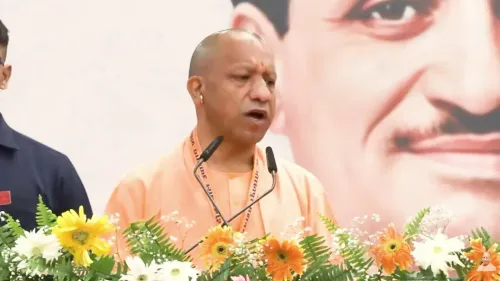
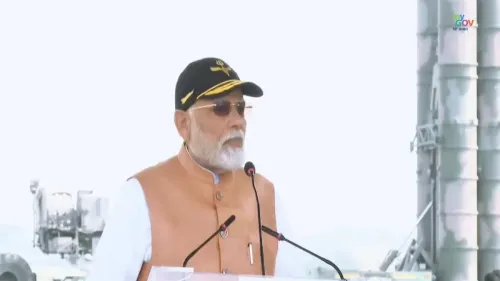
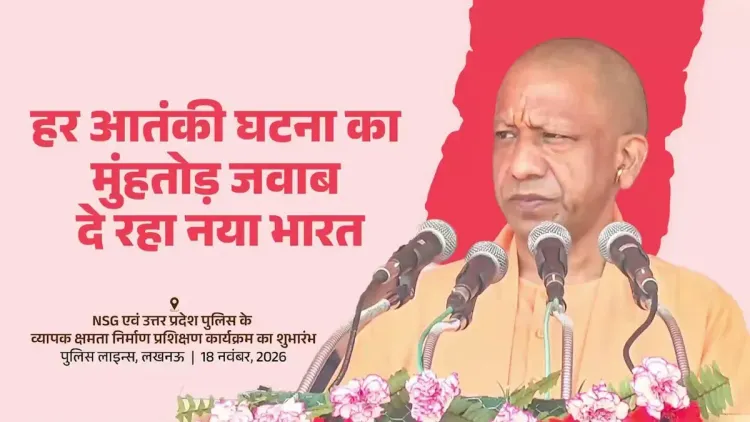
Three operations. One unmistakable message. The Chief Minister's Office of Uttar Pradesh posted on Wednesday, 18 November 2026, quoting Chief Minister Yogi Adityanath invoking India's most consequential counter-terror strikes — the 2016 Surgical Strike, the 2019 Balakot Air Strike, and Operation Sindoor — as proof that India now answers every terror attack with a decisive blow.
The statement, in Hindi, reads: 'Surgical Strike, Balakot Air Strike, Operation Sindoor... ye Bharat ki nayi ranniti aur takat ka ehsaas karate hain.' — 'These operations give us the feel of India's new strategy and strength.' CM Yogi credited Prime Minister Narendra Modi directly, saying India now delivers a 'crushing response' — munh-tod jawab — to every act of terrorism under his leadership.
From Uri to Balakot: a doctrine built on two strikes
The reference is not rhetorical. In September 2016, Indian Army special forces crossed the Line of Control into Pakistan-administered territory and struck militant launch pads in a retaliatory operation following the Uri attack — a watershed moment that ended years of what analysts called 'strategic restraint'. Then, in February 2019, Indian Air Force jets struck a facility in Balakot, Khyber Pakhtunkhwa, in direct response to the Pulwama suicide bombing that killed more than 40 Central Reserve Police Force personnel.
Together, those two operations established a new baseline: India would not absorb a cross-border terror attack without a visible, cross-border response. Senior leaders — both at the Centre and in the states — have repeatedly held them up as a signal of deterrence. CM Yogi's statement follows that well-worn but politically potent pattern.
Operation Sindoor and the evolving counter-terror ledger
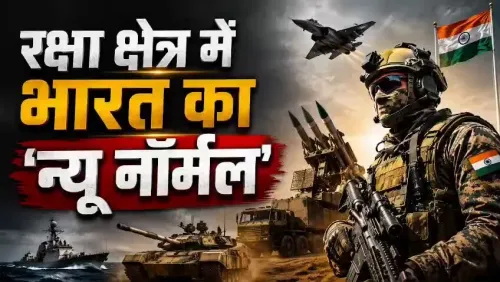
The third operation named — Operation Sindoor — is the newest entry on that ledger. The post positions it alongside its two predecessors as part of a continuous security doctrine, not an isolated incident. By placing all three in a single breath, the statement signals that what once looked like exceptional decisions have become a standing policy: terror is met with force, and the response will be public.
It is a framing that serves multiple audiences simultaneously — the domestic public that watched both the 2016 and 2019 operations unfold in real time, border communities that live closest to the threat, and an international gallery that tracks Indian strategic signalling closely.
Yogi's role as national security amplifier
As Chief Minister of India's most populous state since 2017, Yogi Adityanath has consistently and vocally aligned Uttar Pradesh's political messaging with the central government's national security narrative. His statements on cross-border operations carry weight not just as state-level endorsements but as amplification to a vast Hindi-belt electorate for whom the Uri and Pulwama strikes remain vivid, emotionally charged memories.
The question now — in Parliament, in defence circles, in diplomatic back-channels — is what Operation Sindoor adds to that ledger, and what comes next in a doctrine that has made 'restraint' a word India's security establishment no longer reaches for first.
Point of View
Balakot, and Operation Sindoor — into a single declarative sentence, CM Yogi Adityanath is doing something precise: he is converting episodic military decisions into a continuous, branded doctrine. That framing benefits the BJP at both state and national levels, reinforcing PM Modi's strongman security image ahead of any electoral cycle. It also signals that India's security establishment and its political leadership are aligned on making deterrence visible, not just operational — a shift with significant implications for how New Delhi manages the next provocation from across the border.
NationPress
18 Nov 2026
Frequently Asked Questions
What is Operation Sindoor?
Operation Sindoor is referenced by CM Yogi Adityanath alongside the 2016 Surgical Strike and 2019 Balakot Air Strike as one of India's major counter-terror operations under PM Modi's leadership. Official details of the operation's scope and date have not been fully detailed in public records available to this point.
What was the 2016 Surgical Strike?
The 2016 Surgical Strike was a cross-LoC military operation carried out by Indian Army special forces in September 2016, targeting militant launch pads in Pakistan-administered territory in direct retaliation for the Uri attack.
What was the Balakot Air Strike?
The Balakot Air Strike was an Indian Air Force operation in February 2019 that struck a facility in Balakot, Khyber Pakhtunkhwa, Pakistan, in response to the Pulwama suicide bombing that killed more than 40 CRPF personnel.
Why did CM Yogi Adityanath make this statement?
CM Yogi invoked all three operations to reinforce India's national security narrative under PM Modi, positioning cross-border retaliation as a standing doctrine rather than an exceptional response, and crediting central leadership for the shift away from strategic restraint.
What is India's counter-terror doctrine shift since 2016?
Since the 2016 Surgical Strike, Indian policy has moved from strategic restraint to calibrated, public, cross-border retaliation against terror infrastructure — a posture that both military planners and political leaders have repeatedly signalled as a permanent change in approach.