CM Yogi Hails 12 Years of Modi Govt's Security Record
Synopsis
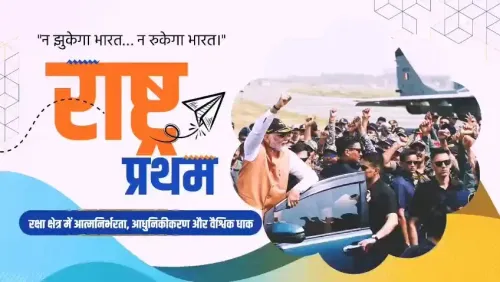
On 17 June 2026, UP Chief Minister Yogi Adityanath marked 12 years of the Modi government by crediting it with a transformed security doctrine — citing the Surgical Strike, Balakot Air Strike, and defence self-reliance as cornerstones of a 'Secure India' that underpins national development.
Key Takeaways
CM Yogi Adityanath posted on 17 June 2026 under #12YearsOfSurakshitBharat , hailing the Modi government 's security record over 12 years .
He cited the 2016 Surgical Strike and the 2019 Balakot Air Strike as evidence of India's 'decisive policy against terrorism.' The post also referenced Operation Sindoor as part of India's counter-terror posture.
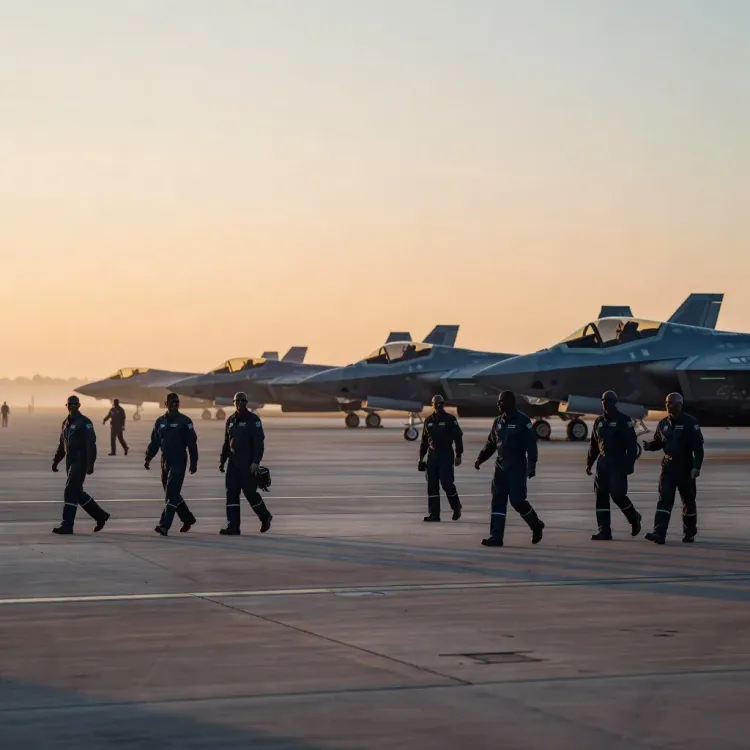
Defence indigenisation under Atmanirbhar Bharat , military modernisation, and border infrastructure expansion were highlighted as pillars of national security.
CM Yogi framed a 'secure India' as the foundational prerequisite for a 'developed India,' directly linking security to the government's developmental vision.
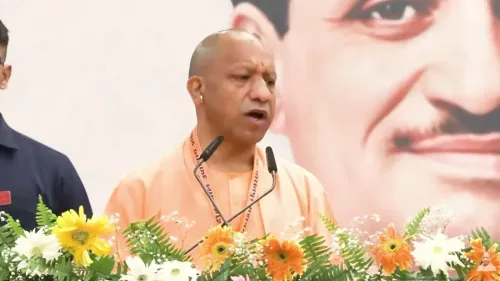
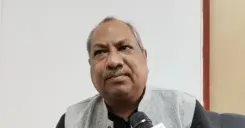
Uttar Pradesh Chief Minister Yogi Adityanath on Wednesday, 17 June 2026, credited Prime Minister Narendra Modi's leadership over the past 12 years with transforming India's national security posture, citing a series of high-profile military operations and a sustained push for defence self-reliance.
Context
Posting under the hashtag #12YearsOfSurakshitBharat ('12 Years of a Secure India'), CM Yogi framed the anniversary of the Modi government in security terms, arguing that 'surakshit Bharat' ('a secure India') is the foundation of 'viksit Bharat' ('a developed India'). The formulation directly links national security to the government's flagship developmental vision.
He pointed to three specific military actions — the 2016 Surgical Strike across the Line of Control, the 2019 Balakot Air Strike on a terror camp in Pakistan, and what he referred to as Operation Sindoor — as evidence of a 'decisive policy against terrorism.' The post described these operations as having 'established India's resolute policy towards terrorism.'
Policy Backdrop
The 2016 Surgical Strike, conducted in the wake of the Uri attack, marked a departure from India's earlier posture of strategic restraint by demonstrating a willingness to conduct cross-border counter-terror operations. The 2019 Balakot Air Strike, launched after the Pulwama attack, extended that doctrine to the use of air power, striking a Jaish-e-Mohammed camp deep inside Pakistani territory.
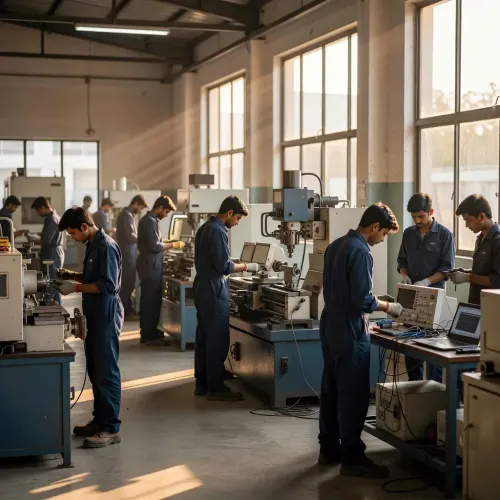
Alongside kinetic responses, the Modi government launched the Atmanirbhar Bharat Abhiyan in 2020, which included dedicated defence indigenisation targets and successive negative import lists for military equipment — effectively mandating domestic procurement of specified platforms. Parallel investment in Border Roads Organisation projects has accelerated construction of roads, bridges, and tunnels along both the Line of Control and the Line of Actual Control.
CM Yogi's post also highlighted 'military modernisation and expansion of border infrastructure' as pillars that have given 'new strength to national security' — language that tracks closely with the government's own stated defence priorities across successive Union Budgets.
Stakeholders and Impact
The post's framing resonates most directly with defence forces personnel, border-area populations, and the BJP's core nationalist constituency ahead of what is expected to be an active political calendar. By anchoring development to security, the message reinforces a long-running party argument that economic progress is contingent on a strong defence posture.
For defence-sector stakeholders — including domestic manufacturers pursuing contracts under indigenisation mandates — the political salience of the security narrative keeps pressure on timelines for indigenous platforms such as the Tejas Mk2 fighter and the Advanced Medium Combat Aircraft. Border communities in states like Jammu and Kashmir, Uttarakhand, Himachal Pradesh, and Arunachal Pradesh have seen tangible infrastructure improvements that improve both civilian connectivity and military logistics.
What's Next
Parliamentary scrutiny of the next Union defence budget will test whether the government sustains the capital expenditure trajectory needed to fund indigenisation and modernisation simultaneously. Announcements around integrated theatre commands and the operational induction timelines for next-generation indigenous platforms are among the closely watched markers of how the security doctrine translates into institutional reform.
As the #12YearsOfSurakshitBharat campaign builds across social media, expect senior BJP leaders to amplify similar security-first messaging — signalling that national defence will remain a central pillar of the party's political communication in the months ahead.
Point of View
The communication seeks to consolidate a narrative of proactive, muscular statecraft as the government enters its thirteenth year. The inclusion of defence indigenisation and border infrastructure alongside kinetic operations signals an attempt to broaden the security story beyond military strikes into long-term institutional investment. This positions national security as both a political asset and a policy legacy argument ahead of future electoral contests.
NationPress
16 Sept 2026
Frequently Asked Questions
What is #12YearsOfSurakshitBharat?
It is a BJP-led social media campaign marking 12 years of the Narendra Modi government, framing the period as one of enhanced national security through military operations and defence self-reliance.
What was the Surgical Strike CM Yogi referred to?
The 2016 Surgical Strike was a cross-Line of Control operation by Indian Army special forces targeting terrorist launch pads in Pakistan-administered Kashmir, conducted after the Uri attack.
What was the Balakot Air Strike?
The Balakot Air Strike was a 2019 Indian Air Force operation that struck a Jaish-e-Mohammed training camp in Balakot, Pakistan, in retaliation for the Pulwama suicide bombing that killed over 40 CRPF personnel.
What is Atmanirbhar Bharat in defence?
Atmanirbhar Bharat in the defence context refers to the government's policy of reducing import dependence by mandating domestic procurement of military equipment and publishing negative import lists that ban the import of specified defence items.
Why did CM Yogi link 'Surakshit Bharat' to 'Viksit Bharat'?
CM Yogi's formulation argues that national security is a prerequisite for development — a recurring BJP political argument that a secure, stable India is the foundation on which economic growth and the 'Viksit Bharat' vision can be built.