CM Samrat Choudhary Hails Modi Govt's 12-Year Anti-Terror Record

Synopsis
Bihar Chief Minister Samrat Choudhary on 17 June 2026 credited PM Modi's twelve-year government with reshaping India's security posture through zero-tolerance terrorism policy, surgical and air strikes, and major border-area development under the #12YearsOfSurakshitBharat campaign.
Key Takeaways
Bihar CM Samrat Choudhary posted on 17 June 2026 crediting PM Modi's 12-year government with a transformed national-security posture.
He cited a zero-tolerance policy on terrorism , the 2016 Surgical Strike , the 2019 Balakot airstrike , and Operation Sindoor as key milestones.
The post is part of the BJP's #12YearsOfSurakshitBharat coordinated campaign marking twelve years in power since May 2014 .
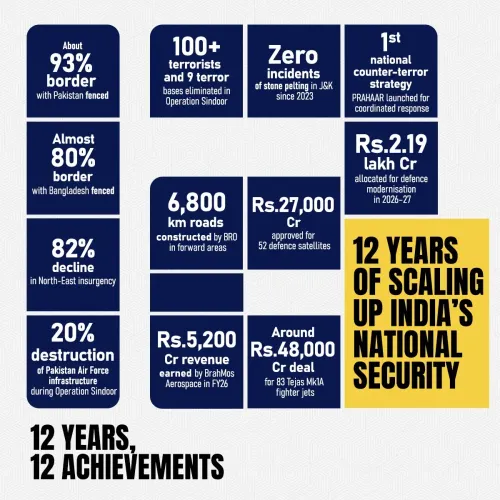
Choudhary also highlighted unprecedented development of border regions as a pillar of the government's security strategy.
His closing message — that India 'favours peace but will firmly respond to every challenge' — encapsulates the BJP's dual deterrence-and-diplomacy framing.
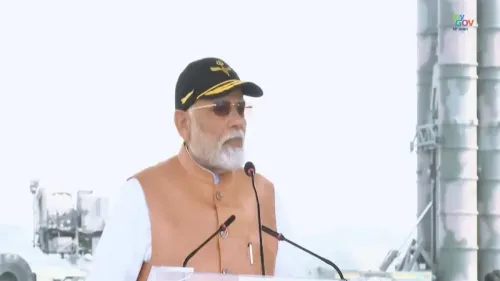
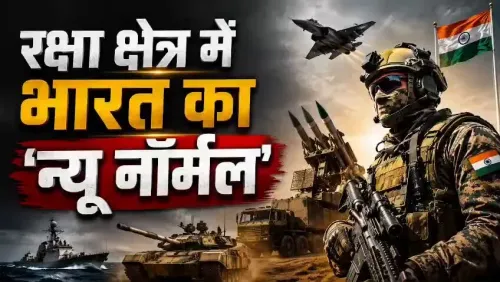
Bihar Chief Minister Samrat Choudhary on Wednesday, 17 June 2026, took to X to credit Prime Minister Narendra Modi's twelve-year tenure with transforming India's national-security posture, citing decisive anti-terrorism operations, strengthened defence capabilities, and unprecedented development of border regions as hallmarks of a more confident nation.
Context
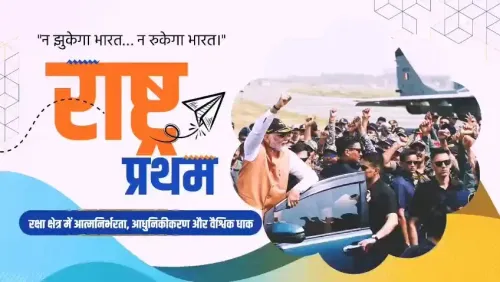
Posting under the hashtag #12YearsOfSurakshitBharat ('12 Years of a Secure India'), CM Choudhary wrote that the Modi government's zero-tolerance policy against terrorism, combined with surgical and air strikes, has sent a clear message to the world: 'India is capable of taking every necessary step to protect its sovereignty and the safety of its citizens.' He specifically named the Surgical Strike, the Air Strike, and Operation Sindoor as emblematic of this resolve. The post carries an attached video and reflects a coordinated BJP communication effort marking twelve years since the party first came to power in May 2014.
Policy Backdrop
India's shift to a more assertive counter-terrorism posture became publicly visible with the Surgical Strike of 29 September 2016, conducted by the Indian Army across the Line of Control following the Uri attack. It was the first time India officially acknowledged a cross-LoC operation targeting terrorist infrastructure in Pakistan-occupied Kashmir. This was followed by the Balakot airstrike of 26 February 2019, in which the Indian Air Force struck a Jaish-e-Mohammed facility inside Pakistani territory after the Pulwama suicide bombing — signalling willingness to project force beyond the LoC. Alongside punitive operations, the government has invested heavily in border infrastructure, including roads, tunnels, and connectivity projects in frontier districts, framing development and deterrence as complementary pillars of national security.
Stakeholders and Impact
The primary beneficiaries cited in the government's narrative are armed forces personnel and residents of border regions, who have seen improved road and rail connectivity, faster troop mobilisation infrastructure, and greater economic activity in previously isolated areas. Politically, the BJP has consistently leveraged its national-security record as a differentiator ahead of state and national elections. CM Choudhary's post, issued from Patna, reinforces that messaging at the state level, tying Bihar's own political discourse to the national security narrative championed by the party's central leadership.
What's Next
With the #12YearsOfSurakshitBharat campaign active across BJP leaders' social media accounts, expect further statements from chief ministers and senior party figures amplifying the defence-and-development theme through the week. Parliamentary debates on the forthcoming defence budget and any official government clarifications on recent operations are likely to keep national-security policy at the centre of political conversation. CM Choudhary's framing — that today's India 'favours peace but knows how to give a firm response to every challenge' — signals that the BJP intends to contest any opposition critique of its security record on both moral and operational grounds.
Point of View
Designed to consolidate the party's national-security brand at a moment when the twelve-year milestone invites comparative scrutiny. By invoking named operations — Surgical Strike, Balakot, and Operation Sindoor — he moves the discourse from abstract policy to concrete military action, making the record harder to dismiss. The framing of India as a 'peace-loving but firm' nation echoes a long-standing BJP rhetorical device that positions assertiveness as a defensive virtue rather than aggression. This kind of messaging, deployed simultaneously by leaders across states, is intended to set the terms of any security debate well before the next electoral cycle.
NationPress
16 Sept 2026
Frequently Asked Questions
What did Bihar CM Samrat Choudhary say about PM Modi's defence record?
CM Choudhary said that over the past twelve years, PM Modi's leadership has given India's confidence a new identity through decisive anti-terror action, stronger defence capabilities, and unprecedented development of border areas.
What is Operation Sindoor?
Operation Sindoor is referenced by CM Choudhary alongside the 2016 Surgical Strike and the 2019 Balakot airstrike as one of India's decisive anti-terrorism operations under the Modi government; official details of this specific operation are subject to government disclosure.
What was the Surgical Strike of 2016?
The Surgical Strike was a cross-Line of Control operation conducted by the Indian Army on 29 September 2016 , targeting terrorist launch pads in Pakistan-occupied Kashmir following the Uri attack — the first such operation India officially acknowledged.
What is the #12YearsOfSurakshitBharat campaign?
#12YearsOfSurakshitBharat ('12 Years of a Secure India') is a BJP social media campaign marking twelve years of the Modi government, with party leaders highlighting national-security achievements including anti-terror operations and border development.
What was the Balakot airstrike?
The Balakot airstrike was an Indian Air Force strike on 26 February 2019 targeting a Jaish-e-Mohammed facility in Balakot, Pakistan, conducted in response to the Pulwama suicide bombing that killed over 40 CRPF personnel.