Chirag Paswan Hails 12 Years of Modi's Defence Resolve
Synopsis
Union Minister Chirag Paswan on June 17, 2026, credited Prime Minister Modi with transforming India's defence posture over 12 years, citing the 2016 Surgical Strike and 2019 Balakot airstrike as proof of the country's zero-tolerance policy on terrorism and growing self-reliance in defence production.
Key Takeaways
Union Food Processing Minister Chirag Paswan posted on June 17, 2026 under the hashtag #12YearsOfSurakshitBharat , marking 12 years of the Modi government's defence record.
He cited the 2016 cross-LoC Surgical Strike (following the Uri attack) and the 2019 Balakot airstrike (following the Pulwama bombing) as landmark assertions of India's zero-tolerance stance on terrorism.
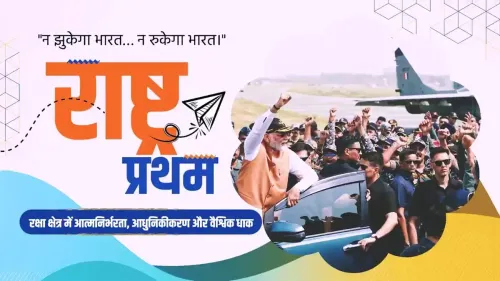
Paswan highlighted border infrastructure upgrades , military modernisation , and defence production self-reliance as pillars of the transformation.
The Make in India initiative (2014) and DPP 2016 laid the policy foundation for indigenising defence procurement, with schemes like iDEX and PLI extending the push.
As LJP (Ram Vilas) president, Paswan's post reflects coordinated NDA messaging around the government's security narrative ahead of future electoral cycles.
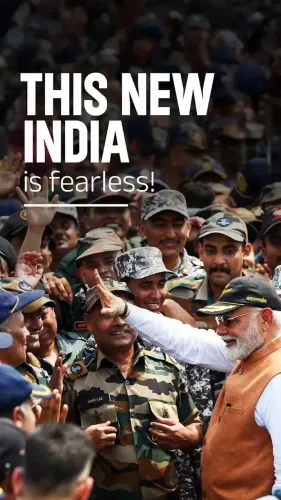
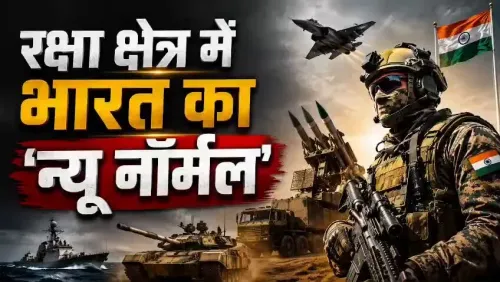
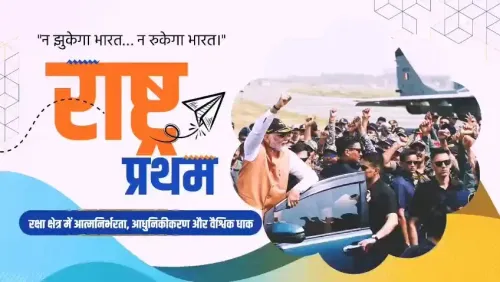
Union Food Processing Minister Chirag Paswan on Wednesday, June 17, 2026, took to X to mark what he described as 12 years of transformative progress in national security and defence self-reliance under Prime Minister Narendra Modi, invoking the 2016 Surgical Strike, the 2019 Balakot airstrike, and a military operation he referred to as Operation Sindoor as emblems of India's zero-tolerance stance on terrorism.
Context
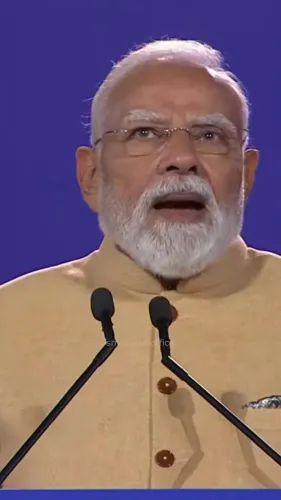
Paswan's post, hashtagged #12YearsOfSurakshitBharat (12 Years of a Secure India), frames the Modi government's tenure since May 2014 as a period of unprecedented assertion in defence policy. He wrote that bold actions like the Surgical Strike, the Balakot airstrike, and Operation Sindoor had sent a clear message to the world: 'there will be no compromise on the nation's security.' The post accompanied a video and was published in Hindi, reflecting the minister's regular practice of communicating on national-security themes to a broad domestic audience.
Paswan, whose primary portfolio is Food Processing Industries, is also the national president of the Lok Janshakti Party (Ram Vilas), a key constituent of the ruling National Democratic Alliance. Senior NDA leaders routinely mark political milestones tied to the government's tenure with coordinated messaging on social media.
Policy Backdrop
The minister's remarks align with a well-documented shift in India's defence posture since 2014. The Make in India initiative, launched in September 2014, explicitly prioritised defence manufacturing, and the Defence Procurement Procedure (DPP) 2016 introduced the 'Buy (Indian-IDDM)' category to accelerate indigenous design and production.
Successive budgets have raised the share of domestic procurement in the defence outlay, while the government has pursued parallel tracks of border-road and airfield construction and emergency force-modernisation procurements. The broader Atmanirbhar Bharat framework — self-reliant India — has set progressive indigenisation targets aimed at reducing the country's historically high dependence on defence imports.
The 2016 cross-LoC Surgical Strike, conducted after the Uri attack, and the 2019 Balakot airstrike by the Indian Air Force, carried out in the aftermath of the Pulwama suicide bombing, are the two publicly confirmed military actions Paswan cited. Both operations have become touchstones in NDA political communication around national security credibility.
Stakeholders and Impact
The primary beneficiaries of the policy arc Paswan describes are the Indian armed forces and the emerging domestic defence-manufacturing ecosystem, which includes both public-sector undertakings and a growing private-sector base under schemes such as iDEX (Innovations for Defence Excellence) and the Production Linked Incentive (PLI) scheme for aerospace and munitions clusters.
For the Lok Janshakti Party (Ram Vilas), defence nationalism is also a political asset: aligning with the Modi government's security record reinforces the party's NDA credentials ahead of future electoral cycles in its home state of Bihar and beyond. Such messaging also resonates with a wider electorate that has consistently ranked national security among its top concerns in post-poll surveys.
What's Next
The Defence Ministry's annual acquisition plans and the next round of iDEX or PLI scheme extensions for aerospace and munitions clusters will be closely watched as indicators of whether the indigenisation drive continues to accelerate. Diplomatic and strategic analysts will also monitor how India's stated zero-tolerance posture on cross-border terrorism shapes its engagement with neighbours and multilateral forums in the months ahead.
As the Modi government approaches the midpoint of its third term, the 12-year narrative of 'Surakshit Bharat' (Secure India) is likely to remain a central pillar of NDA communication — with ministers across portfolios, including Paswan, amplifying it on every significant political anniversary.
Point of View
The messaging seeks to pre-empt opposition critiques on border management or defence procurement delays. For Paswan personally, visible alignment with the Modi government's security record strengthens his party's position within the NDA coalition well beyond his food-processing brief.
NationPress
20 Sept 2026
Frequently Asked Questions
What did Chirag Paswan say about India's defence record?
Chirag Paswan praised 12 years of progress under PM Modi, highlighting the 2016 Surgical Strike and 2019 Balakot airstrike as proof of India's zero-tolerance policy on terrorism and its growing defence self-reliance.
What is the 2016 Surgical Strike Chirag Paswan mentioned?
The 2016 Surgical Strike was a cross-Line of Control operation by the Indian Army in September 2016, targeting terrorist launch pads in Pakistan-administered Kashmir in retaliation for the Uri attack that killed Indian soldiers.
What was the Balakot airstrike?
The Balakot airstrike was an Indian Air Force operation in February 2019 that struck a Jaish-e-Mohammed facility in Balakot, Pakistan, conducted in response to the Pulwama suicide bombing that killed over 40 CRPF personnel.
What is Atmanirbhar Bharat in defence?
Atmanirbhar Bharat in defence refers to India's policy of self-reliance in military production, pursued since 2014 through initiatives like Make in India, the Defence Procurement Procedure 2016, iDEX, and PLI schemes to reduce import dependence.
Why is Chirag Paswan, a Food Processing Minister, commenting on defence?
As national president of the Lok Janshakti Party (Ram Vilas) and a senior NDA cabinet minister, Paswan regularly comments on national security to reinforce the coalition's political messaging, even though his formal portfolio is food processing industries.