Anurag Thakur Hails 12 Years of Modi-Era Defence Modernisation
Synopsis
BJP MP Anurag Thakur marked 12 years of the Modi government by citing the Surgical Strike, Balakot Air Strike, and Operation Sindoor as proof of a stronger, more modern Indian military and more secure national borders under PM Modi's leadership.
Key Takeaways
BJP MP Anurag Thakur posted on 17 June 2026 under #12YearsOfSurakshitBharat , crediting PM Modi with a stronger military over 12 years .
Three operations were cited: the 2016 Surgical Strike across the LoC, the 2019 Balakot Air Strike in Pakistan, and Operation Sindoor .
The Surgical Strike followed the Uri attack ; the Balakot strike followed the Pulwama attack and targeted a Jaish-e-Mohammed facility.
The BJP government has pursued Atmanirbhar Bharat defence indigenisation and military theatreisation reforms since 2014 .
Parliamentary debate on the next defence budget and any official disclosure on Operation Sindoor are the key near-term developments to watch.
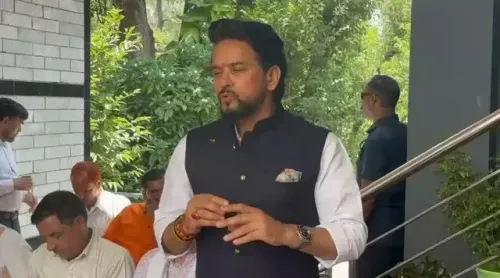
BJP MP Anurag Thakur on Wednesday, 17 June 2026, invoked three landmark cross-border operations — the 2016 Surgical Strike, the 2019 Balakot Air Strike, and Operation Sindoor — to argue that Prime Minister Narendra Modi's twelve years in office have produced a stronger, more modern military and more secure national borders.
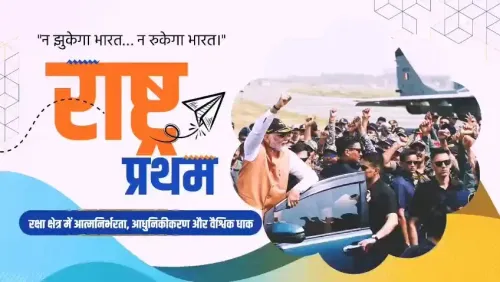
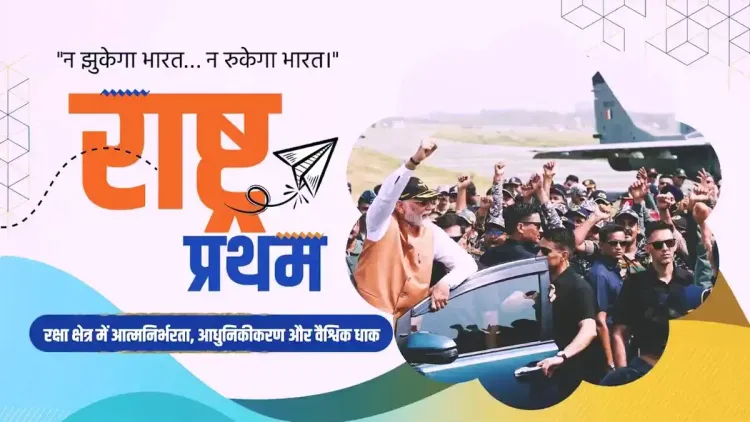
Posting under the hashtag #12YearsOfSurakshitBharat ('12 Years of a Secure India'), the Hamirpur MP wrote: 'Sashakt sena, surakshit rashtra' — 'A strong army, a secure nation' — framing the Modi government's defence record as a demonstration of India's power and leadership to the world.
Context
The post marks what the ruling Bharatiya Janata Party (BJP) is commemorating as 12 years of the Modi government, which took office in May 2014. Thakur, a former Union Minister who held the Information & Broadcasting and Youth Affairs & Sports portfolios, has consistently been among the party's most vocal communicators on national security themes.
The three operations cited span a decade of evolving counter-terror doctrine. The September 2016 Surgical Strikes across the Line of Control (LoC) were India's first publicly acknowledged cross-border ground response to terrorism in decades, launched after the Uri attack. The February 2019 Balakot Air Strike by the Indian Air Force targeted a Jaish-e-Mohammed facility in Pakistan's Khyber Pakhtunkhwa province following the Pulwama attack, establishing a precedent for the use of air power beyond the LoC.
Policy Backdrop
Since 2014, the government has pursued a more kinetic counter-terror posture alongside structural reforms in the Indian Armed Forces, including accelerated indigenisation under the Atmanirbhar Bharat defence production initiative. Discussions around military theatreisation — integrating the Army, Navy, and Air Force under unified theatre commands — have also been a defining reform agenda of this period.
Successive high-profile operations have been publicly highlighted by the ruling party to project deterrence and political resolve, weaving operational outcomes into a broader narrative of institutional transformation within the military establishment.
Stakeholders and Impact
The primary stakeholders in this framing are the Indian Armed Forces and border-area populations in states such as Jammu & Kashmir, Punjab, and the northeastern frontier. For the BJP, the defence modernisation record is a central political asset heading into any electoral cycle.
Opposition parties have periodically contested the government's characterisation of these operations, particularly regarding casualty claims and strategic outcomes, though the broad public salience of each operation has remained high.
What's Next
Parliamentary scrutiny of the upcoming defence budget is expected to test how far indigenisation targets and capital expenditure commitments have been met over the twelve-year arc Thakur invokes. Any official release of details or after-action assessments related to Operation Sindoor would also add substance to the claims being advanced by BJP leaders in this anniversary campaign. The ruling party's ability to sustain the 'Surakshit Bharat' narrative will depend significantly on how those disclosures unfold in the public domain.
Point of View
Tethering three operationally distinct events into a single deterrence narrative timed to the BJP's twelve-year milestone. By naming Operation Sindoor alongside the already-established Surgical Strike and Balakot precedents, the party signals that its kinetic counter-terror doctrine has a third, more recent data point — even as official details of that operation remain limited in the public domain. The framing of 'Surakshit Bharat' is designed to pre-empt opposition critiques on border security ahead of any electoral contest, making defence credibility a BJP-owned issue. Whether the narrative holds will depend on how parliamentary scrutiny of defence spending and any formal disclosures on Operation Sindoor play out over the coming months.
NationPress
20 Sept 2026
Frequently Asked Questions
What is Operation Sindoor mentioned by Anurag Thakur?
Operation Sindoor is a military operation cited by BJP MP Anurag Thakur as part of India's counter-terror actions under PM Modi's government. Official details of the operation have not been fully disclosed in the public domain as of mid-2026.
What was the Surgical Strike of 2016?
The September 2016 Surgical Strike was a cross-Line of Control ground operation by the Indian Army targeting terrorist launch pads in Pakistan-administered Kashmir, conducted in response to the Uri attack that killed Indian soldiers.
What was the Balakot Air Strike?
The February 2019 Balakot Air Strike was an Indian Air Force operation that struck a Jaish-e-Mohammed training facility in Balakot, Pakistan , carried out after the Pulwama suicide bombing that killed 40 CRPF personnel .
What is #12YearsOfSurakshitBharat?
#12YearsOfSurakshitBharat — meaning '12 Years of a Secure India' — is a BJP campaign hashtag marking 12 years of the Narendra Modi government since it first took office in May 2014 , with a focus on national security achievements.
Who is Anurag Thakur and why does he comment on defence?
Anurag Thakur is the BJP Lok Sabha MP from Hamirpur, Himachal Pradesh , and a former Union Minister who held the Information & Broadcasting and Youth Affairs & Sports portfolios. He is a senior party spokesperson who regularly communicates on governance and national security matters.