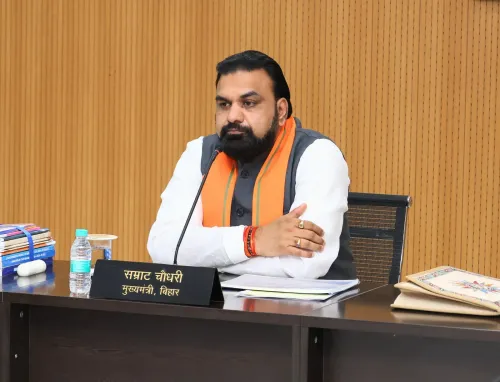
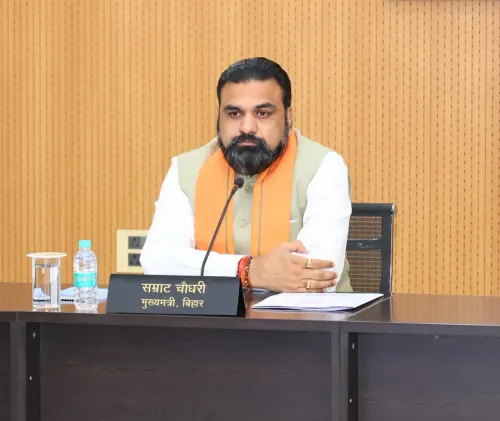
CM Samrat Choudhary Hails Centre's Historic Silt Policy Move for Bihar
Synopsis
Bihar CM Samrat Choudhary praised the central government's move on a national silt policy on 4 November 2026, crediting PM Modi and Nitin Gadkari with fulfilling a demand long raised by former CM Nitish Kumar to address Bihar's chronic flood and river-management crisis.
Key Takeaways
Bihar CM Samrat Choudhary on 4 November 2026 hailed the Centre's initiative on a silt removal policy as a historic step.
The demand was originally raised over many years by former Bihar Chief Minister Nitish Kumar .
Prime Minister Narendra Modi and Union Minister Nitin Gadkari are credited with driving the central initiative.
The policy aims to address Bihar's chronic challenges of river sedimentation, flood control, and water management.
Choudhary invoked the 'double engine sarkar' framework, framing the move as proof of aligned BJP governance at state and centre.
The Chief Minister also cited tackling organised crime and strengthening law and order as parallel state government priorities.
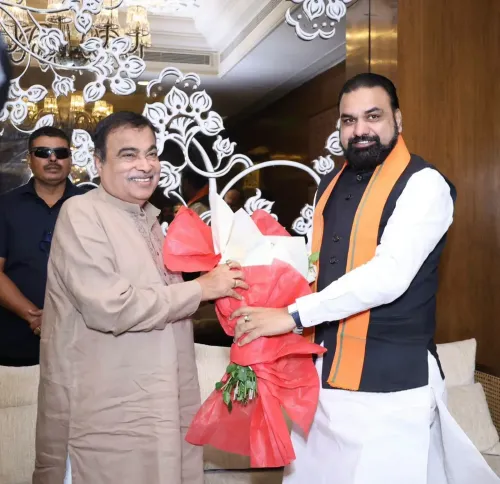
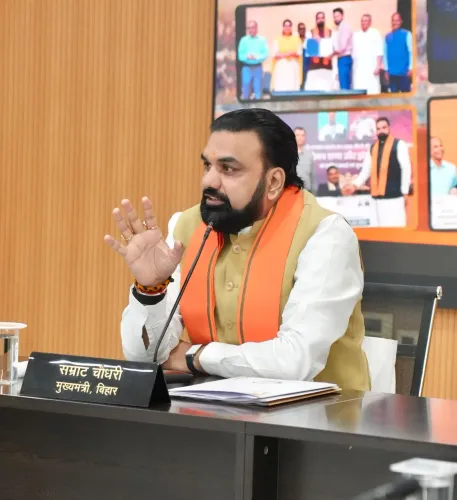
Decades of flooded fields, submerged villages, and silted-up rivers may finally be getting a policy answer — and Bihar Chief Minister Samrat Choudhary wants the state to know who delivered it. On Wednesday, 4 November 2026, Choudhary took to X to credit the central government with taking what he called a historic step toward realising a long-standing demand: a national silt removal policy for Bihar's flood-prone rivers.
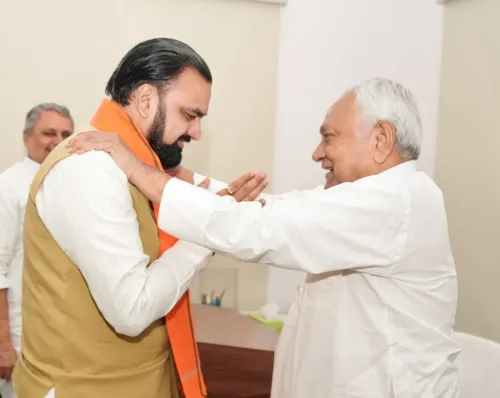
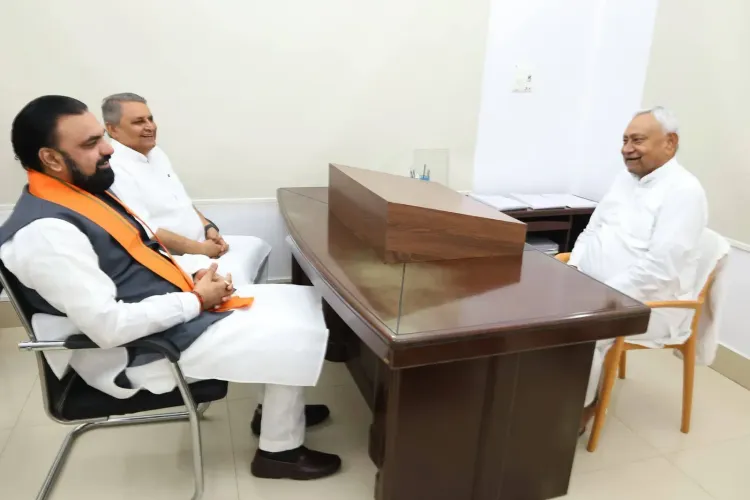
Posting in Hindi, Choudhary wrote that the initiative — driven under the leadership of Prime Minister Narendra Modi and Union Minister for Road Transport and Highways Nitin Gadkari — has given concrete shape to a demand raised persistently by Bihar ke pūrva mukhyamantrī (former Bihar Chief Minister) Nitish Kumar over many years. 'This decision is an important step toward Bihar's water management, flood control, and overall development,' he said, extending gratitude to the Prime Minister and the Union Minister on behalf of the people of Bihar.
The silt problem Bihar has lived with for generations
Bihar sits downstream of the Himalayas, cradling some of the most silt-laden rivers in South Asia — the Kosi, Gandak, Bagmati, and others that annually carry enormous sediment loads down from the mountains. Over decades, that silt has steadily raised riverbeds, narrowed channels, and dramatically reduced the rivers' capacity to carry floodwaters. The result: even moderate monsoon seasons tip entire districts into inundation.
Nitish Kumar, across multiple stints as Bihar Chief Minister, made a dedicated national desilting policy a signature demand — arguing that without systematic silt removal, every other flood-control infrastructure measure would eventually be overwhelmed. That demand is now credited, at least by Choudhary, with finding its moment.
Double-engine politics behind a technical fix
The framing in Choudhary's post is deliberate. The phrase 'double engine sarkar' — the BJP's catchphrase for aligned state and central governments pulling Bihar's development forward together — anchors his message. With the BJP-led NDA governing both Patna and Delhi, Choudhary is positioning this policy initiative as proof that the arrangement delivers real, tangible outcomes for Bihar's most vulnerable communities: the millions of farmers and riverside residents for whom flood season is not a weather event but an annual emergency.
Choudhary also folded a second priority into his post — a pointed reference to the state government's focus on organised crime and law enforcement, signalling that the Bihar administration sees security and development as twin fronts of the same governance push.
What Bihar needs to see next
The specifics — exact rivers targeted, funding allocation, implementation timelines, and the agencies responsible — are what flood-affected communities will now watch for. A policy announcement generates hope; a project sanction with a budget line generates change. Bihar's riverine districts, which have waited through monsoon after monsoon for structural relief, will measure this milestone by what follows it on the ground.
If the Centre follows through with a funded, time-bound desilting programme, it would represent one of the most consequential interventions in Bihar's water management architecture in years. The political credit has already been claimed — now comes the engineering.
Point of View
He brings Kumar's support base into the credit-sharing circle, reinforcing NDA unity in Bihar. The law-and-order rider is not incidental — it signals to voters that the government is simultaneously tough on crime and delivering on development, a dual positioning that has electoral logic in Bihar's current political environment. The real test will be whether specific, funded desilting projects follow, or whether the 'historic initiative' remains at the announcement stage.
NationPress
4 Nov 2026
Frequently Asked Questions
What is the silt policy Bihar has been demanding?
Bihar has long demanded a national silt removal policy to systematically desilt its major rivers — including the Kosi, Gandak, and Bagmati — which carry heavy sediment loads from the Himalayas that raise riverbeds and worsen annual flooding.
Who first raised the demand for a silt policy in Bihar?
Former Bihar Chief Minister Nitish Kumar raised the demand for a dedicated national silt policy repeatedly over many years, arguing it was essential for meaningful flood control in the state.
What did CM Samrat Choudhary say about the silt policy on 4 November 2026?
CM Samrat Choudhary posted on X praising the central government's move toward a silt policy as a historic initiative, crediting PM Narendra Modi and Union Minister Nitin Gadkari with advancing the long-standing Bihar demand.
What is 'double engine sarkar' and why is it used in this context?
'Double engine sarkar' is the BJP's phrase for having the same political alliance governing both a state and the central government, suggesting coordinated and faster development; Choudhary used it to argue the silt policy move proves this arrangement delivers for Bihar.
How does the silt problem affect Bihar's floods?
Decades of accumulated silt have raised the beds of Bihar's rivers, reducing their water-carrying capacity so that even moderate monsoon rains trigger widespread flooding across riverine districts, affecting millions of farmers and rural communities.