Anurag Thakur Hails 12 Years of Modi Govt Defence Modernisation
Synopsis
BJP MP Anurag Thakur has lauded the Modi government's 12-year defence record from Hamirpur, asserting that military modernisation and elevated morale now enable India to deliver retaliatory strikes inside enemy territory — an allusion to the Uri and Balakot operations.
Key Takeaways
Anurag Thakur , BJP MP from Hamirpur , posted on 23 June 2026 crediting the Modi government with 12 years of defence modernisation.
He claimed the armed forces now possess the capability and morale to 'enter the enemy's territory and give a crushing response.' The statement alludes to landmark operations including the 2016 Uri surgical strikes and the 2019 Balakot airstrike .
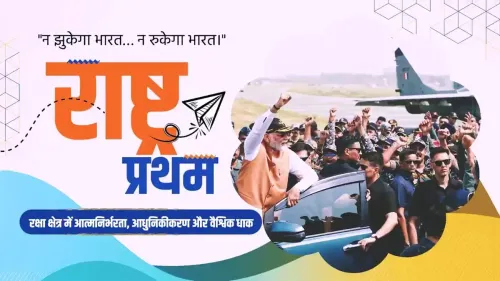
Defence capital expenditure has risen in nominal terms each year since 2014 , supported by the Atmanirbhar Bharat indigenous procurement push.
The 2022 Agnipath scheme reformed short-term military recruitment, though it remains a subject of ongoing debate.
Parliamentary scrutiny of the next defence budget and border infrastructure updates will test the durability of this modernisation narrative.
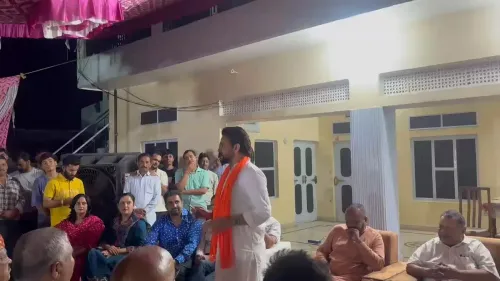
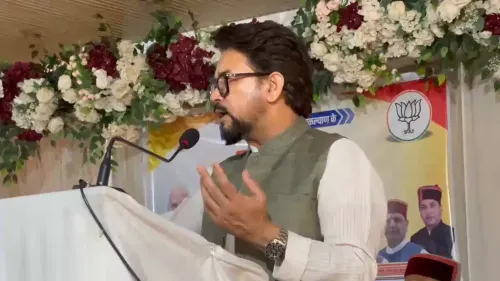
BJP MP Anurag Thakur, representing Hamirpur in Himachal Pradesh, on Tuesday, 23 June 2026, credited the Modi government with transforming India's military posture over the past 12 years — saying the armed forces now have both the capability and the morale to strike back at the enemy on its own soil.
Posting from Hamirpur, Thakur wrote in Hindi: 'Modi sarkar ne pichhle 12 saalon na sirf sena ka aadhunikaran kiya balki unka manobal itna badhaaya ki aaj hum dushman ko uski seema mein ghuskar muhtod jawab dena jaante hain' — 'The Modi government, in the last 12 years, has not only modernised the army but raised its morale to such a level that today we know how to enter the enemy's territory and give a crushing response.'
Context
Thakur's remarks come against the backdrop of a sustained political emphasis on India's willingness to conduct cross-border operations. The statement references a doctrine that gained public salience after the 2016 Uri surgical strikes and the 2019 Balakot airstrike — two operations the government publicly acknowledged as departures from earlier restraint. The phrase 'enter the enemy's territory' is widely understood as an allusion to these episodes.
Thakur, a six-term MP from Hamirpur and former Union Minister of Information and Broadcasting and Youth Affairs and Sports, has consistently championed the government's national-security record on public platforms.
Policy Backdrop
Since 2014, successive defence budgets under the Modi government have raised capital outlays for equipment procurement, with a stated preference for domestic sourcing under the Atmanirbhar Bharat initiative. The government has progressively expanded the list of items reserved for indigenous production, aiming to reduce India's historically high dependence on imported military hardware.
The 2022 Agnipath scheme introduced a short-term recruitment model designed to lower the average age profile of the forces and reduce the long-term pension burden — a structural reform that drew both support and controversy. Defence capital expenditure has risen in nominal terms each year over this period, though analysts note that as a share of GDP the figures have remained broadly stable.
Stakeholders and Impact
The Indian Armed Forces — operating along both the Line of Control with Pakistan and the Line of Actual Control with China — are the primary stakeholders in any modernisation drive. Border states, including Himachal Pradesh itself, supply a disproportionately large share of military personnel and have a direct interest in both force welfare and operational readiness.
Veterans' groups and serving personnel have broadly welcomed increased capital spending on equipment, while some former officers have raised questions about the pace of induction and the long-term implications of the Agnipath model for unit cohesion and institutional memory.
What's Next
Parliamentary scrutiny of the next defence budget and updates on ongoing border infrastructure projects — including road and tunnel construction along the northern frontier — will be key indicators of whether the modernisation trajectory continues. Debates over the Agnipath scheme's renewal and the induction timelines for major platforms such as fighter jets and submarines are also expected to keep defence policy at the centre of political discourse in the months ahead.
Thakur's post signals that the BJP intends to keep its national-security record prominent in public messaging, particularly as the party seeks to consolidate its position ahead of state and national electoral cycles.
Point of View
Invoking the post-2016 'new normal' of publicly acknowledged cross-border operations as evidence of a transformed strategic culture. By anchoring the claim to '12 years' rather than specific incidents, the party frames modernisation as a sustained policy achievement rather than a crisis response. This messaging pattern — linking military assertiveness to government credibility — has become a structural pillar of BJP electoral communication, particularly effective in high-recruitment states like Himachal Pradesh. The timing, well ahead of any immediate electoral trigger, suggests the party is laying rhetorical groundwork for a sustained national-security narrative cycle.
NationPress
22 Sept 2026
Frequently Asked Questions
What did Anurag Thakur say about the Indian Army?
Anurag Thakur said the Modi government has, over the past 12 years, modernised the Indian Army and raised its morale to the point where India can now enter enemy territory and deliver a crushing response.
What are the Uri surgical strikes and Balakot airstrike?
The Uri surgical strikes were cross-LoC operations conducted in 2016 after a terror attack on an army base in Uri, Kashmir. The Balakot airstrike was a 2019 Indian Air Force operation inside Pakistan following the Pulwama attack — both publicly acknowledged by the government as a shift in India's response doctrine.
How has the Modi government modernised the Indian Armed Forces?
Since 2014, the government has raised defence capital expenditure each year, prioritised indigenous procurement under Atmanirbhar Bharat, and introduced the 2022 Agnipath short-term recruitment scheme to restructure force composition and reduce the pension burden.
Who is Anurag Thakur and which constituency does he represent?
Anurag Thakur is a BJP Lok Sabha MP from Hamirpur in Himachal Pradesh, serving since 2008. He is a former Union Minister of Information and Broadcasting and Youth Affairs and Sports.
What is the Atmanirbhar Bharat defence initiative?
Atmanirbhar Bharat, or 'self-reliant India,' is a government policy that reserves an expanding list of defence items for domestic production, aiming to reduce India's historically high dependence on imported military hardware.