Anurag Thakur Credits Modi's Leadership for India's Global Stability
Synopsis
BJP MP Anurag Thakur, posting from Himachal Pradesh on June 12, 2026, attributed India's resilience amid global challenges to PM Narendra Modi's effective leadership, reinforcing a central BJP governance narrative on economic stability and policy continuity.
Key Takeaways
BJP MP Anurag Thakur posted on June 12, 2026 , crediting PM Narendra Modi 's leadership for India's stability in a challenging global environment.
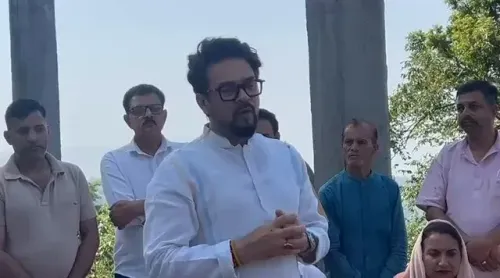
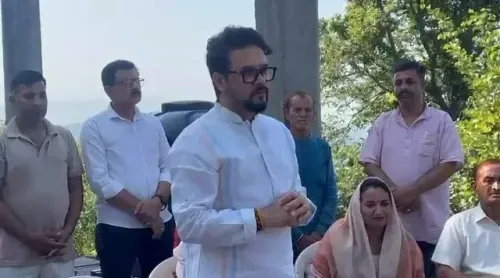
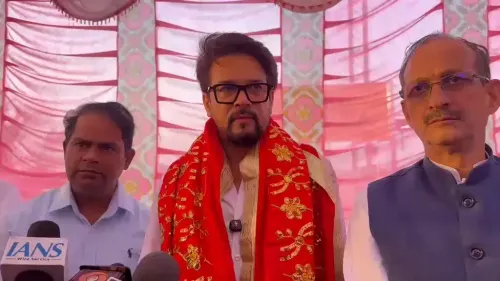
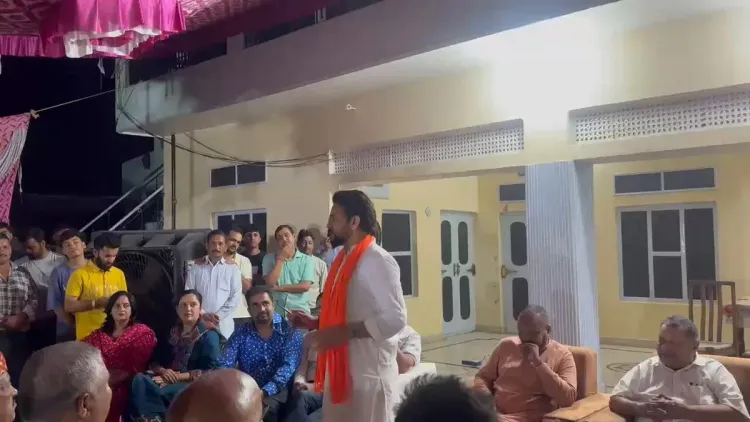
The post was geotagged to Himachal Pradesh and accompanied by a video.
Thakur is a Lok Sabha MP from Hamirpur and former Union Minister of Information and Broadcasting and Youth Affairs and Sports.
The Atmanirbhar Bharat initiative, launched in May 2020 , underpins the BJP's narrative of domestic economic resilience.
Senior BJP leaders have consistently framed central policy continuity as key to India's macroeconomic stability since 2014 .
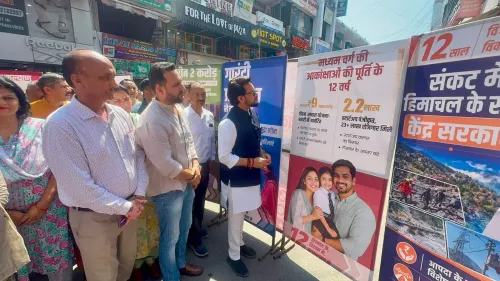
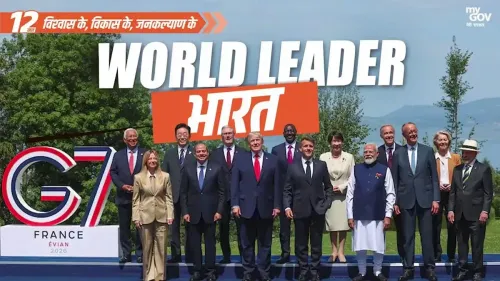
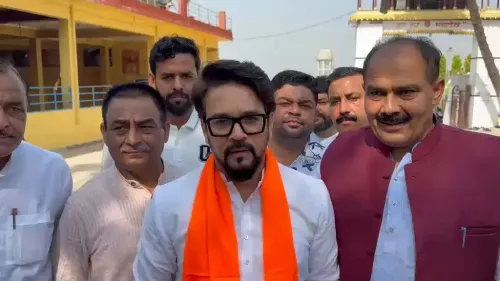
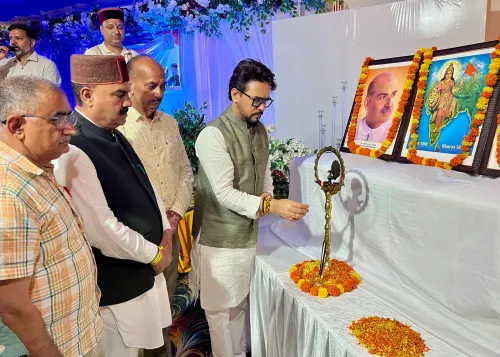
BJP MP Anurag Thakur, representing Hamirpur, Himachal Pradesh, on Friday, June 12, 2026, credited Prime Minister Narendra Modi's leadership for India's continued economic and political stability amid challenging global conditions, sharing his remarks in a post geotagged to Himachal Pradesh.
Context
Thakur, writing in Hindi, stated: 'यह आदरणीय प्रधानमंत्री श्री नरेंद्र मोदी जी के प्रभावी नेतृत्व का ही परिणाम है' — 'This is the result of the effective leadership of respected Prime Minister Narendra Modi' — asserting that India is advancing 'with complete stability even in today's challenging global circumstances.' The post was accompanied by a video and tagged to Himachal Pradesh.
The statement follows a pattern seen among senior BJP leaders of publicly attributing India's macroeconomic resilience to central government policy stewardship, particularly during periods of global economic turbulence.
Policy Backdrop
Since May 2014, the Modi-led government has pursued a series of structural reforms aimed at insulating the Indian economy from external shocks. The Atmanirbhar Bharat initiative, launched in May 2020, was a flagship effort to build domestic supply-chain resilience in the face of global disruptions, and has since been cited repeatedly by the ruling party as evidence of forward-looking economic governance.
Official government communication has consistently framed policy continuity as central to sustaining India's growth trajectory through successive global headwinds — from pandemic-era contractions to commodity-price volatility and geopolitical tensions.
Stakeholders and Impact
Thakur's remarks, made from Himachal Pradesh, carry regional resonance: the hill state's economy is closely tied to central transfers, tourism, hydropower, and agricultural support, all of which are sensitive to national fiscal and policy decisions. As a former Union Minister of Information and Broadcasting and Youth Affairs and Sports, Thakur commands a visible platform that amplifies such messaging beyond constituency boundaries.
For Indian citizens broadly, the underlying claim — that strong central leadership translates into macroeconomic stability — speaks to a key electoral and governance narrative that the BJP has anchored its communication around since 2014.
What's Next
Attention will turn to upcoming parliamentary sessions and any central fiscal or reform announcements that could lend policy substance to the stability narrative Thakur has invoked. State-level economic and infrastructure developments in Himachal Pradesh will also be watched, given the state's dependence on central government priorities. Senior BJP leaders from other states are likely to echo similar framing as the party sustains its governance communication ahead of future electoral cycles.
Point of View
The statement carries weight beyond routine party messaging. It signals that the party's senior leadership remains aligned on a unified narrative of economic resilience heading into the next cycle of political activity. The regional tag to Himachal Pradesh also suggests an effort to ground national-level governance claims in local political contexts.
NationPress
26 Oct 2026
Frequently Asked Questions
What did Anurag Thakur say about PM Modi on June 12, 2026?
Anurag Thakur credited PM Narendra Modi's 'effective leadership' for India advancing with 'complete stability' even amid challenging global circumstances, posting the statement geotagged to Himachal Pradesh.
Who is Anurag Thakur?
Anurag Thakur is a BJP Lok Sabha MP from Hamirpur, Himachal Pradesh, and a former Union Minister who has held the portfolios of Information and Broadcasting and Youth Affairs and Sports.
What is the Atmanirbhar Bharat initiative?
Atmanirbhar Bharat, launched in May 2020, is a government initiative aimed at strengthening India's domestic economic self-reliance and supply-chain resilience in the face of global disruptions.
Why do BJP leaders emphasise India's stability under Modi?
Since 2014, the BJP has consistently framed policy continuity and structural reforms as the foundation of India's macroeconomic resilience, using this narrative to build electoral and governance credibility during global economic uncertainty.
What is Anurag Thakur's connection to Himachal Pradesh?
Anurag Thakur represents Hamirpur constituency in Himachal Pradesh in the Lok Sabha and is one of the state's most prominent national-level political figures.