Anurag Thakur marks 12 years of Modi govt, cites transparent governance
Synopsis
BJP MP Anurag Thakur has praised the Modi government's 12-year record on X, citing transparent administration, corruption-free governance, and inclusive development as hallmarks of the NDA's tenure since May 2014.
Key Takeaways
Anurag Thakur , BJP Lok Sabha MP from Hamirpur, Himachal Pradesh , marked 12 years of the Modi-led central government on June 8, 2026 .
He described the tenure as a 'powerful example of public service, transparent administration, and inclusive development.' The post credits the government with establishing a 'new work culture of corruption-free and accountable governance' over the past decade-plus.
Key policy pillars underlying the claim include GST (2017) , demonetisation (2016) , and the ongoing expansion of Direct Benefit Transfer (DBT) and Aadhaar -linked welfare delivery.
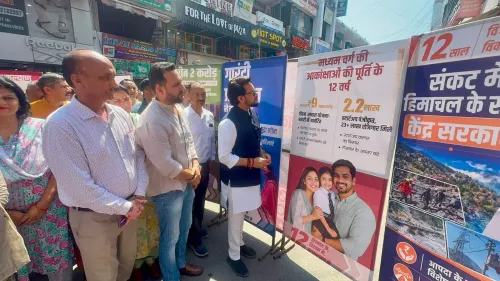
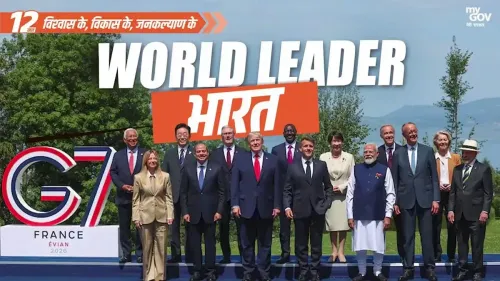
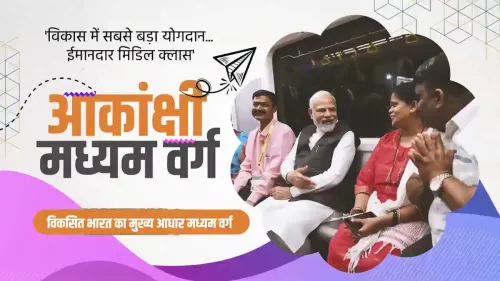
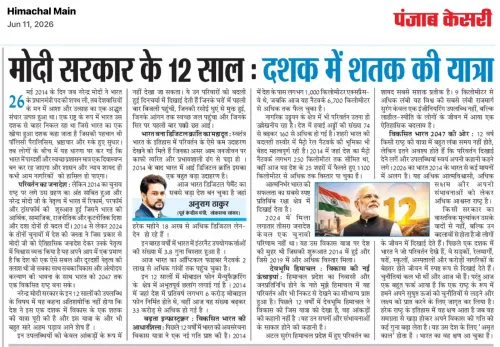
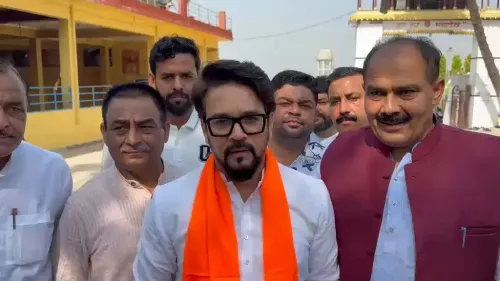
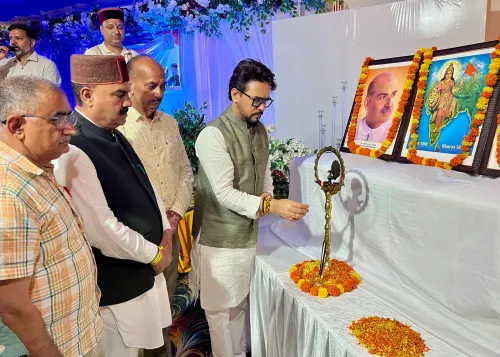
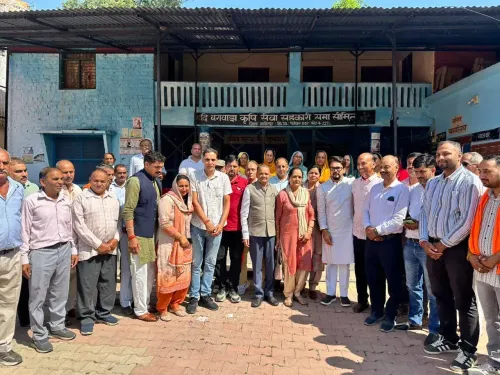
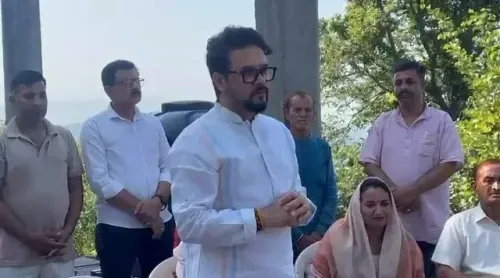
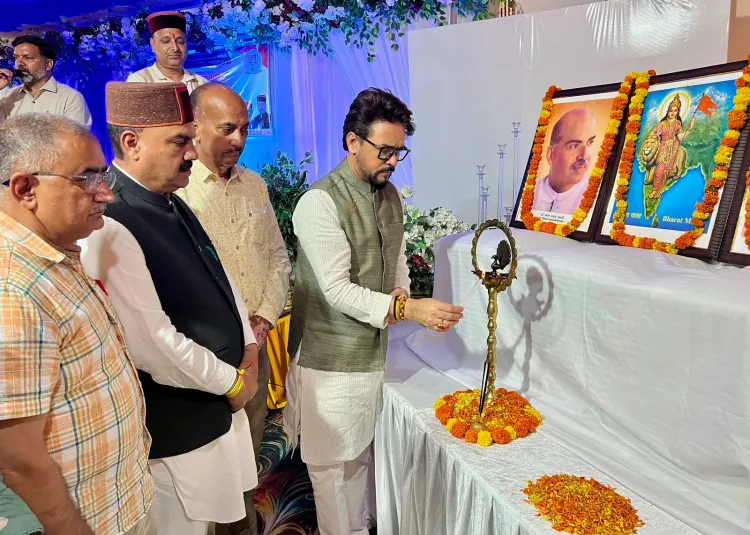
The post is accompanied by four images and is part of a broader BJP pattern of amplifying its governance record at milestone moments.
BJP MP Anurag Thakur on Monday, June 8, 2026, marked the completion of 12 years of the Narendra Modi-led central government, calling the period a 'powerful example of public service, transparent administration, and inclusive development.' The post, shared on X with four accompanying images, underscores the BJP's continued framing of its governance record as a benchmark for accountability and citizen trust.
Context
In his post, Thakur wrote — 'आदरणीय प्रधानमंत्री श्री नरेन्द्र मोदी जी के नेतृत्व में केंद्र सरकार के 12 वर्षों का कार्यकाल जनसेवा, पारदर्शी प्रशासन और समावेशी विकास की एक सशक्त मिसाल बनकर सामने आया है' ('Under the leadership of respected Prime Minister Narendra Modi, the central government's 12-year tenure has emerged as a powerful example of public service, transparent administration, and inclusive development'). He further noted that over this period the country has recorded 'unprecedented progress at the economic, social, and global level' and that citizens' trust in governance has 'continuously strengthened.'
Thakur also highlighted the establishment of a new work culture of 'corruption-free administration and accountable governance' over the past decade-plus, attributing the sustained rise in public trust directly to the government's prioritisation of good governance and development.
Policy Backdrop
The BJP government that took office in May 2014 came in with an explicit mandate of 'minimum government, maximum governance' and an anti-corruption drive. Key structural reforms followed in quick succession: demonetisation in November 2016 was positioned as a strike against black money and a push toward digital, transparent transactions, while the nationwide rollout of the Goods and Services Tax (GST) in July 2017 replaced a fragmented indirect-tax regime with a unified, technology-driven system designed to reduce administrative discretion.
Running parallel to these headline measures has been the steady expansion of Direct Benefit Transfer (DBT) and Aadhaar-linked welfare delivery — a mechanism the government has consistently cited as plugging leakages and ensuring that subsidies reach intended beneficiaries without intermediary corruption. Together, these initiatives form the policy spine that Thakur's post references when invoking 'transparent administration.'
Stakeholders and Impact
The primary stakeholders in this narrative are common citizens and Indian voters, who are the stated beneficiaries of DBT-driven welfare, digital public infrastructure, and anti-corruption measures. For the BJP, the 12-year milestone is both a political landmark and a communications opportunity — the party has consistently positioned governance reform as a core electoral plank across successive national and state elections.
As a former Union Minister of Information and Broadcasting and Youth Affairs and Sports, Thakur occupies a prominent position within the BJP's communication apparatus, lending institutional weight to anniversary messaging of this kind. His post is part of a broader pattern of senior party figures amplifying the Modi government's governance record at milestone moments.
What's Next
Attention will now turn to whether the government uses the upcoming monsoon session of Parliament to introduce new transparency or digital governance legislation that can extend this narrative into a fresh policy cycle. Analysts will also watch for state-level replication of central administrative reforms, which would test the durability and scalability of the governance model Thakur and other BJP leaders are championing. How opposition parties respond to the 12-year milestone framing — particularly on metrics of employment, price stability, and federal fiscal relations — will shape the political debate in the months ahead.
Point of View
The party signals that it intends to contest the next political cycle on administrative credibility, not just welfare optics. The timing also serves an internal party function: senior leaders publicly reinforcing the Modi government's record helps consolidate the narrative ahead of any legislative or electoral contest on the horizon. Whether the opposition can effectively counter this framing with data on employment, inflation, or federal fiscal health will determine how much traction the '12-year governance model' argument actually gains with swing voters.
NationPress
23 Sept 2026
Frequently Asked Questions
Why is Anurag Thakur talking about 12 years of Modi government?
June 2026 marks 12 years since the BJP government under Narendra Modi took office in May 2014 . Thakur's post is part of the party's milestone communications, highlighting governance achievements such as DBT, GST, and anti-corruption measures.
What did Anurag Thakur say about Modi government's 12 years?
Thakur called the 12-year tenure a 'powerful example of public service, transparent administration, and inclusive development,' and credited the government with building a new culture of 'corruption-free and accountable governance.'
What are the key governance reforms of the Modi government since 2014?
Major reforms include demonetisation (November 2016) , the nationwide rollout of GST (July 2017) , and the expansion of Direct Benefit Transfer (DBT) linked to Aadhaar to reduce leakages in welfare delivery.
Who is Anurag Thakur?
Anurag Thakur is a BJP Lok Sabha MP from Hamirpur, Himachal Pradesh and a former Union Minister of Information and Broadcasting and Youth Affairs and Sports .
What is Direct Benefit Transfer and why does BJP cite it?
Direct Benefit Transfer (DBT) is a government mechanism that routes subsidies and welfare payments directly into beneficiaries' bank accounts via Aadhaar linkage, bypassing intermediaries. The BJP cites it as evidence of transparent, leakage-free governance under the Modi administration.