Anurag Thakur Marks 12 Years of BJP Rule, Cites Middle-Class Gains
Synopsis
BJP MP Anurag Thakur on June 15, 2026, marked 12 years of PM Modi's leadership by crediting the government with easing middle-class lives, expanding opportunity, and strengthening confidence through service and good governance — anchored by the hashtag #12YearsOfSakshamMiddleClass.
Key Takeaways
BJP MP Anurag Thakur posted on June 15, 2026 , marking 12 years of PM Narendra Modi 's government.
The post credited the BJP's record with improving ease of living and expanding opportunity for India's middle class .
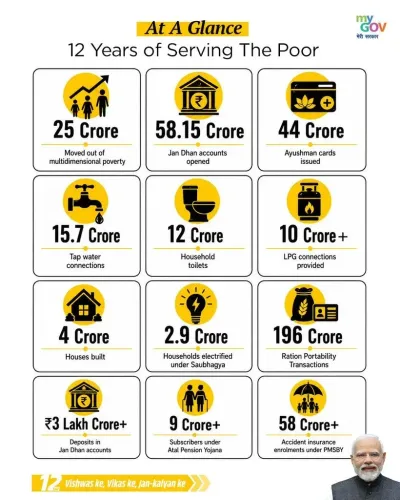
Key policy pillars cited include Jan Dhan Yojana , GST , and the Direct Benefit Transfer system, all launched or expanded post-2014.
The hashtag #12YearsOfSakshamMiddleClass signals a coordinated BJP communication effort around the milestone.
The Union Budget 2027 is the next major policy moment where middle-class commitments may be tested with concrete measures.
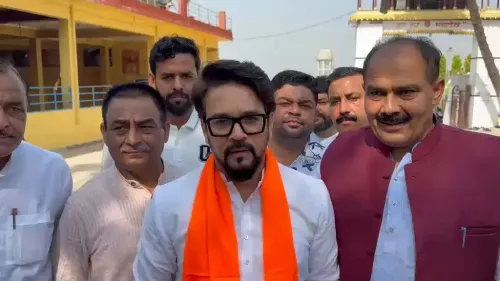
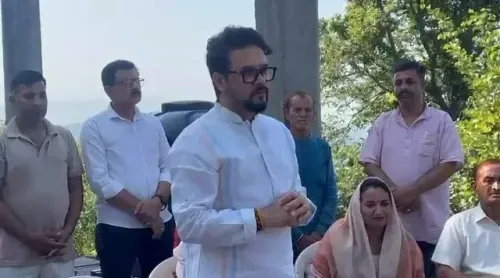
BJP MP Anurag Thakur, the Lok Sabha member from Hamirpur, Himachal Pradesh and former Union Minister, took to X on Monday, June 15, 2026, to mark 12 years of the Narendra Modi-led government, crediting it with improving the quality of life and expanding opportunity for India's middle class.
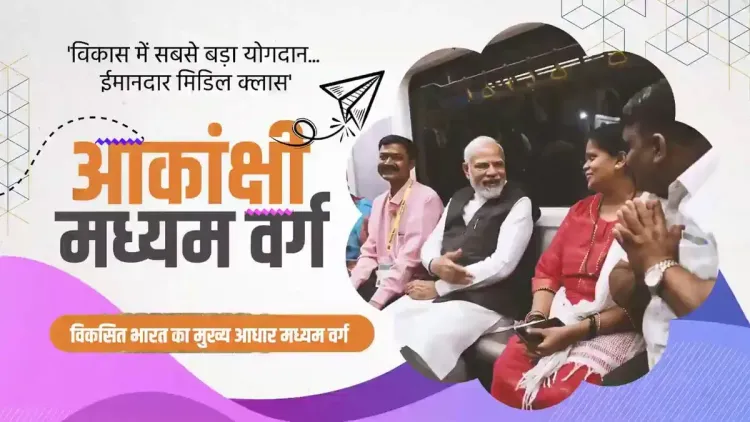
In his post, Thakur wrote — 'सेवा, सुशासन और मध्यम वर्ग के कल्याण के 12 वर्ष' ('12 years of service, good governance, and welfare of the middle class') — framing the BJP's record since 2014 around three pillars: ease of living, upward mobility, and renewed confidence among salaried and self-employed households. The post was accompanied by a video and carried the hashtag #12YearsOfSakshamMiddleClass.
Context
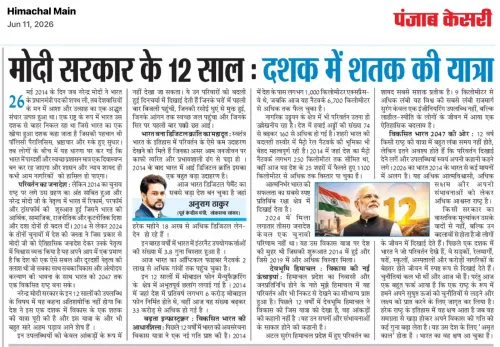
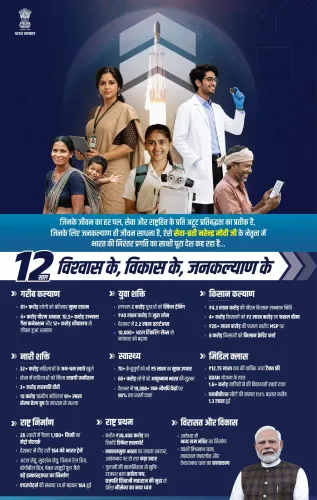
Narendra Modi was first sworn in as Prime Minister on May 26, 2014, marking the BJP's return to a full majority at the Centre after a decade. The party has since won two successive general elections — in 2019 and 2024 — consolidating its position as the dominant force in national politics. The 12-year milestone has prompted a wave of communication from party leaders highlighting governance achievements across sectors.
Anurag Thakur, who served as Union Minister of Information and Broadcasting and Youth Affairs and Sports in previous cabinet configurations, has been among the BJP's most vocal communicators on social media. His post is part of a coordinated party effort to consolidate the middle-class narrative ahead of future electoral cycles.
Policy Backdrop
The BJP government's middle-class agenda since 2014 has rested on several structural interventions. The Pradhan Mantri Jan Dhan Yojana, launched in 2014, brought banking access to lower- and middle-income households, enabling formal credit and direct subsidy transfers. The rollout of the Goods and Services Tax (GST) in July 2017 consolidated India's fragmented indirect tax regime, reducing compliance layers for small businesses and the self-employed.
The Direct Benefit Transfer (DBT) architecture, expanded aggressively post-2014, has been cited by the government as a mechanism to reduce leakages and deliver subsidies — on fuel, food, and fertiliser — directly to eligible beneficiaries, including middle-income households. Personal income-tax rationalisation in successive Union Budgets, including the introduction of an optional simplified tax regime, has also been positioned as relief for the salaried class.
Stakeholders and Impact
India's middle class — broadly comprising urban salaried workers, small-business owners, and aspirational rural households — is estimated to number several crore families and represents a critical voting and consumption bloc. Policy decisions on income-tax slabs, housing finance, digital public infrastructure, and healthcare access directly shape their economic experience.
Urban taxpayers and first-generation professionals have been among the primary recipients of digital-governance reforms: from DigiLocker and UMANG to simplified GST filing portals. At the same time, critics have pointed to pressures on the middle class from inflation, stagnant wage growth in certain sectors, and the rising cost of education and healthcare — though Thakur's post does not address these concerns.
What's Next
The Union Budget 2027 is expected to be a key policy moment for the middle class, with debate already building around personal income-tax slab revisions and potential new credit or housing schemes targeting salaried households. The BJP's continued emphasis on the 'Saksham Middle Class' framing signals that middle-class welfare will remain a central plank in the party's political communication through the next electoral cycle. How the government translates this narrative into concrete Budget measures will determine whether the momentum Thakur describes translates into tangible relief for millions of households.
Point of View
The party frames 12 years not merely as welfare delivery but as an aspirational transformation. The timing, well ahead of the next general election cycle, suggests the party is seeding a narrative it intends to amplify through Budget 2027 and beyond. The post's silence on inflation and wage pressures, however, leaves an opening for opposition parties to contest the same constituency with a counter-narrative grounded in cost-of-living data.
NationPress
22 Sept 2026
Frequently Asked Questions
What did Anurag Thakur post about on June 15 2026?
Anurag Thakur posted on X to mark 12 years of PM Narendra Modi's government, saying it improved the lives of India's middle class through service and good governance, using the hashtag #12YearsOfSakshamMiddleClass.
What is #12YearsOfSakshamMiddleClass?
It is a BJP social-media campaign hashtag marking 12 years of the Narendra Modi government, focused on highlighting welfare and governance measures benefiting India's middle class since 2014.
What policies has the Modi government introduced for the middle class?
Key measures include the Pradhan Mantri Jan Dhan Yojana for financial inclusion, the Goods and Services Tax to simplify indirect taxation, Direct Benefit Transfers to reduce subsidy leakages, and personal income-tax rationalisation in successive Union Budgets.
Who is Anurag Thakur?
Anurag Thakur is a BJP Lok Sabha MP from Hamirpur in Himachal Pradesh and a former Union Minister who held the portfolios of Information and Broadcasting and Youth Affairs and Sports.
When did Narendra Modi first become Prime Minister?
Narendra Modi was first sworn in as Prime Minister on May 26, 2014, after the BJP won a full majority in the Lok Sabha general elections that year.