Anurag Thakur Marks 12 Years of Modi Govt, Cites Welfare Gains
Synopsis
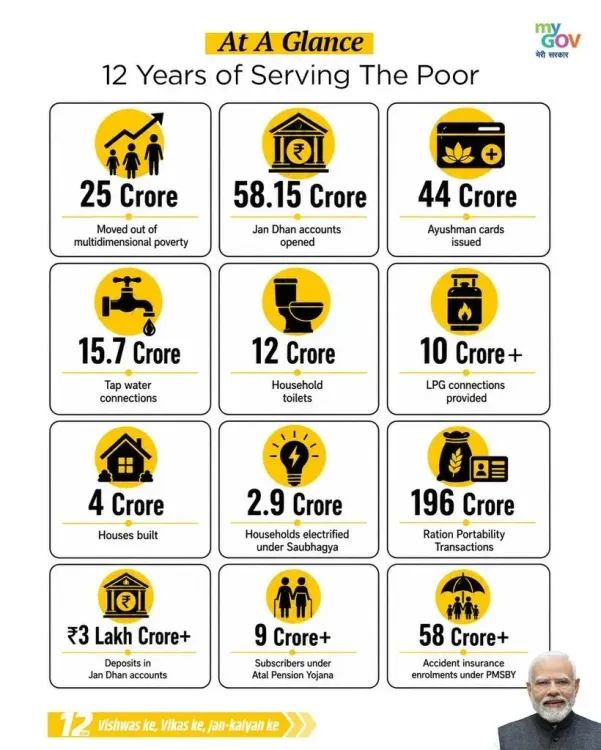
BJP MP Anurag Thakur marked 12 years of the Modi government on June 8, 2026, crediting flagship schemes — Jan Dhan, Ayushman Bharat, PM-KISAN, and DBT — with lifting over 25 crore people out of poverty and laying the foundation for a Developed India by 2047.
Key Takeaways
BJP MP Anurag Thakur posted on June 8, 2026 to mark 12 years of the Modi government under the hashtag #12YearsOfGaribKalyan .
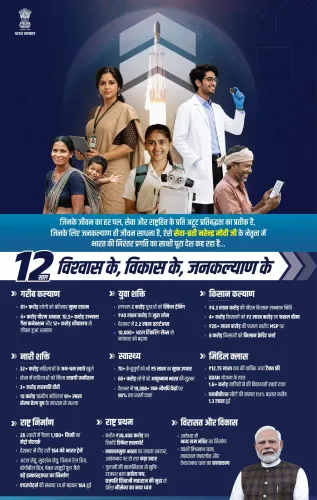
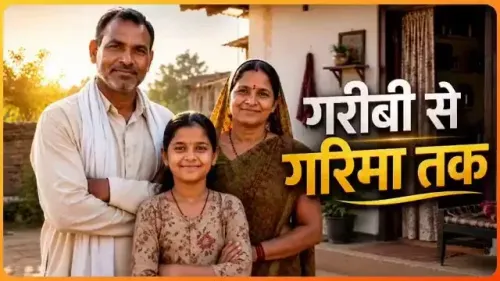
The post credits the government with lifting over 25 crore people out of poverty and providing more than 3.5 crore pucca houses to the poor.
Key schemes cited include Jan Dhan Yojana (financial inclusion), Ayushman Bharat (₹5 lakh health cover), PM-KISAN (farmer income support), and Direct Benefit Transfer (subsidy delivery).
The post invokes the Antyodaya philosophy — welfare for the most marginalised — as the guiding spirit of the government's approach.
The Viksit Bharat @2047 goal of a developed India by independence's centenary is positioned as the logical endpoint of this 12-year welfare arc.
Poverty-reduction and housing figures cited by the government are contested by independent researchers on methodological grounds.
BJP MP Anurag Thakur on Monday, June 8, 2026, marked 12 years of the Narendra Modi-led government with a sweeping account of its welfare record, arguing that the administration has delivered 'a century's worth of development' in a single decade and that the goal of a Viksit Bharat (Developed India) by 2047 is now within sight.
Context
Thakur, the Lok Sabha MP from Hamirpur, Himachal Pradesh and a former Union Minister of Information & Broadcasting and Youth Affairs & Sports, posted under the hashtag #12YearsOfGaribKalyan — a reference to welfare for the poor. The post lists a series of flagship programmes as evidence that the government 'has not merely promised change but delivered it.'
The BJP and its allies have been marking the June 2014 formation of the first Modi government with coordinated messaging across social media, positioning the anniversary as a milestone in India's development trajectory.
Policy Backdrop
The schemes cited by Thakur span the full 12-year period. Pradhan Mantri Jan Dhan Yojana, launched in August 2014, aimed to bring unbanked households into the formal financial system; the government has credited it with enrolling millions of previously excluded citizens. Ayushman Bharat, announced in the 2018 Union Budget, extended health insurance coverage of up to ₹5 lakh per year to poor and lower-middle-class families.
PM-KISAN Samman Nidhi, rolled out from February 2019, provides direct income support to landholding farmers. Direct Benefit Transfer (DBT) — scaled up significantly after 2014 — routes subsidies and entitlements straight to beneficiaries' bank accounts, cutting out intermediaries. Together, these form the operational core of what the government describes as the Antyodaya approach: prioritising those at the bottom of the economic ladder.
Thakur's post also claims that more than 25 crore people have been lifted out of poverty and that over 3.5 crore pucca houses have been provided to the poor — figures drawn from government data that are the subject of ongoing academic and policy debate.
Stakeholders and Impact
The programmes highlighted cut across several large demographic groups: farmers through PM-KISAN, women through financial inclusion and political representation measures, youth through skill and employment initiatives, and poor households through housing, health cover, and DBT. The government's framing links these individual schemes to the overarching Viksit Bharat @2047 vision — an official roadmap for India to become a developed economy by the centenary of independence.
Opposition parties and independent economists have contested several of the headline numbers, particularly on poverty reduction, arguing that methodology and baseline choices affect the scale of gains. The government maintains that converging data from multiple agencies validate its claims.
What's Next
With the 2047 target now a central plank of BJP's long-range political messaging, the party is expected to intensify its welfare-achievement narrative ahead of upcoming state elections and in the run-up to the next general election cycle. NITI Aayog and line ministries are anticipated to release updated scheme-coverage data and poverty metrics that will either reinforce or complicate the claims made in posts such as this one. How independent assessments reconcile with official figures will shape the credibility of the Viksit Bharat narrative as 2047 draws closer.
Point of View
Forward-looking frame — linking incremental scheme deliverables to the grand 2047 developed-nation target. The choice of the Antyodaya idiom is deliberate: it signals ideological continuity with the RSS-rooted tradition of prioritising the last person in the queue, giving the BJP's technocratic welfare push a deeper cultural legitimacy. The hashtag #12YearsOfGaribKalyan also signals a coordinated party-wide communication exercise, suggesting this is less a spontaneous post and more a scripted milestone message. Whether the numbers cited survive independent scrutiny will matter: the 2047 narrative's credibility rests on verifiable progress, and opposition parties are already contesting the methodology behind headline poverty-reduction figures.
NationPress
19 Sept 2026
Frequently Asked Questions
What is the #12YearsOfGaribKalyan hashtag about?
#12YearsOfGaribKalyan marks 12 years of the Narendra Modi-led government (since June 2014 ) and translates roughly as '12 years of welfare for the poor,' highlighting schemes aimed at poverty alleviation, housing, health, and financial inclusion.
What is the Viksit Bharat 2047 vision?
Viksit Bharat @2047 is the Indian government's official roadmap to make India a fully developed economy by 2047 , the centenary of independence, encompassing goals in infrastructure, health, education, and per-capita income.
How many people has the Modi government claimed to lift out of poverty?
The government, including in Anurag Thakur's post, claims that over 25 crore people have been lifted out of poverty over the past 12 years, citing converging data from multiple official agencies, though independent economists continue to debate the methodology.
What is Ayushman Bharat and who does it cover?
Ayushman Bharat , launched in 2018 , provides health insurance coverage of up to ₹5 lakh per year to poor and lower-middle-class families, making it one of the world's largest government-funded health protection schemes.
What is PM-KISAN Samman Nidhi?
PM-KISAN Samman Nidhi , rolled out from February 2019 , is a direct income support scheme that transfers funds to landholding farmers across India, designed to supplement farm income and reduce financial stress in the agricultural sector.