Owaisi: Govt Wants Mosque Razed for Central Vista, Used Hindu Rite to Launch It
Synopsis
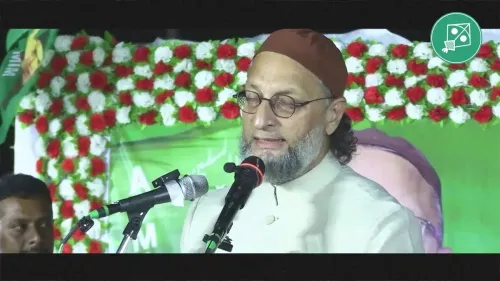
AIMIM president Asaduddin Owaisi has challenged the Union government's submission to the Delhi High Court seeking removal of the century-old Qadeemi Masjid from the Krishi Bhawan compound for the Central Vista project, pointing to the contradiction with the project's own Bhoomi Pooja inauguration.
Key Takeaways
The Union government has told the Delhi High Court that the Qadeemi Masjid inside the Krishi Bhawan compound must be removed for the Common Central Secretariat (CCS) under the Central Vista project.
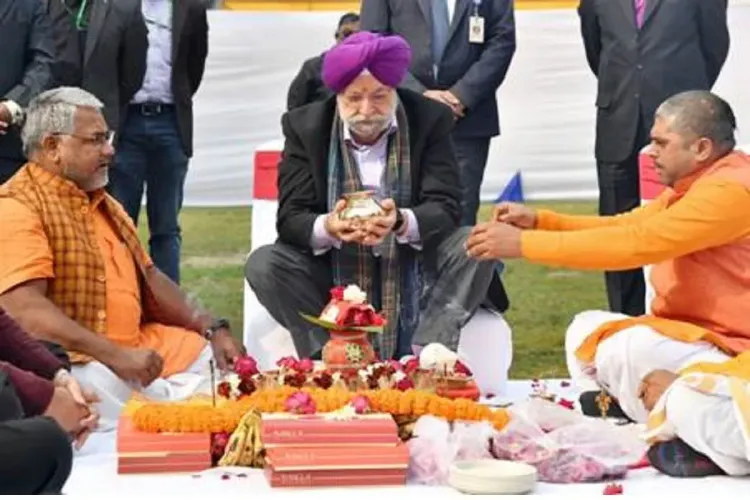
The government's stated reason is that the mosque is 'impermissible and incompatible with the secular character of government property.' AIMIM president Asaduddin Owaisi argues this contradicts the fact that the Central Vista project was inaugurated with a Bhoomi Pooja , a Hindu ritual, on public land.
The Qadeemi Masjid is claimed to predate 1912 , making it older than Krishi Bhawan itself.
The Central Vista redevelopment was approved in 2019 ; the new Parliament's foundation stone was laid in 2020 .
The Delhi High Court's ruling will set a precedent on how heritage religious structures on government land are treated under large infrastructure projects.
A mosque that predates the building it stands beside — and possibly the neighbourhood around it — is now at the centre of a sharp constitutional question before the Delhi High Court. AIMIM president Asaduddin Owaisi on Wednesday, 4 November 2026, called out what he described as a glaring double standard: the Union government has told the court that the Qadeemi Masjid, located inside the Krishi Bhawan compound in New Delhi, must be demolished to make way for the Common Central Secretariat (CCS) — on the ground that it is 'impermissible and incompatible with the secular character of government property.'
A mosque older than the building around it
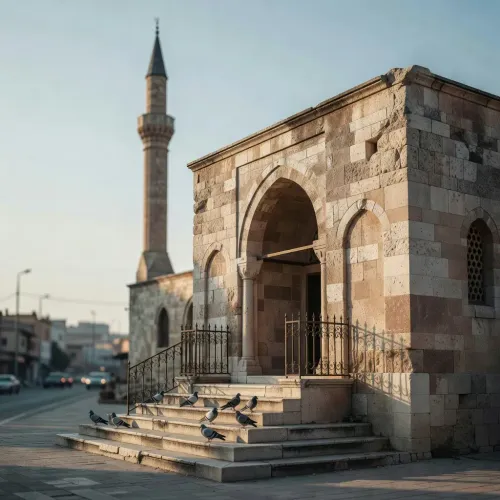
The Qadeemi Masjid's presence inside Krishi Bhawan — the complex that houses the Ministry of Agriculture and Farmers Welfare — is not a recent encroachment. Owaisi points out that the mosque stood there before 1912, predating even the construction of Krishi Bhawan itself. The word qadeemi means 'ancient' in Urdu, and the mosque's name is itself a statement of its vintage. The government's submission to the court, as characterised by Owaisi, makes no accommodation for that history.The Bhoomi Pooja argument at the heart of Owaisi's challenge
Owaisi's sharpest point is not legal — it is logical. The Central Vista redevelopment project, approved by the Union government in 2019 with its foundation stone laid for the new Parliament building in 2020, was inaugurated with a Bhoomi Pooja — a Hindu consecration ritual. That ceremony, conducted on what is unambiguously public land being funded by taxpayers of every faith, drew criticism at the time. Now the same government, in the same project, invokes secularism as the reason a mosque cannot remain. 'Secularism,' Owaisi writes, 'is not offended by the use of one faith's rituals for a public project, but is allergic to a masjid that has stood there even before 1912.' The contrast is deliberate and difficult to dismiss. If the constitutional principle of secularism governs what may stand on government land, critics argue it must govern what may be performed on that land too — and vice versa.Central Vista's recurring collision with history
The Central Vista project — one of independent India's most ambitious and contested infrastructure programmes — has repeatedly collided with questions about heritage, land use, and due process. The plan to replace colonial-era administrative buildings in Lutyens' Delhi with a modern secretariat cluster has faced legal challenges since its inception, with courts and conservationists scrutinising heritage clearances and demolition orders. The Qadeemi Masjid case adds a communal-rights dimension to those existing fault lines. The Delhi High Court's eventual ruling will carry weight beyond this single mosque — it will effectively define how the state balances religious structures of historical standing against large-scale infrastructure mandates on government land. A century-old prayer space, a government affidavit invoking secularism, and a Bhoomi Pooja on the same stretch of Delhi soil: the High Court will now have to decide what the Constitution actually means when it says the state has no religion.Point of View
The optics are uncomfortable; for the opposition and Muslim civil society, the case is a ready-made emblem of what they describe as differential treatment. The Delhi High Court's ruling will be watched as a signal far beyond Lutyens' Delhi.
NationPress
4 Nov 2026
Frequently Asked Questions
What is the Qadeemi Masjid and why does the government want it removed?
The Qadeemi Masjid is a centuries-old mosque inside the Krishi Bhawan compound in New Delhi. The Union government has told the Delhi High Court it must be demolished to make way for the Common Central Secretariat under the Central Vista redevelopment project, arguing it is incompatible with the secular nature of government property.
What is Owaisi's argument against the government's secularism claim?
Owaisi points out that the Central Vista project itself was inaugurated with a Bhoomi Pooja — a Hindu ritual — on public land, making the government's claim that a mosque violates the secular character of government property contradictory.
How old is the Qadeemi Masjid?
According to Owaisi, the mosque predates 1912, making it older than the Krishi Bhawan building itself.
What is the Central Vista project?
The Central Vista project is a large-scale redevelopment of government buildings in Lutyens' Delhi, including a new Parliament building and Common Central Secretariat. It was approved in 2019 and the Parliament building's foundation stone was laid in 2020.
What will the Delhi High Court decide in the Qadeemi Masjid case?
The Delhi High Court is hearing a petition concerning the government's request to remove the Qadeemi Masjid from Krishi Bhawan. Its ruling will determine whether a historically established religious structure on government land can be demolished for an infrastructure project, and could set a wider precedent for similar cases.