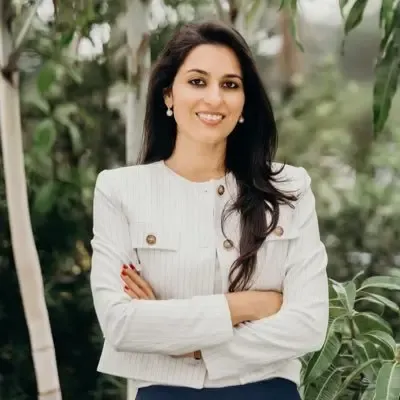
Piya Dandiya, daughter of Rajasthan-origin doctor, wins Florida US House seat

Synopsis
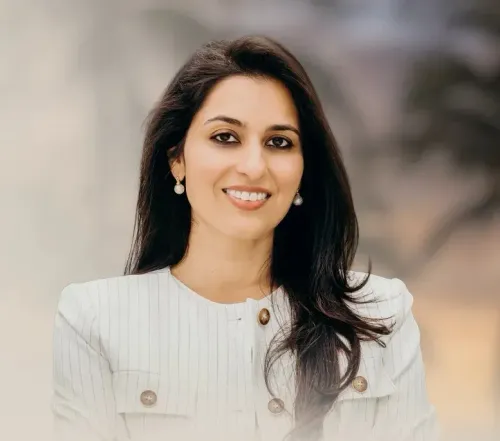
Piya Dandiya, daughter of a Rajasthan immigrant doctor and a Harvard-educated former school principal, has become the ninth person of Indian origin elected to the US House of Representatives — winning a Florida district that was deliberately redrawn to hurt Democrats, handing Trump's redistricting play a rare defeat.
Key Takeaways
Piya Dandiya , daughter of an immigrant doctor from Rajasthan , has been elected to the US House of Representatives from Florida .
She defeated Republican Casey Askar with 51.9 per cent of the vote in Tuesday's midterm election.
She is the ninth person of Indian origin elected to the US House, a lineage dating back to Dalip Singh Saund in 1956 .
Her district was redrawn across Palm Beach County and three other counties to dilute Democratic strength — the strategy did not succeed.
She raised $3.9 million from 24,000 donors , with 93 per cent giving $100 or less .
Dandiya is a former Teach For America educator, Harlem school principal, White House Fellow , and former Apple executive.
Piya Dandiya, the daughter of an immigrant doctor from Rajasthan, has been elected to the US House of Representatives from Florida, becoming the ninth person of Indian origin to win a seat in the House since Dalip Singh Saund did so in 1956. Her victory on Tuesday in the midterm election also marked a decisive rebuff to a constituency remapping effort that had been designed to dilute Democratic Party strength in the district.
How She Won
Dandiya defeated her Republican rival Casey Askar, securing 51.9 per cent of the vote. The constituency sits adjacent to former President Donald Trump's Mar-a-Lago estate in Palm Beach County, though it does not include the property itself. The district had been redrawn to zigzag across parts of Palm Beach County and three other counties, reportedly in a bid to increase Republican prospects — a strategy that ultimately failed. The long-serving Democrat who had previously held the seat, Lois Franel, shifted to a neighbouring constituency, leaving it open for Dandiya to contest.
A Groundbreaking Indian-American Journey
Dandiya's path to Congress is rooted in public service and education. While studying at Harvard University, she spent summer breaks volunteering in New Delhi, teaching English to underprivileged children. She went on to join Teach For America, the volunteer programme that places educators in schools in low-income communities. She later became one of the youngest principals in the United States when she founded and led a school in Harlem, New York, where 86 per cent of the students came from disadvantaged backgrounds — and every student who completed the school went on to college.
She was subsequently awarded the prestigious White House Fellowship, which places high-potential young professionals as special assistants and advisors to senior government officials. Following that, she joined technology giant Apple, where she worked with state governments to modernise public education, healthcare, and government systems. Education is a thread running through her family: her mother started a Montessori school for Dandiya herself, and her son now studies there.
What Dandiya Has Said
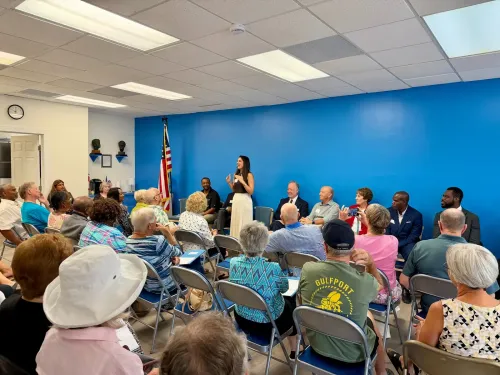
In a campaign advertisement, Dandiya paid tribute to her parents, calling them her inspiration. 'My parents taught me to leave the world better than I found it,' she said. She described her congressional run as being driven by a desire to 'stand up for our country's democratic ideals' at what she called a 'critical moment as politicians in Washington weaken programmes that give millions of citizens a fighting chance.'
Her platform centred on lowering healthcare costs, protecting Social Security and Medicare, banning congressional stock trading, and cutting middle-class taxes. She announced on Facebook that she had raised $3.9 million from 24,000 donors, with 93 per cent contributing $100 or less — a figure she cited as evidence of broad grassroots backing.
Significance for Indian-Americans
Dandiya's win extends a lineage of Indian-American representation in the US Congress that began with Dalip Singh Saund nearly seven decades ago. Her victory is notable for its geography — a contested, redrawn district in a state closely associated with Trump-era Republican strategy — and for the profile she brings: a first-generation American, educator, school founder, and technology executive. As Indian-American political representation continues to grow across both parties, her election adds another chapter to that evolving story.
Point of View
Running on a grassroots-funded campaign, could prevail in a gerrymandered swing district points to the limits of map-drawing as a substitute for candidate quality. At the same time, her victory arrives at a moment when Indian-American political representation is growing on both sides of the aisle, complicating any single-community narrative. The harder test will be whether she can hold a seat that was engineered to be hostile — 2028 will be the real referendum on her coalition.
NationPress
4 Nov 2026
Frequently Asked Questions
Who is Piya Dandiya?
Piya Dandiya is the daughter of an immigrant doctor from Rajasthan who has been elected to the US House of Representatives from Florida. She is a Harvard-educated former teacher, school principal in Harlem, White House Fellow, and former Apple executive who ran on a Democratic platform focused on healthcare, Social Security, and middle-class taxes.
Which district in Florida did Piya Dandiya win?
Dandiya won a Florida congressional district that abuts former President Donald Trump's Mar-a-Lago estate in Palm Beach County but does not include it. The district had been redrawn to zigzag across Palm Beach County and three other counties in an attempt to dilute Democratic Party strength.
How many Indian-Americans have been elected to the US House of Representatives?
Dandiya is the ninth person of Indian origin to be elected to the US House of Representatives. The first was Dalip Singh Saund, who was elected in 1956.
By how much did Piya Dandiya win?
Dandiya defeated Republican Casey Askar with 51.9 per cent of the vote in Tuesday's midterm election. She also raised $3.9 million from 24,000 donors, 93 per cent of whom contributed $100 or less.
Why is Dandiya's win considered significant beyond her personal profile?
Her victory is seen as a defeat for a constituency remapping plan that had been designed to increase Republican electoral prospects in the district. The seat had also been vacated by long-serving Democrat Lois Franel, who moved to a neighbouring constituency, making it an open contest that the remapping was intended to tip Republican.