NCERT Class 9 textbooks add personal finance, entrepreneurship chapters
Synopsis
India's Class 9 students will now learn about mutual funds, EMIs, income tax, and startup basics — all from their NCERT Social Science textbooks. Economic Advisory Council member Sanjeev Sanyal spotlighted the changes, noting a striking tonal shift: entrepreneurship is now framed as innovation, not exploitation. It is a quiet but consequential overhaul of how the next generation thinks about money and business.
Key Takeaways
NCERT Class 9 Social Science textbooks now include Chapter 5: 'Managing Your Personal Finances' and Chapter 6: 'From Ideas to Startups' .
The personal finance chapter covers fixed deposits, mutual funds, EMIs, taxes, risk-return trade-offs , and financial goal-setting.
The entrepreneurship chapter explains profit and loss accounts, business plans, innovation , and risk-taking.
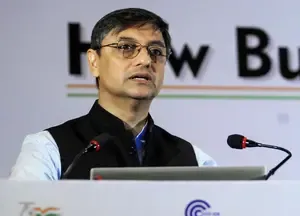
Sanjeev Sanyal , Member of the Economic Advisory Council to the Prime Minister , highlighted the chapters in posts on X on 4 November 2026 .
The new framing presents business and risk-taking as positive activities, a departure from earlier textbook portrayals that emphasised 'hoarding' and 'black-markets' .
The revisions align with the National Education Policy (NEP) 2020 's emphasis on competency-based, real-world learning.
The latest edition of NCERT Social Science textbooks for Class 9 has introduced dedicated chapters on personal finance and entrepreneurship, marking a significant shift in how economic concepts are taught in Indian schools. Sanjeev Sanyal, Member of the Economic Advisory Council to the Prime Minister of India, highlighted the additions on 4 November 2026, calling them a step toward equipping students with real-world life skills.
What the New Chapters Cover
Chapter 5, titled 'Managing Your Personal Finances', introduces students to the fundamentals of money management, including saving, investing, protecting assets, and paying income tax. The chapter encourages students to reflect on how they handle pocket money or monetary gifts — whether they spend, save, or set it aside for future needs.
Students are also introduced to investment instruments such as fixed deposits, mutual funds, and concepts like EMIs, risk-return trade-offs, and financial goal-setting. The chapter emphasises that financial planning should begin early, as responsibilities grow with age.
On taxation, the textbook explains that taxes are compulsory payments made to the government to finance public services, and distinguishes between direct taxes (such as income tax) and indirect taxes (such as the Goods and Services Tax, or GST). It notes that individuals earning above a specified income threshold are required to pay tax, while those below the prescribed limit are exempt.
Entrepreneurship Enters the Classroom
Chapter 6, titled 'From Ideas to Startups', focuses on the fundamentals of starting and managing a business. The chapter covers business planning, profit and loss accounts, innovation, and risk-taking.
Sanyal, sharing photographs of the textbook pages on X, noted a sharp departure from earlier editions: 'There is also a chapter on entrepreneurship in the Grade 9 Social Science Part 2. It explains basics of profit & loss account, business plans and so. Most importantly, it presents risk-taking, innovation and business as a positive activity - quite different from how previous textbook portrayed it (with emphasis on ‘hoarding’ and ‘black-markets’),' he wrote.
Notably, the reframing of business activity — from something associated with exploitation to a vehicle for innovation — represents a tonal overhaul, not just a curricular update.
Sanyal's Endorsement and Social Media Spotlight
In an earlier post on X, Sanyal had written: 'The economics segment of the recently introduced NCERT textbooks for Social Science (Grade 9, Part 2) now has a chapter on personal finance. Students are taught basics about fixed deposits, mutual funds, EMI, taxes, risk-return and so on. The idea is to provide them with useful life skills.'
He also shared a link to the NCERT textbook, inviting readers to review the chapters directly. His posts drew significant attention, bringing the curriculum revisions to wider public notice.
Why This Matters
India has long ranked poorly on financial literacy indices despite a rapidly growing fintech sector and expanding investor base. Introducing concepts like mutual funds, EMIs, and income tax at the Class 9 level could meaningfully raise baseline financial awareness for the next generation of earners. This comes amid broader NCERT curriculum reforms that have been under discussion since the National Education Policy (NEP) 2020, which called for a shift toward competency-based, real-world learning. The entrepreneurship chapter, in particular, aligns with the Centre's push to foster a startup culture among youth — with India now home to over 100 unicorns. All eyes will now be on whether these chapters are matched by adequately trained teachers and classroom delivery.
Point of View
But its impact will hinge on implementation. India's financial literacy deficit is not a knowledge-access problem alone — it is also a pedagogy problem. Telling a 14-year-old about mutual funds means little if the teacher explaining it has never held one. The more significant signal here is ideological: by retiring the 'hoarding and black-markets' framing, NCERT is finally treating markets as mechanisms rather than villains. That is a belated correction, but the absence of a parallel teacher-training push risks undermining the curriculum's ambitions before a single class has been taught.
NationPress
4 Nov 2026
Frequently Asked Questions
What new chapters have been added to NCERT Class 9 Social Science textbooks?
The updated NCERT Class 9 Social Science Part 2 textbook includes Chapter 5, 'Managing Your Personal Finances', covering saving, investing, EMIs, mutual funds, and taxation, and Chapter 6, 'From Ideas to Startups', which introduces entrepreneurship basics including business planning, profit and loss accounts, and risk-taking.
Who highlighted the new NCERT Class 9 chapters and why?
Sanjeev Sanyal, a Member of the Economic Advisory Council to the Prime Minister of India, highlighted the chapters in posts on X on 4 November 2026. He noted their practical value as life skills and pointed out the positive reframing of entrepreneurship compared to earlier textbooks.
Why are these changes to the NCERT curriculum significant?
The changes are significant because they introduce real-world financial concepts — mutual funds, EMIs, income tax — to students as young as 14, potentially raising financial literacy at scale. The entrepreneurship chapter also marks a tonal overhaul, presenting business and innovation as positive forces rather than sources of economic harm.
How do the new NCERT chapters connect to India's National Education Policy?
The revisions align with the National Education Policy (NEP) 2020, which called for a shift from rote learning to competency-based, real-world education. Financial literacy and entrepreneurship were identified as key areas for integration into school curricula under the NEP framework.
What does the NCERT Class 9 chapter on personal finance cover?
The chapter covers saving, investing in instruments like fixed deposits and mutual funds, understanding EMIs and risk-return trade-offs, protecting assets, and paying income tax. It also explains the difference between direct taxes such as income tax and indirect taxes such as GST, and notes that individuals below a prescribed income threshold are exempt from income tax.