SME Growth Fund: ₹10,000 crore Cabinet approval to widen capital access for small businesses

Synopsis
The Cabinet's ₹10,000 crore SME Growth Fund is a rare equity-side intervention in MSME financing — most past schemes addressed debt. By pairing government equity participation with an SME IPO pathway and SEBI-regulated institutional involvement, the fund could unlock a multiplier effect well beyond its initial corpus, particularly for businesses in Tier-2 and Tier-3 cities historically shut out of formal capital markets.
Key Takeaways
The Union Cabinet approved a ₹10,000 crore SME Growth Fund on 7 October 2026 to provide equity capital to small and medium enterprises.
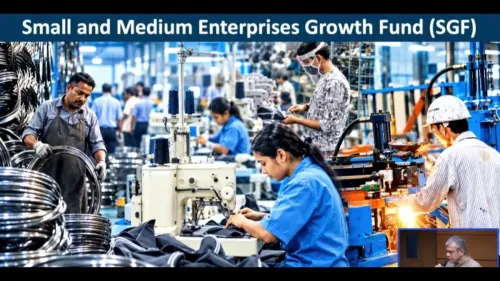
The fund covers businesses in manufacturing, services, technology, innovation, and strategic value chains .
It supports SMEs seeking to raise capital via SME IPOs , creating a structured route to capital markets.
PHDCCI and FKCCI say government equity participation will boost private investor confidence and trigger a multiplier effect through SEBI-regulated institutions .
Tier-2 and Tier-3 city enterprises — historically underserved by institutional capital — are a key target group.
The initiative forms part of the Union Budget 2026-27 MSME package; operational guidelines are yet to be notified.
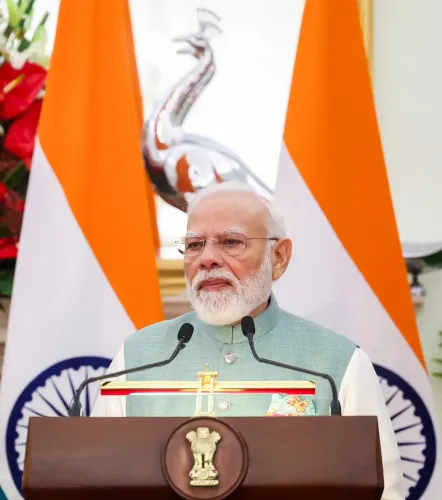
The Union Cabinet, chaired by Prime Minister Narendra Modi, on Tuesday, 7 October 2026, approved the establishment of a ₹10,000 crore SME Growth Fund aimed at widening equity access for small and medium enterprises across manufacturing, services, technology, and innovation-driven sectors. Industry leaders have welcomed the move as a structural fix to one of the most persistent bottlenecks in India's MSME ecosystem — the chronic shortage of growth capital.
What the SME Growth Fund Offers
The fund is designed to provide growth-oriented equity capital to high-potential small and medium enterprises, with a particular focus on businesses operating in manufacturing, services, technology, innovation, and strategic value chains. Unlike debt-based instruments, equity participation through the fund is expected to strengthen enterprise balance sheets and improve creditworthiness for future fundraising.
The initiative also targets support for SMEs seeking to tap capital markets through SME initial public offerings (IPOs), creating a more structured pathway for businesses looking to scale operations and expand capacity. It forms part of the broader Union Budget 2026-27 package to bolster the MSME sector through improved equity access, liquidity support, and professional assistance.
Industry Reaction: A Confidence Signal for Investors
Ranjeet Mehta, CEO and Secretary General of the PHD Chamber of Commerce and Industry (PHDCCI), described the approval as a major step toward strengthening India's SME ecosystem. He said government equity participation would not only help enterprises access funds directly but also encourage greater involvement from private investors by boosting sector-wide confidence.
Notably, Mehta highlighted that the fund's design — with the government taking an equity stake — sends a credibility signal that could lower the risk perception of SME investments among institutional and retail investors alike.
Multiplier Effect and Tier-2, Tier-3 City Impact
K. Satish Nagaraj, Vice President of the Federation of Karnataka Chambers of Commerce and Industry (FKCCI), said the scheme could mobilise significantly larger pools of capital by attracting participation from SEBI-regulated financial institutions. He argued the ₹10,000 crore corpus could have a multiplier effect, unlocking financing well beyond the initial government outlay.
Nagaraj also stressed that the fund is expected to particularly benefit businesses in Tier-2 and Tier-3 cities, where access to institutional funding has traditionally been limited. This geographical dimension addresses a long-standing equity gap in India's economic development, where the bulk of formal capital has historically flowed to metros.
Broader Policy Context
India's MSME sector employs an estimated 11 crore people and contributes roughly 30% of GDP, yet access to formal equity capital has remained structurally constrained. Most small enterprises rely on promoter funds, informal borrowing, or high-cost debt, leaving them under-capitalised relative to their growth potential.
This is not the first government initiative targeted at MSME financing — previous schemes under the Credit Guarantee Fund Trust for Micro and Small Enterprises (CGTMSE) and MUDRA addressed debt access, but equity-side interventions at this scale are relatively rare. The SME Growth Fund represents a deliberate pivot toward equity, signalling a recognition that debt alone cannot finance the next phase of MSME growth.
What Happens Next
Operational guidelines for the fund, including eligibility criteria and disbursement mechanisms, are yet to be formally notified. Industry bodies including PHDCCI and FKCCI have called for swift implementation to ensure the fund's benefits reach enterprises in the current financial year. Regulatory coordination with SEBI will be critical for the SME IPO support component to function effectively.
Point of View
CGTMSE guarantees, emergency credit lines. The ₹10,000 crore SME Growth Fund is a meaningful departure because equity, not debt, is what genuinely de-risks a growing business. The real question is execution: who decides which SMEs receive equity, on what terms, and with what governance safeguards? Without transparent eligibility criteria and an independent oversight mechanism, a fund of this size risks becoming a patronage channel rather than a market-building tool. The SME IPO angle is the most interesting structural element — if it actually accelerates listings and deepens the retail investor base for smaller companies, it could have durable capital market consequences beyond the initial corpus.
NationPress
7 Oct 2026
Frequently Asked Questions
What is the ₹10,000 crore SME Growth Fund approved by the Cabinet?
It is a government-backed equity fund approved by the Union Cabinet on 7 October 2026, designed to provide growth capital to small and medium enterprises in manufacturing, services, technology, and innovation sectors. It forms part of the Union Budget 2026-27 measures to strengthen the MSME ecosystem.
How will the SME Growth Fund benefit small businesses?
The fund provides equity support to high-potential SMEs, helping them access capital markets through SME IPOs, strengthen their balance sheets, and attract private investors. Industry bodies expect a multiplier effect through participation by SEBI-regulated financial institutions.
Which businesses and regions will the fund prioritise?
The fund targets SMEs in manufacturing, services, technology, innovation-driven sectors, and strategic value chains. A key focus is on businesses in Tier-2 and Tier-3 cities, where institutional funding access has historically been limited.
How does this fund differ from earlier MSME schemes like MUDRA?
Earlier schemes such as MUDRA and CGTMSE primarily addressed debt access for micro and small enterprises. The SME Growth Fund is an equity-side intervention, providing ownership capital rather than loans — a relatively rare move at this scale for Indian MSMEs.
When will the SME Growth Fund become operational?
Operational guidelines, including eligibility criteria and disbursement mechanisms, are yet to be formally notified following the Cabinet approval. Industry bodies have called for swift implementation to ensure benefits reach enterprises within the current financial year.