Tharoor on India-Pakistan: Caught in a New Cold War
Synopsis
Congress MP Dr. Shashi Tharoor, writing for global policy forum Project Syndicate, characterises India-Pakistan relations as a 'new Cold War' — a structured, entrenched standoff between two nuclear-armed neighbours with vanishing diplomatic contact and deepening strategic divergence.
Key Takeaways
Shashi Tharoor published a new column in Project Syndicate on October 7, 2026 , examining India-Pakistan relations.
Tharoor uses the phrase 'new Cold War' to describe the current phase of the bilateral relationship — structured hostility rather than active conflict.
The post- 2019 revocation of Article 370 and Pakistan's downgrading of diplomatic ties mark the beginning of the current deep freeze.
Both countries have since deepened rival strategic alignments — India in Quad frameworks, Pakistan closer to China .
Tharoor's choice of Project Syndicate , read in over 150 countries , positions the argument in a global policy conversation, not just a domestic one.
As a former UN Under-Secretary-General and Minister of State for External Affairs , Tharoor's foreign-policy framing carries weight beyond partisan commentary.
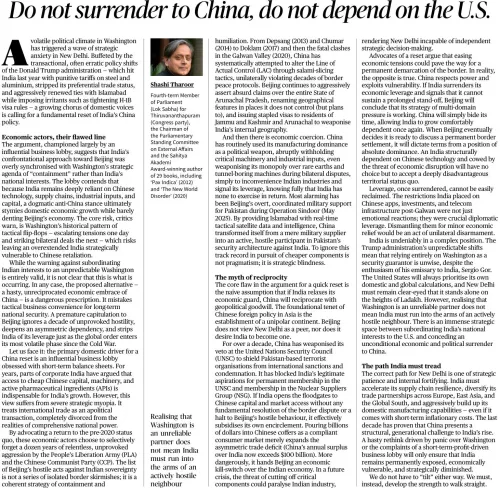
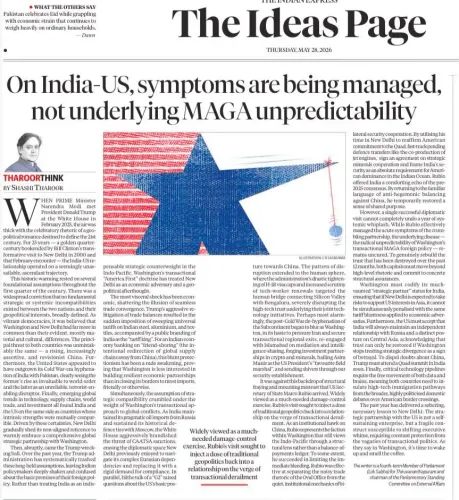
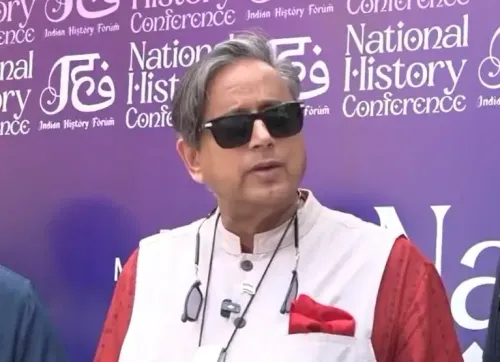
The India-Pakistan relationship has rarely felt more frozen — and Congress MP Dr. Shashi Tharoor is putting that freeze under the analytical lens. In a new column published on Wednesday, October 7, 2026, Tharoor writes for Project Syndicate, the globally read policy commentary platform, arguing that the two nuclear-armed neighbours are locked in what he calls a 'new Cold War.'
What Tharoor's 'New Cold War' framing means
The Cold War analogy is deliberately loaded. It evokes not just hostility but a structured, entrenched standoff — adversaries who have stopped fighting openly yet cannot find a path to normalcy. Tharoor, a former UN Under-Secretary-General and Union Minister of State for External Affairs, has long argued that the subcontinent's unresolved tensions carry consequences far beyond the two countries. His choice of Project Syndicate — whose readership spans policymakers, academics, and diplomats across 150-plus countries — signals that this is a message aimed as much at the world as at New Delhi or Islamabad.
The 'new Cold War' framing distinguishes the current phase from earlier periods of outright military confrontation. It suggests a relationship defined by sustained diplomatic freeze, proxy competition, and nuclear-tinged deterrence rather than active kinetic conflict — a state that carries its own distinct dangers, including miscalculation and the slow erosion of any back-channel communication.
The long arc behind the current freeze
India-Pakistan relations have passed through several distinct phases since Partition in 1947 — four wars, multiple crises, and brief windows of dialogue that ultimately collapsed. The post-2019 period, following India's revocation of Article 370 in Jammu and Kashmir and Pakistan's subsequent downgrading of diplomatic ties, has been particularly static. Trade has remained suspended, high-commissioner-level representation has been absent, and people-to-people contacts have dwindled to near zero.
Both countries have since deepened their respective strategic alignments — India cementing its role in Quad frameworks and expanding defence partnerships, Pakistan leaning further into its ties with China and recalibrating its relationship with Gulf states. The structural divergence, Tharoor's framing implies, is no longer a temporary rupture but an increasingly institutionalised condition.
Why a parliamentarian writes for a global policy forum
Tharoor's dual identity — sitting Lok Sabha MP from Thiruvananthapuram and internationally credentialed public intellectual — has always given his foreign-policy commentary a particular weight. Writing in Project Syndicate places him in conversation with heads of state and former prime ministers who are regular contributors. It also means his 'new Cold War' label will circulate in briefing rooms and think tanks well beyond India's borders.
Whether New Delhi's current foreign-policy establishment shares his diagnosis is a separate question. But when a senior opposition parliamentarian with his international pedigree frames the subcontinent's trajectory this starkly on a global platform, the framing itself becomes part of the diplomatic conversation.
Point of View
Publishing this on a global platform serves a dual purpose: articulating an alternative foreign-policy vision and signalling India's internal pluralism of strategic thought to an international audience. The column lands at a moment when both New Delhi and Islamabad are deepening rival alignments, making the 'Cold War' metaphor less a provocation and more a sober description of where the subcontinent's most consequential bilateral relationship has arrived.
NationPress
7 Oct 2026
Frequently Asked Questions
What did Shashi Tharoor write about India and Pakistan?
Tharoor wrote a column for Project Syndicate on October 7, 2026, arguing that India and Pakistan are caught in a 'new Cold War' — a structured, entrenched standoff with near-zero diplomatic contact and deepening strategic divergence.
What is Project Syndicate and why does Tharoor write there?
Project Syndicate is a globally circulated policy commentary platform read in over 150 countries by policymakers, academics, and diplomats. Tharoor, a former UN Under-Secretary-General, uses it to address an international audience on South Asian affairs.
What does 'new Cold War' between India and Pakistan mean?
The term describes a relationship defined by sustained diplomatic freeze, proxy competition, and nuclear deterrence rather than open military conflict — a condition Tharoor argues is increasingly institutionalised rather than temporary.
When did India-Pakistan relations reach their current low point?
The current deep freeze is widely traced to 2019, when India revoked Article 370 in Jammu and Kashmir and Pakistan responded by downgrading diplomatic ties, suspending trade, and recalling its high commissioner.
What is Shashi Tharoor's background in foreign policy?
Tharoor served as UN Under-Secretary-General for Communications and Public Information and as India's Minister of State for External Affairs before becoming the Lok Sabha MP from Thiruvananthapuram, giving him one of the most internationally recognised foreign-policy profiles in the Indian opposition.