Tharoor questions India-US ties after Rubio visit
Synopsis
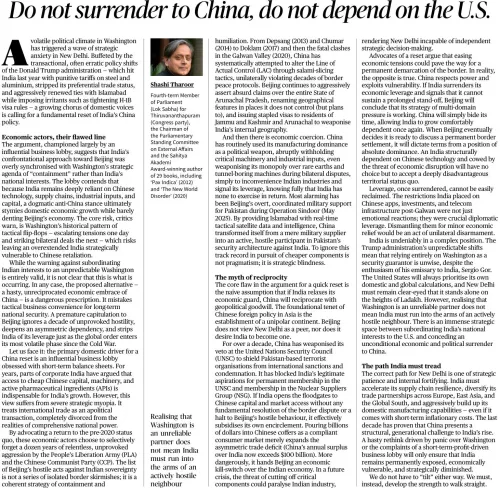
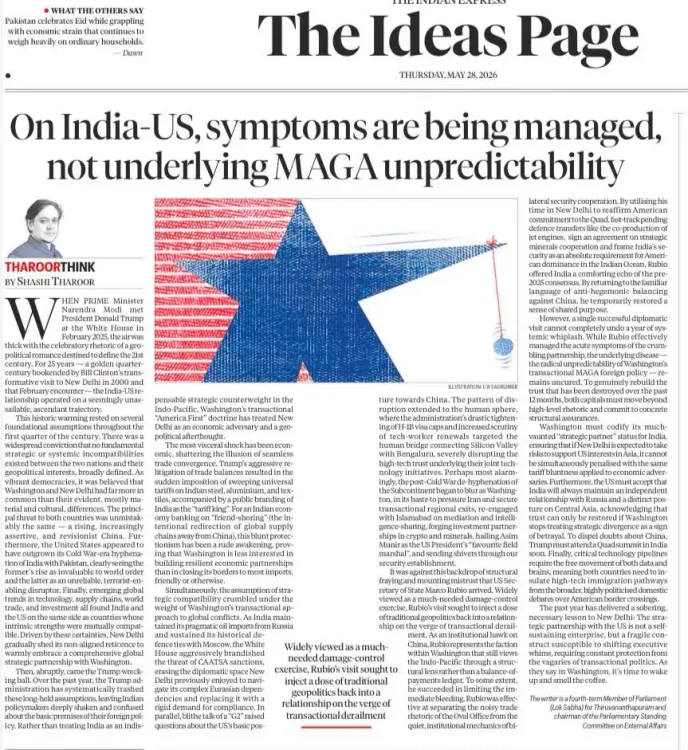
Congress MP Dr. Shashi Tharoor has published a TharoorThink column examining Marco Rubio's visit to India and raising pointed questions about whether the Trump administration's approach has fundamentally damaged the assumptions underpinning 25 years of growing India-US strategic ties.
Key Takeaways
Shashi Tharoor published a TharoorThink column on May 28, 2026 on the Rubio visit to India.
Tharoor asks whether 'the fundamental assumptions underlying the past quarter century of warming relations have been destroyed by the Trump wrecking-ball.' He acknowledges Marco Rubio 'did some damage control' during the visit but signals unresolved concerns remain.
India-US ties have been built across multiple administrations since 2000 , anchored by the 2008 Civil Nuclear Agreement and successive defence pacts including LEMOA (2016) .
The next India-US 2+2 ministerial meeting and the forthcoming Quad leaders' summit are key markers to watch for the relationship's direction.
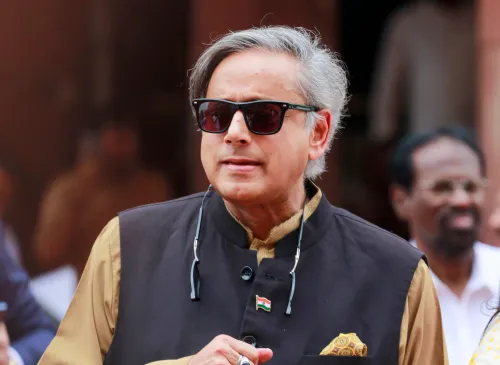
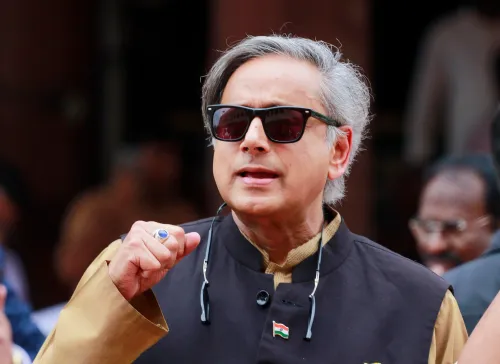
Congress MP Dr. Shashi Tharoor on Thursday, May 28, 2026, published his latest TharoorThink column examining US Secretary of State Marco Rubio's recent visit to India, questioning whether the foundational assumptions of a quarter-century of growing India-US relations have been undermined by the current Trump administration's approach to global alliances.
Context
In the post, Tharoor writes that his column 'reviews the Rubio visit to India and asks whether the fundamental assumptions underlying the past quarter century of warming relations have been destroyed by the Trump wrecking-ball.' He acknowledges that Rubio 'did some damage control' during the visit, but signals that significant concerns remain — the post trails off with 'there are still some,' suggesting the full argument is developed in the linked column.
Tharoor, a former UN Under-Secretary-General and former Union Minister of State for External Affairs, is among the most prominent voices in Indian public life on foreign policy. His TharoorThink series has regularly offered analysis of India's international relationships from a liberal-internationalist perspective.
Policy Backdrop
The India-US strategic partnership has been built incrementally across multiple administrations on both sides. The relationship took a decisive turn with President Bill Clinton's landmark visit to India in 2000, the first high-level US engagement after India's 1998 nuclear tests, which had triggered American sanctions.
The 2005 US-India joint statement and the subsequent Indo-US Civil Nuclear Agreement of 2008 under President George W. Bush removed long-standing non-proliferation barriers and opened the door to broad defence and technology cooperation. The Obama era further institutionalised the relationship through agreements such as the Logistics Exchange Memorandum of Agreement (LEMOA) in 2016, which enabled military logistics sharing. Regular 2+2 ministerial dialogues, intelligence cooperation, and convergence on Indo-Pacific stability became pillars of the partnership.
Under President Donald Trump's second term, however, questions have resurfaced about the durability of this architecture. The Trump administration's transactional approach to trade, periodic friction over immigration policy, and a broader recalibration of US alliance commitments have prompted observers across the political spectrum to reassess the relationship's trajectory.
Stakeholders and Impact
The stakes of any India-US drift are considerable. Indian defence establishments have deepened interoperability with US platforms and logistics infrastructure over two decades, a process that would be costly to reverse. US-India business groups representing bilateral trade — which has grown into the hundreds of billions of dollars — have a direct interest in stable political and regulatory ties.
The Indian foreign service has navigated successive US administrations by emphasising strategic convergence over short-term friction, but analysts note that the current moment poses a more structural challenge if the underlying normative consensus — shared democratic values, rules-based order, Indo-Pacific stability — is perceived as eroding on the American side. Tharoor's framing of a 'wrecking-ball' suggests he views the disruption as qualitatively different from earlier episodes of turbulence.
What's Next
Attention will now turn to the next India-US 2+2 ministerial meeting and any public positioning ahead of the next Quad leaders' summit, both of which will serve as litmus tests for whether the relationship can absorb the current strains. Rubio's visit, described by Tharoor as having offered partial reassurance, may itself become a reference point in those conversations.
For now, Tharoor's column frames the central question starkly: can a strategic partnership built on shared assumptions survive an era in which those assumptions are being actively contested by one side? The answer, he implies, is not yet clear.
Point of View
But whether the normative architecture of the partnership itself is intact. By describing the Trump administration as a 'wrecking-ball,' he signals that he views current disruptions as structurally different from earlier episodes of bilateral turbulence. His qualified acknowledgement that Rubio 'did some damage control' is a careful rhetorical move: it avoids alarmism while keeping the question of long-term reliability firmly on the table. For the Indian foreign-policy establishment, which has historically managed US relations by depoliticising them, Tharoor's public framing adds parliamentary pressure to what is typically a quiet diplomatic conversation.
NationPress
19 Sept 2026
Frequently Asked Questions
What did Shashi Tharoor write about Marco Rubio's India visit?
Tharoor's TharoorThink column reviews Rubio's visit and questions whether the Trump administration has destroyed the foundational assumptions of 25 years of growing India-US strategic relations, while noting Rubio attempted some damage control.
What is TharoorThink?
TharoorThink is a regular column by Congress MP Dr. Shashi Tharoor in which he offers analysis on international affairs, Indian foreign policy, and global political developments.
Why are India-US relations under strain under Trump?
The Trump administration's transactional approach to trade, periodic friction on immigration, and a broader recalibration of US alliance commitments have raised questions about the durability of the strategic partnership built over the past 25 years.
What is the history of India-US relations?
India-US ties warmed significantly after President Clinton's 2000 visit, accelerated through the 2008 Civil Nuclear Agreement under President Bush, and were further institutionalised under Obama through defence pacts like LEMOA. Regular 2+2 dialogues and Indo-Pacific cooperation became central pillars.
What should India watch for next in its relationship with the US?
Key markers include the next India-US 2+2 ministerial meeting and the forthcoming Quad leaders' summit, both of which will indicate whether the partnership can absorb current strains.