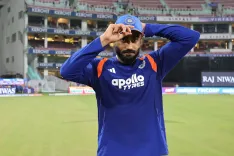
Mixed Political Reactions to Tharoor's West Asia Diplomacy Comments
Synopsis
Shashi Tharoor's remarks on India's diplomatic stance in the West Asia conflict have ignited varied responses across the political landscape, with leaders either supporting or criticizing the government's perceived ambiguity. This discourse highlights the ongoing debate over India's foreign policy direction amidst global tensions.
Key Takeaways
Tharoor's defense of diplomatic restraint highlights ongoing tensions in West Asia.
Political leaders are divided on India’s foreign policy approach.
Historical context emphasizes India’s tradition of moral diplomacy.
Calls for clarity reflect the need for a defined stance in global conflicts.
Strategic partnerships must be prioritized alongside principle.
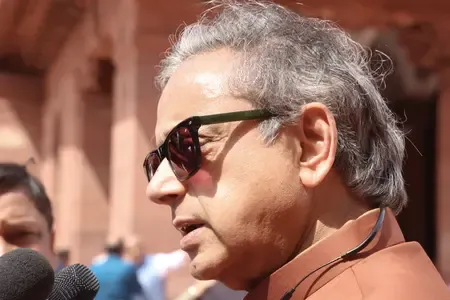
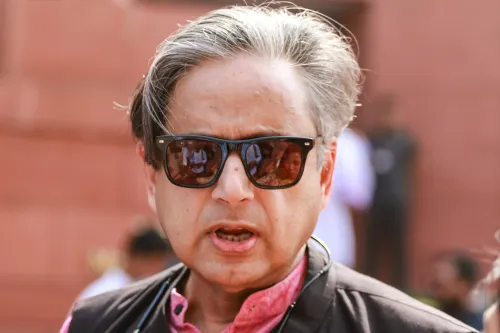
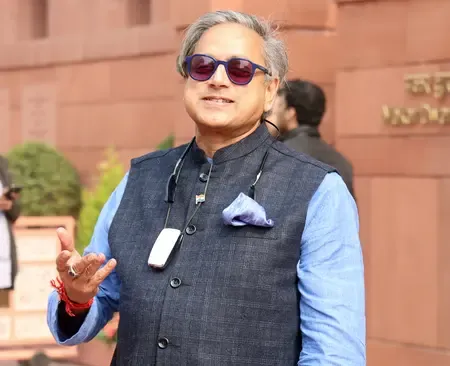
New Delhi, March 19 (NationPress) Congress MP Shashi Tharoor’s comments advocating for India’s diplomatic restraint regarding the ongoing conflict in West Asia have ignited diverse reactions from political leaders. While some have endorsed his viewpoint, others have criticized the government, labeling its foreign policy as ambiguous.
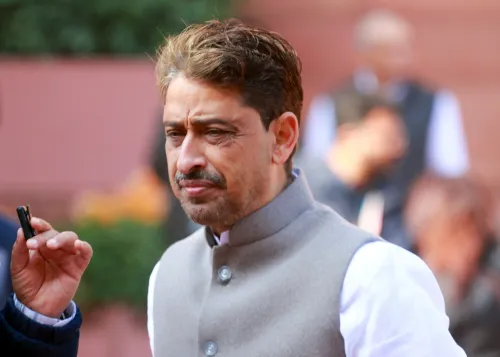
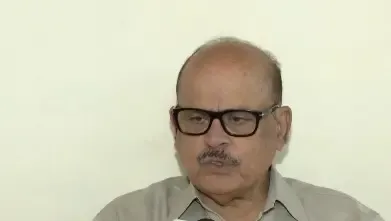
In response to Tharoor’s statements, Congress MP Tariq Anwar conveyed to IANS that the opinions shared by the senior politician might reflect personal beliefs, emphasizing the need for the government to clarify India’s stance amid the rising tensions involving the United States, Israel, and Iran.
"This might be his individual perspective. Throughout this ongoing turmoil, the conflict in the Gulf between America, Israel, and Iran has been evident. India must articulate its position clearly. Despite the unfolding situation, our role remains undefined," he remarked.
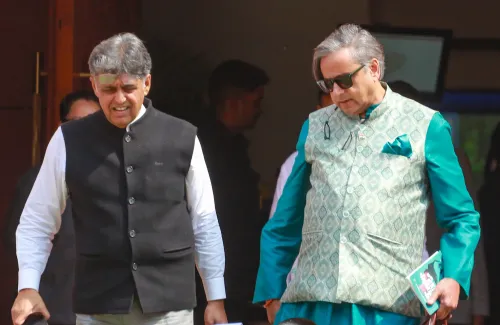
RJD MP Manoj Kumar Jha also expressed his disagreement with Tharoor’s viewpoint, asserting that India’s diplomatic legacy has traditionally been anchored in moral standings during global conflicts.
"I acknowledge Shashi Tharoor’s capabilities, yet I cannot fully concur with his assessment. An examination of India’s historical diplomatic corridors shows that even during our nascent post-independence period, we maintained a moral stance based on global equilibrium, not simply whether to act or refrain. I have expressed my disagreement previously and am reiterating it now," Jha stated to IANS.
On the other hand, Rajasthan Minister Jogaram Patel supported Tharoor’s insights, noting that the Congress MP is recognized for his thoughtful perspectives on foreign policy issues.
"Shashi Tharoor consistently articulates well-reasoned viewpoints. His extensive representation of India abroad allows him to express his opinions candidly. What he has stated now is accurate, and the Congress should acknowledge it," Patel affirmed.
NCP-SP MP Fauzia Khan also raised concerns regarding the government’s approach, indicating that the foreign policy stance on the current conflict lacks clarity.
"What sort of policy is this? We have yet to grasp it. Perhaps Shashi Tharoor understands, but I remain perplexed by a policy where innocent lives are lost, and our sensitivity remains dormant. We remain silent," she expressed.
These reactions followed Tharoor’s nuanced defense of New Delhi’s diplomatic approach during increasing tensions in West Asia involving the US, Israel, and Iran.
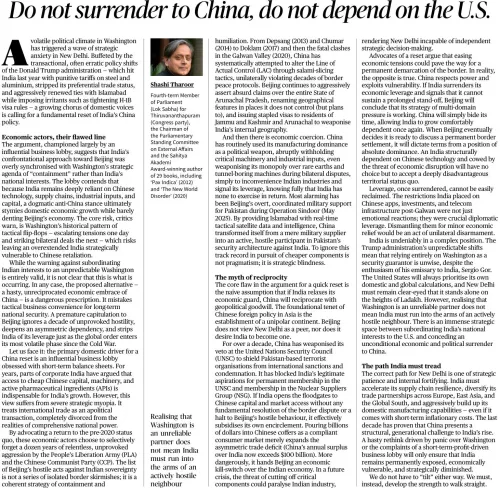
In an op-ed published in The Indian Express, Tharoor defended India’s diplomatic restraint, countering critics who labeled the government’s silence on the US-Israeli war against Iran as a moral failing. Instead, he characterized New Delhi’s approach as "responsible statecraft".
He contended that while the ongoing conflict may breach international law, India’s foreign policy must balance principles with pragmatism, prioritizing national interests, regional stability, and strategic partnerships over mere rhetorical denouncements.
Tharoor also referenced India’s enduring diplomatic tradition, recalling Jawaharlal Nehru’s non-alignment policy.
He underscored that non-alignment was "not an aversion to moral positions but a recognition that India’s sovereignty and survival hinged on evading entanglement in Cold War hostilities."
"Today, in an increasingly multipolar world, India engages in ‘multi-alignment’—collaborating with various powers, sometimes at odds with each other, while keeping national interests at the forefront," Tharoor articulated.
His remarks have stirred discomfort within certain factions of the Congress party, where some members have accused the government of maintaining a "deafening silence" and not taking an assertive diplomatic role amid the crisis.
Point of View
The call for a clear and defined stance emphasizes the need for strategic diplomacy that balances national interests with global moral responsibilities.
NationPress
6 Oct 2026
Frequently Asked Questions
What did Shashi Tharoor say about India's foreign policy?
Tharoor defended India's diplomatic restraint in the West Asia conflict, describing it as 'responsible statecraft' that balances principles with pragmatism.
How did other politicians react to Tharoor's comments?
Reactions were mixed; some, like Tariq Anwar and Manoj Kumar Jha, criticized the government for ambiguity, while others, like Jogaram Patel, supported Tharoor's perspective.
What historical context did Tharoor provide?
Tharoor referenced India's non-alignment policy from Jawaharlal Nehru's era, emphasizing that it was about maintaining sovereignty and avoiding Cold War entanglements.
What is the current situation in West Asia?
The region is experiencing escalating tensions involving the United States, Israel, and Iran, impacting diplomatic relations globally.
Why is clarity in foreign policy important?
Clear foreign policy helps define a nation's stance in international conflicts, ensuring strategic interests are prioritized while addressing moral responsibilities.