Imran Masood Critiques Tharoor's Diplomatic Comments on West Asia
Synopsis
Congress MP Imran Masood has publicly criticized Shashi Tharoor for what he deems 'excessive sycophancy' towards the Prime Minister regarding India's diplomatic stance on the West Asia conflict. This controversy highlights the internal tensions within the Congress party as they navigate a complex geopolitical landscape.
Key Takeaways
Imran Masood reprimands Shashi Tharoor for diplomatic comments.
Tharoor advocates for India's 'responsible statecraft'.
Internal dissent within the Congress party regarding foreign policy.
Sonia Gandhi condemns the government's silence on international issues.
India's foreign policy characterized by 'multi-alignment'.
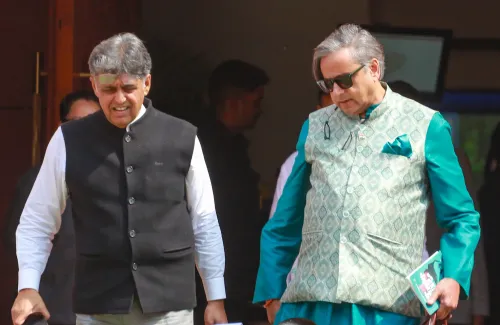
New Delhi, March 19 (NationPress) Congress MP Imran Masood sharply criticized party member Shashi Tharoor on Thursday for his remarks regarding India's stance on the ongoing conflict in West Asia. Masood urged Tharoor to avoid what he termed as "excessive sycophancy" towards the Prime Minister.
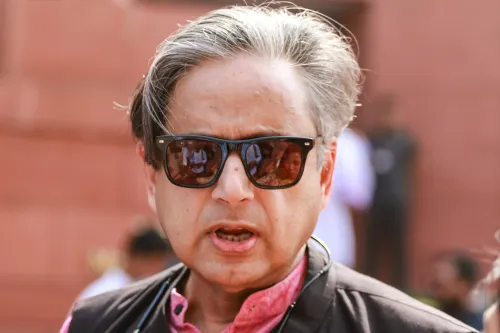
This comes after Tharoor provided a measured defense of India's diplomatic position amid rising tensions involving the US, Israel, and Iran.
In his article discussing the West Asia crisis, Tharoor defends India's diplomatic restraint, countering critics who labeled the government's silence on the US-Israeli conflict with Iran as a "moral failure". Instead, he describes India's approach as "responsible statecraft".
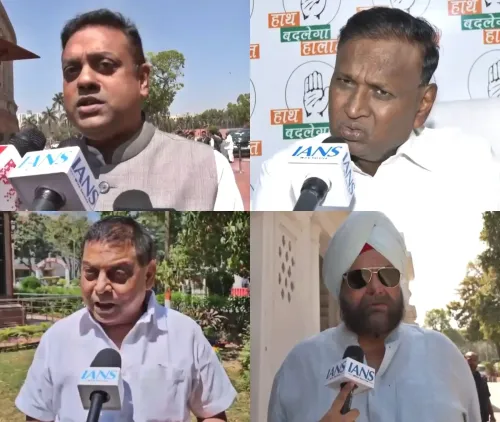
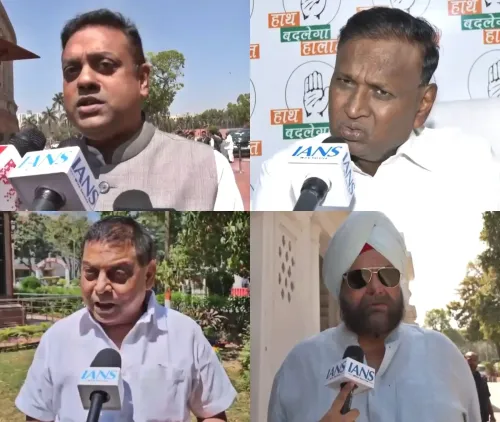
In response, Masood stated to IANS, "Tharoor Sahab, please avoid such excessive sycophancy towards the Prime Minister; this country has never experienced a weaker Prime Minister than the current one."
He added, "The nation is currently facing the repercussions of the Prime Minister's visit to Israel, where he embraced Israeli PM Benjamin Netanyahu. This was followed by the outbreak of war, yet it is the common people who are left to bear the consequences."
In his op-ed in The Indian Express, Tharoor acknowledged that while the conflict may breach international law, India's foreign policy must balance principle with pragmatism, emphasizing national interests, regional stability, and strategic alliances over mere rhetorical denouncements.
Tharoor's comments have sparked concerns among some factions within the Congress party, with various leaders accusing the Central government of a "deafening silence" and a failure to take an active diplomatic stance in the ongoing crisis. Detractors within the party have described the government's approach as a "surrender of values" and a shift away from India's traditional non-aligned position.
Just days prior, Congress Parliamentary Party (CPP) Chairperson Sonia Gandhi criticized the Central government for its "silence" on the US-Israel attack on Iran. She remarked that the absence of an official statement on this issue is not neutral; it represents an "abdication" of responsibility.
In her op-ed in The Indian Express, titled 'The government's silence on the killing of the Iranian leader is not neutral; it is abdication', Sonia Gandhi stated, "The assassination of a sitting head of state amidst ongoing negotiations marks a significant rupture in modern international relations. Yet, beyond the shock of the event, what stands out starkly is New Delhi’s silence."
Interestingly, Tharoor also invoked the late Prime Minister Jawaharlal Nehru's non-alignment policy to support the current government's stance on the West Asia conflict.
He emphasized that India has historically balanced principle with pragmatism, recalling Nehru's policy of non-alignment.
He pointed out that this was not a refusal to adopt moral positions, but rather a recognition that India's sovereignty and survival depended on steering clear of Cold War conflicts.
"In today's increasingly multipolar world, India practices 'multi-alignment'—engaging with various powers, even when they may be in conflict with one another, while prioritizing our national interests," he concluded.
Point of View
Prompting discussions on the balance between national interests and ethical considerations in diplomacy.
NationPress
6 Oct 2026
Frequently Asked Questions
What did Imran Masood criticize about Shashi Tharoor?
Imran Masood criticized Shashi Tharoor for what he termed 'excessive sycophancy' towards the Prime Minister regarding India's diplomatic stance on the West Asia conflict.
What is Tharoor's defense of India's diplomatic stance?
Tharoor defends India's diplomatic restraint, arguing that it is a form of 'responsible statecraft' amidst criticisms of the government's silence on the US-Israeli conflict with Iran.
How has the Congress party reacted to Tharoor's comments?
Some leaders within the Congress have expressed unease, accusing the Central government of maintaining a 'deafening silence' and failing to take a proactive diplomatic role in the crisis.
What did Sonia Gandhi say about the government's silence?
Sonia Gandhi criticized the government's silence over the US-Israel attack on Iran, stating it represents an 'abdication' of responsibility.
What is 'multi-alignment' in India's foreign policy?
Tharoor described India's current approach as 'multi-alignment', engaging with multiple global powers while prioritizing national interests.