Tharoor: India's Role in West Asia Conflict is Strong, No Rivalry with Pakistan
Synopsis
Congress MP Shashi Tharoor supports India's proactive engagement in West Asia, dismissing concerns over Pakistan's mediation role as a threat to India's foreign policy. He emphasizes the need for peace in the region and highlights India's diplomatic efforts.
Key Takeaways
Tharoor supports India's diplomatic engagement in West Asia.
He dismisses claims of rivalry with Pakistan.
India's goal is regional peace and stability.
There are significant implications for India due to the conflict.
His party views Pakistan's mediation as a setback.
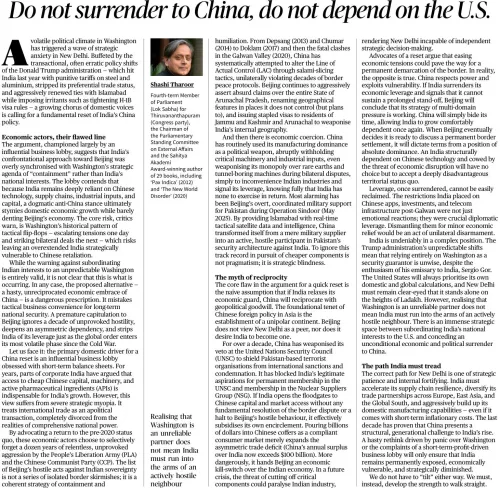
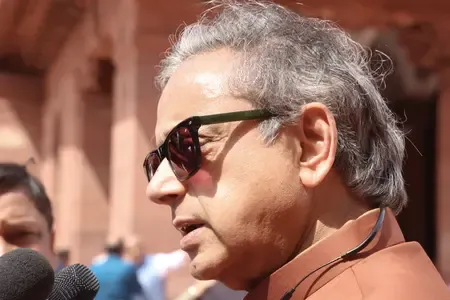
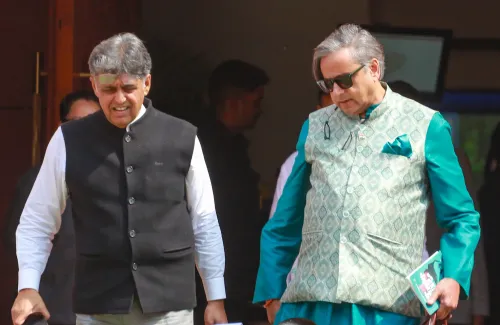
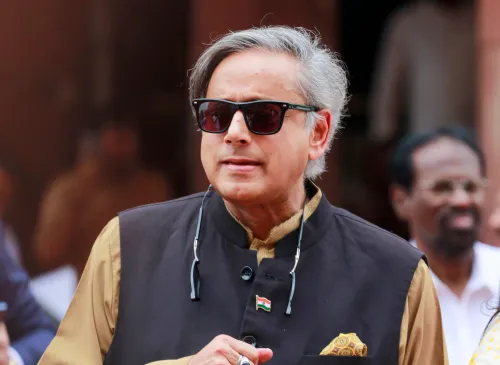
New Delhi, April 11 (NationPress) Congress MP Shashi Tharoor articulated his support for India's strategy regarding the ongoing conflict in West Asia, asserting that New Delhi is fulfilling a commendable role by engaging actively with local leaders. He dismissed the Opposition's claims that Pakistan's increasing influence as a mediator casts a negative light on India's foreign policy.
This statement was made as delegations from the United States and Iran arrived in Islamabad to discuss the rising tensions in the region.
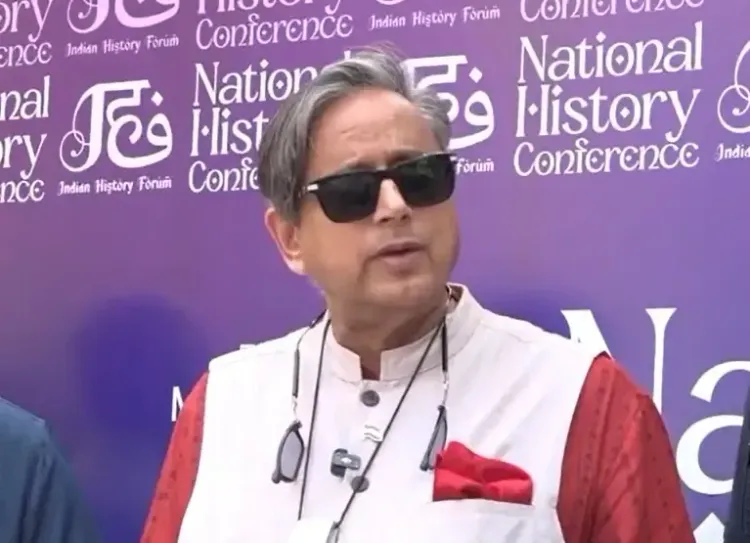
After attending the National History Conference in New Delhi, Tharoor explained that Pakistan's involvement is driven by its unique strategic needs, which contrast sharply with those of India. He stated, "Pakistan has skin in the game. It shares a 900 km border with Iran and has a significant Shia population. If the conflict escalates, it will be Pakistan that faces the influx of refugees. Their stake in this situation is markedly different from ours. I do not perceive any rivalry with Pakistan in this context," he added.
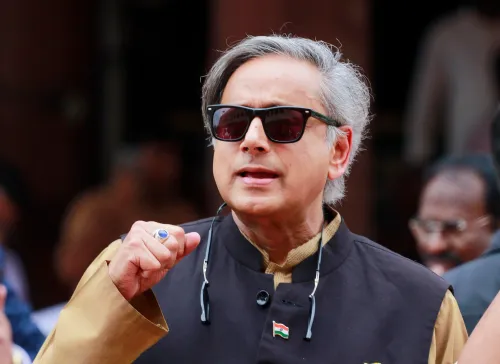
Tharoor emphasized that the overarching goal should be peace, highlighting that India stands to gain from stability in the region, irrespective of the mediator. "Peace should be our priority, and that is what everyone seeks. The ongoing war has had a serious impact on India... We desire a resolution to this conflict. The disruption in energy supply is evident. Over one crore Indians are currently stranded in Gulf nations due to the war... Therefore, it is in India’s interest for this war to end, regardless of who mediates—be it Pakistan or another party," he stated.
He underscored India’s commitment to diplomacy, stating, "India's interest aligns with achieving peace. We must closely monitor the situation. Our Prime Minister, External Affairs Minister, and Petroleum Minister are all in communication with regional leaders, and maintaining this dialogue is essential... We should genuinely hope that peace emerges from these diplomatic efforts."
Tharoor continued, "Whoever facilitates peace matters less than the peace itself. However, if peace fails to materialize, we must assess whether we could have contributed differently in future scenarios."
He further elaborated on India's role in global diplomacy, mentioning, "India has a fundamental interest in ensuring that peace prevails and that regional stability is maintained. A power vacuum can be detrimental and can affect us adversely in various ways."
As a prominent advocate for the Global South, Tharoor stated that India is a responsible player in shaping a viable regional and global order. "We cannot afford to be passive... We must engage actively, but this must be a well-considered approach, assessing what contributions we can offer. Sometimes, silence may be the most effective contribution we can make," he noted.
He also drew attention to the government's ongoing diplomatic activities, remarking, "Currently, we are more engaged in the region than ever. Three of our ministers are active there, and our Prime Minister is in communication; all of this is positive as it enhances our capacity to play a larger role that is currently limited."
Tharoor referenced a social media post from Pakistan's Prime Minister Shehbaz Sharif, who requested a two-week extension for diplomatic efforts in the West Asia dispute. Following its publication, users circulated screenshots revealing the post's edit history, which initially indicated "Draft - Pakistan's PM Message on X."
In a pointed remark about Pakistan, he commented, "I suspect Washington prompted Pakistan's PM to post this on X; otherwise, why would it say 'Draft - Pakistan's PM message'?"
He further suggested that the phrasing in that message hinted at US intervention, stating, "Only Pakistan could craft this kind of message."
In the meantime, Tharoor's own party, the Indian National Congress, has labeled Pakistan's mediation attempts as a serious blow to India's foreign policy.
The Opposition contends that personalized diplomacy has not achieved the desired results and has allowed Pakistan to regain diplomatic ground, potentially undermining India's long-standing efforts to isolate Islamabad on the international front.
Point of View
It's essential to note that Tharoor's comments reflect a strategic viewpoint advocating for India's active role in diplomatic discussions over West Asia. His remarks highlight a commitment to regional stability and peace, which is crucial for India's national interests.
NationPress
22 Sept 2026
Frequently Asked Questions
What is Tharoor's stance on Pakistan's mediation role?
Tharoor believes that Pakistan's involvement as a mediator does not pose a threat to India's foreign policy, asserting that India's role remains strong and focused on peace.
How is India engaging with the West Asia conflict?
India is actively engaging with regional leaders through its Prime Minister and ministers to promote peace and stability amidst the conflict.
What are the implications of the ongoing conflict for India?
The conflict has significant implications for India, including disruptions in energy supply and the safety of over one crore Indians stranded in Gulf nations.
What did Tharoor say about the importance of peace?
Tharoor emphasized that peace is the primary objective, and it benefits India regardless of who facilitates it, whether Pakistan or another nation.
How did Tharoor respond to the opposition's criticism?
Tharoor dismissed the opposition's concerns, stating that India's proactive role in diplomacy is crucial and that there is no competition with Pakistan.