Jaishankar in Accra: India, Ghana must unite for UN Security Council reform
Synopsis
EAM Jaishankar's visit to Accra wasn't routine diplomacy — it was India explicitly recruiting Ghana for its UN Security Council reform campaign. With Ghana set to chair both the African Union and ECOWAS in 2027, New Delhi is positioning Accra as a key African ally in reshaping a multilateral order that both nations argue no longer reflects the world's actual power balance.
Key Takeaways
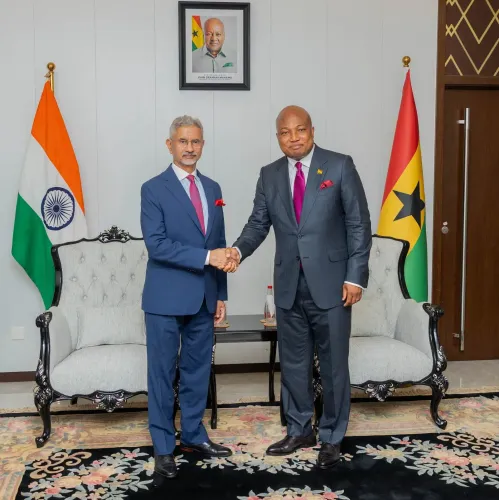
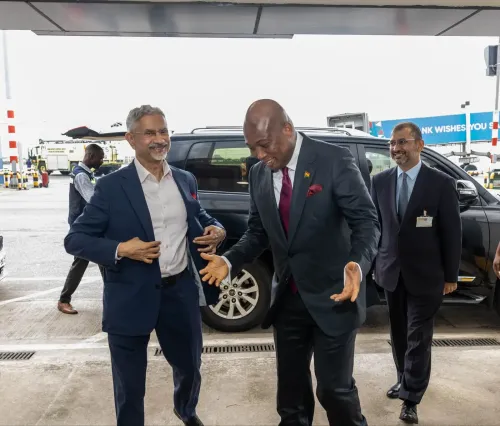
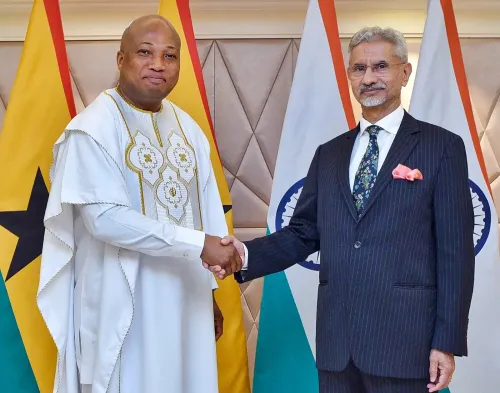
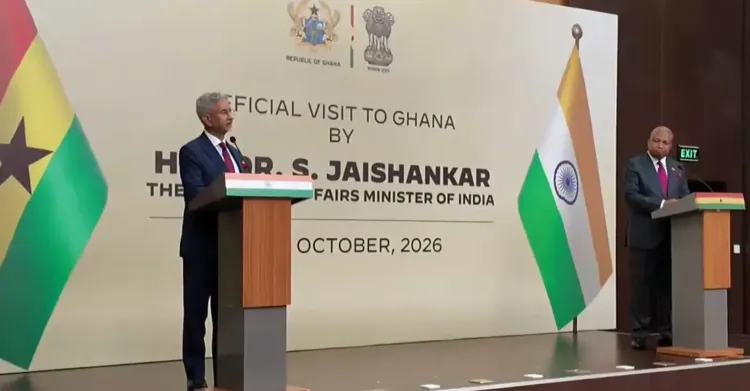
EAM S Jaishankar met Ghana Foreign Minister Samuel Okudzeto Ablakwa in Accra on 7 October 2026 .
Jaishankar called on India and Ghana to work 'strongly together' for reform of the UN , including the UN Security Council .
Ghana is set to assume the chairship of both the African Union and ECOWAS in 2027 .
Both nations are members of the Commonwealth and are expected to participate in an upcoming Commonwealth meeting within weeks.
Jaishankar praised Ghana's advocacy for Sustainable Development Goals and its UN General Assembly resolution on reparatory justice and restitution of cultural properties.
India highlighted Ghana's participation in the International Solar Alliance and the Coalition for Disaster Resilient Infrastructure .
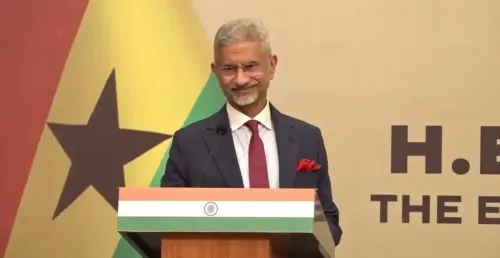
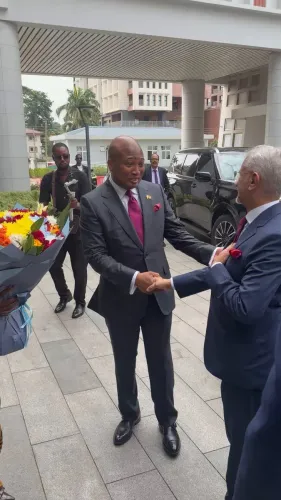
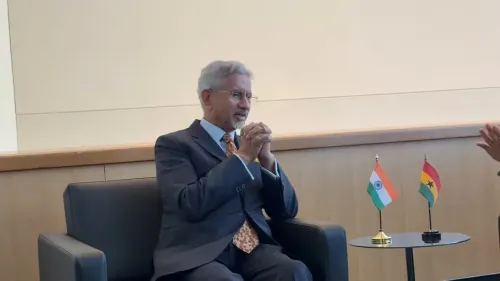
External Affairs Minister S Jaishankar on Wednesday, 7 October 2026, called for India and Ghana to work 'strongly together' toward reform of the United Nations, including a restructured UN Security Council, following bilateral talks with Ghana Foreign Minister Samuel Okudzeto Ablakwa in Accra. The remarks underscored India's continued push for multilateral reform as part of its broader Global South diplomacy.
Key Developments from the Accra Meeting
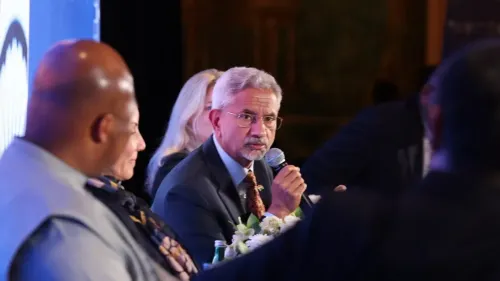
Speaking to reporters after the bilateral meeting, Jaishankar emphasised the depth of India's partnerships with both the African Union (AU) and the Economic Community of West African States (ECOWAS), noting that Ghana is set to assume the chairship of both bodies in 2027. He praised Ghana's historical role in the AU as 'widely appreciated in India' and highlighted shared membership in the Commonwealth, with both nations expected to participate in an upcoming Commonwealth meeting within weeks.
Jaishankar also expressed appreciation for Ghana's commitment to reparatory justice and the restitution of cultural properties. He referenced a significant resolution moved by Ghana in the UN General Assembly on the issue, at a follow-up meeting in which India also participated.
What Jaishankar Said on UN Reform
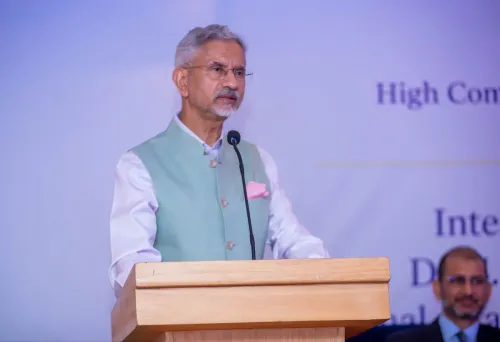
Jaishankar drew a direct line between the two countries' shared identity as Global South partners and their aligned positions on UN restructuring. 'We feel that as Global South partners, we should be working together strongly for the reform of the United Nations, including the Security Council, and this is an issue where I think our outlook is very similar,' he said.
This is a consistent refrain of Indian foreign policy under Prime Minister Narendra Modi — the demand for an expanded, more representative Security Council that includes major developing nations. India has long sought a permanent seat, with backing from a growing number of African and Asian nations.
Sustainable Development Goals and Multilateral Pressure
Jaishankar acknowledged that progress on Sustainable Development Goals (SDGs) has slipped this decade, citing Covid-19, multiple armed conflicts, and cascading global challenges as key setbacks. He credited Ghana as 'a very powerful voice of advocacy' for keeping SDG commitments alive in multilateral forums.
He also highlighted Ghana's participation in Indian-led international initiatives — the International Solar Alliance and the Coalition for Disaster Resilient Infrastructure — and said discussions were held on deepening Ghana's association with other such platforms.
Multipolarity and Strategic Autonomy
Jaishankar closed with a broader geopolitical framing, stating: 'I think the world is moving towards multipolarity, towards its natural diversity, and it's incumbent on countries like us, who have been through difficult experiences in our history, to stand up as voices of independence, as advocates of strategic autonomy, of countries who really want to determine our own choices and are working together.'
The statement aligns India and Ghana as co-architects of an emerging non-aligned, multipolar order — a posture India has increasingly projected at the G20, BRICS, and UN levels. As Ghana prepares for its dual AU and ECOWAS chairships, the bilateral relationship is likely to gain further strategic weight in the months ahead.
Point of View
New Delhi is effectively pre-positioning an African champion for its Security Council reform bid ahead of what promises to be a contentious UN cycle. The language of 'strategic autonomy' and 'multipolarity' also signals that India is framing this not merely as reform advocacy, but as a civilisational counter-narrative to a Western-dominated order. What remains untested is whether this convergence of rhetoric translates into coordinated votes and resolutions — the only metric that actually moves the needle in Turtle Bay.
NationPress
7 Oct 2026
Frequently Asked Questions
What did EAM Jaishankar say about UN Security Council reform in Accra?
Jaishankar said that India and Ghana, as Global South partners, should work 'strongly together' for reform of the United Nations, including the Security Council. He noted that the two countries share a very similar outlook on the issue.
Why is Ghana significant for India's UN reform push?
Ghana is set to assume the chairship of both the African Union and ECOWAS in 2027, making it a major voice across African multilateral bodies. India views Ghana's support as strategically important for building consensus around UN Security Council expansion, where African backing is critical.
What other areas did India and Ghana discuss in Accra?
The two sides discussed Ghana's participation in Indian-led initiatives such as the International Solar Alliance and the Coalition for Disaster Resilient Infrastructure. They also addressed Sustainable Development Goals, reparatory justice, restitution of cultural properties, and upcoming Commonwealth engagements.
What is India's position on UN Security Council reform?
India has long sought a permanent seat on an expanded UN Security Council, arguing the current structure does not reflect the contemporary balance of global power. New Delhi has consistently built coalitions among Global South nations, including in Africa and Asia, to support this position.
What did Jaishankar mean by 'strategic autonomy' and 'multipolarity'?
Jaishankar used these terms to describe a vision of a world order in which developing nations — especially those with colonial histories — assert independent foreign policy choices rather than aligning with any single power bloc. He framed India and Ghana as partners in building this multipolar order.