RBI removes Paytm Payments Bank from scheduled banks list after licence cancellation
Synopsis
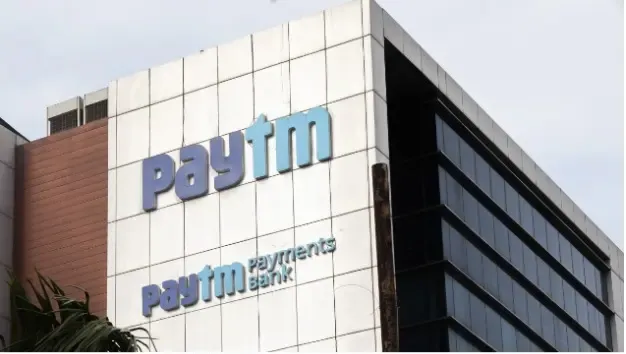
The RBI has formally struck Paytm Payments Bank off the scheduled banks list — the final regulatory step after its licence was cancelled in April 2026 and the Delhi High Court ordered its winding up. It marks the end of one of India's most publicly documented payments bank collapses, rooted in compliance failures stretching back to at least 2022.
Key Takeaways
The RBI on 7 October 2026 removed Paytm Payments Bank Limited (PPBL) from the Second Schedule of the RBI Act, 1934 .
The exclusion was notified on 31 July 2026 and published in the Gazette of India on 7 September 2026 .
The RBI cancelled PPBL 's banking licence in April 2026 , citing persistent non-compliance and conduct detrimental to depositors.
The Delhi High Court ordered the winding up of Paytm Payments Bank , compounding the regulatory action.
Regulatory scrutiny of PPBL dates to March 2022 , when new customer onboarding was banned; deposit restrictions followed in early 2024 .
Paytm Payments Bank is an associate of fintech major Paytm , promoted by Vijay Shekhar Sharma .
The Reserve Bank of India (RBI) on Wednesday, 7 October 2026, formally removed Paytm Payments Bank Limited (PPBL) from the Second Schedule of the Reserve Bank of India Act, 1934 — the official register of scheduled banks in India. The move conclusively reflects the lender's altered regulatory status following the cancellation of its banking licence earlier this year.
The Official Notification
In its formal statement, the RBI confirmed that Paytm Payments Bank Limited was excluded from the Second Schedule vide Notification DoR.LIC.No.S3674/16.13.215/2026-27 dated 31 July 2026, subsequently published in the Gazette of India (Part III – Section 4) on 7 September 2026. Being listed in the Second Schedule confers certain privileges and obligations under the RBI Act; its removal is the regulatory system's final acknowledgement that PPBL no longer holds the status of a bank.
Licence Cancellation and the Road to Removal
The de-scheduling follows the RBI's decision in April 2026 to cancel Paytm Payments Bank's banking licence, citing persistent non-compliance with regulatory requirements. The central bank had stated that the bank's affairs were being conducted in a manner detrimental to the interests of both the institution and its depositors. The Delhi High Court subsequently ordered the winding up of Paytm Payments Bank, adding a judicial seal to what had already been a prolonged regulatory unravelling.
A History of Regulatory Scrutiny
The troubles at Paytm Payments Bank — an associate entity of fintech major Paytm, promoted by Vijay Shekhar Sharma — did not materialise overnight. As far back as March 2022, the RBI barred the lender from onboarding new customers, citing what it described as material supervisory concerns, and directed it to commission a comprehensive external IT audit. Restrictions intensified in early 2024, when the central bank prohibited the bank from accepting fresh deposits, credits, and top-ups in customer accounts, prepaid instruments, and wallets, again citing ongoing compliance concerns. The escalating series of supervisory actions — spanning customer onboarding curbs, technology reviews, deposit restrictions, licence cancellation, and now de-scheduling — represents one of the most publicly documented regulatory interventions in India's payments banking sector.
What De-Scheduling Means
Scheduled bank status, conferred under the Second Schedule of the RBI Act, 1934, entitles a bank to borrow from the RBI at the bank rate and requires it to maintain a certain level of reserves. Removal from this list is not merely symbolic — it formally terminates whatever residual statutory privileges the entity held as a scheduled bank and signals to the financial system that the institution is no longer a regulated banking entity. This is a rare step in India's banking history, underscoring the severity of the compliance failures involved.
What Happens Next
With the Delhi High Court having ordered the winding up of Paytm Payments Bank, the focus now shifts to the resolution process — including the fate of customer deposits, outstanding obligations, and any residual operations. Depositors and merchants who relied on PPBL infrastructure have largely migrated to other platforms following the 2024 restrictions. The parent company, Paytm, has publicly stated it has transitioned its payment processing operations away from the bank.
Point of View
Or whether faster intervention could have protected depositors earlier. As payments banking licences come under renewed scrutiny, this episode will likely define the template for how the RBI handles the next non-compliant digital lender.
NationPress
7 Oct 2026
Frequently Asked Questions
Why has the RBI removed Paytm Payments Bank from the scheduled banks list?
The RBI removed Paytm Payments Bank from the Second Schedule of the RBI Act, 1934 because its banking licence was cancelled in April 2026 after persistent non-compliance with regulatory requirements. The de-scheduling formally reflects the bank's loss of scheduled bank status following the licence cancellation and a subsequent Delhi High Court winding-up order.
When was Paytm Payments Bank excluded from the scheduled banks list?
The exclusion was notified by the RBI on 31 July 2026 and published in the Gazette of India on 7 September 2026. The RBI publicly announced the removal on 7 October 2026.
What led to the cancellation of Paytm Payments Bank's licence?
The RBI cancelled PPBL's banking licence in April 2026, stating that the bank's affairs were being conducted in a manner detrimental to the interests of the institution and its depositors, following years of supervisory concerns. Regulatory actions dated back to March 2022, when the RBI barred PPBL from onboarding new customers, with further deposit restrictions imposed in early 2024.
What does removal from the scheduled banks list mean for Paytm Payments Bank?
Removal from the Second Schedule of the RBI Act terminates the entity's statutory privileges as a scheduled bank — including the ability to borrow from the RBI at the bank rate. It is the final regulatory step confirming that Paytm Payments Bank is no longer a recognised banking institution in India.
What happens to Paytm Payments Bank customers and deposits now?
With the Delhi High Court having ordered the winding up of Paytm Payments Bank, the focus shifts to the resolution process covering customer deposits and outstanding obligations. Most customers and merchants had already migrated to other platforms following the deposit restrictions imposed in early 2024, and Paytm has stated it transitioned payment processing away from the bank.