India's wildlife wins praised globally, but 'poor country' remark sparks sharp rebuke
Synopsis
The Economist praised India's wildlife conservation as 'the country at its finest' — then undercut itself by calling India 'a relatively poor country with limited state capacity.' The backlash from former diplomats, conservation biologists, and economists reveals a live fault line: who gets to frame success, and on whose terms? Meanwhile, India's own data tells a story of 3,682 tigers and a 70% share of the world's wild population.
Key Takeaways
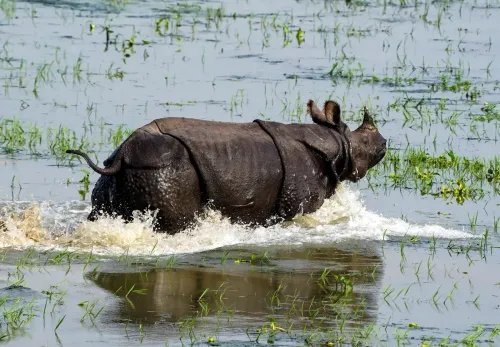
The Economist praised India's Project Tiger, Project Elephant, Project Snow Leopard, Project Dolphin , and Project Rhino as 'an example of the country at its finest.' The same article described India as 'a relatively poor country with limited state capacity,' triggering sharp rebuttals from Indian experts and former officials.
Former Foreign Secretary Nirupama Menon Rao and conservation biologist Neha Sinha both called the framing patronising in posts on X .
Norway's former Climate and Environment Minister Erik Solheim called India's animal protection efforts 'astonishing successful' and cited a personal visit to Gir forest in Gujarat .
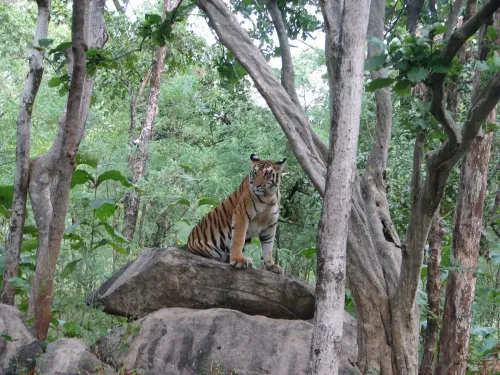
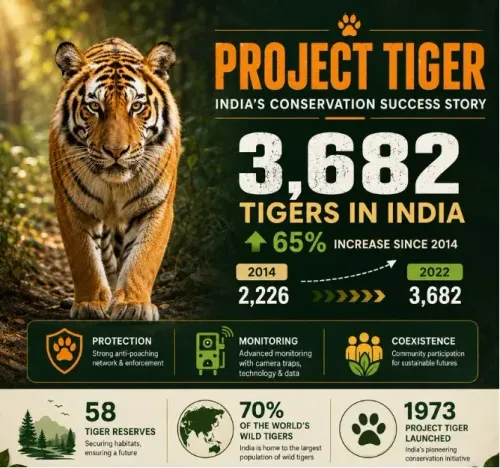
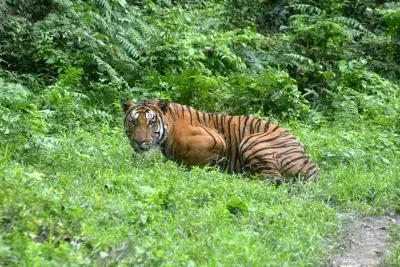
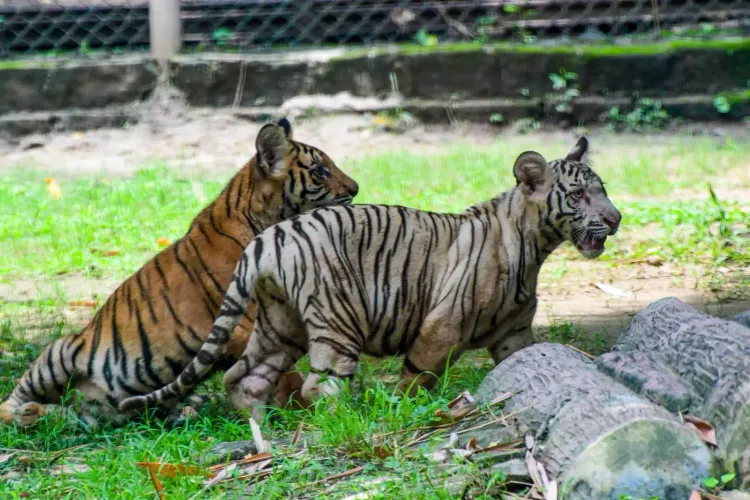
India's wild tiger population stands at 3,682 as of the 2022 All India Tiger Estimation , representing nearly 70% of the global wild tiger population — more than double the 2006 count.
India has been reintroducing cheetahs from Africa since 2022 to revive a species extinct within its borders since 1952 .
India's landmark wildlife conservation programmes have drawn global admiration, with British magazine The Economist calling the country's efforts to protect tigers, elephants, dolphins, and rhinos 'an example of the country at its finest.' However, a single phrase in the same piece — describing India as 'a relatively poor country with limited state capacity' — triggered a vigorous backlash from Indian diplomats, scientists, and economists.
What The Economist Said
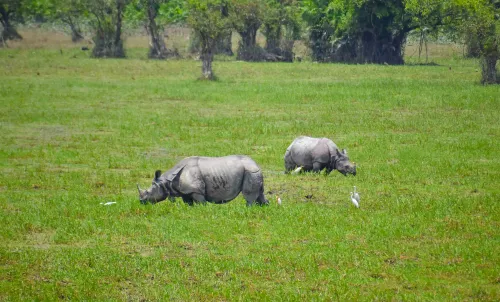
The magazine praised India's suite of flagship conservation drives — Project Tiger, Project Elephant, Project Snow Leopard, Project Dolphin, and Project Rhino — crediting them with pulling several species back from the brink. It noted that tigers were 'heading towards extinction in the 1970s' before India intervened. The piece also highlighted that Assam Chief Minister Himanta Biswa Sarma recently reported zero cases of poaching related to the state's growing rhino population in the previous year, and that India has been importing cheetahs from Africa since 2022 to revive a species that went extinct within its borders in 1952.
Yet the same article remarked: 'It is extraordinary that the people and politicians of a relatively poor country with limited state capacity and endless demands on its resources can come together to achieve something as selfless as protecting other creatures.' That framing was widely seen as patronising, and the pushback was swift.
International Voice of Support
Norway's former Climate and Environment Minister Erik Solheim described India's animal protection record as 'astonishing successful.' In a post on X, Solheim recalled a personal visit to the Gir forest in Gujarat in June, noting that the state had opened a new reserve to accommodate its expanding population of Asiatic lions — a species unique to India. He also cited the cultural dimension, quoting from the article: 'Hindu dharma is based upon the idea that humans are part of nature, not above nature. God is even half human, half animal as in the case of Ganesha and Hanuman. This matters also today.'
The Indian Rebuttal
Conservation biologist Neha Sinha was among the first to push back, calling the magazine's framing 'dismal and patronising.' In a post on X, she wrote: 'For the record, "poor people" are some of the most selfless people I have known.'
India's former Foreign Secretary Nirupama Menon Rao was equally pointed. 'Nations do not acquire compassion with wealth. It is hardly a luxury acquired with better living standards. It is intrinsic to you as a person, rich or poor. Why wear an expression of patronising surprise when a relatively poorer country than yours effectively conserves and preserves its precious wildlife? The measure of moral imagination is not per capita income,' she said in a post on X.
Economist Prof. Shamika Ravi drew attention to the public mourning that followed the death of a 45-year-old elephant in Kerala, arguing it illustrated how deeply nature is woven into Indian life. Tagging The Economist's handle on X, she wrote: 'Can you imagine such a farewell for an animal anywhere else in the world? Nature is a way of life in India.'
India's Conservation Record in Numbers
According to the Indian government, India today holds the world's largest wild tiger population, accounting for nearly 70 per cent of all wild tigers globally. The country has more than doubled its scientifically assessed tiger numbers since 2006. The All India Tiger Estimation (2022) places the population at 3,682, covering 20 states and surveying over 6.41 lakh kilometres on foot — one of the largest and most comprehensive wildlife assessments ever conducted anywhere in the world.
This comes amid a broader global conversation about how conservation priorities are framed when the richer world evaluates biodiversity efforts in developing nations. As India's wildlife numbers continue to climb, the debate over who gets to define 'capacity' — and on whose terms — is unlikely to fade.
Point of View
Qualify the actor. The 'relatively poor country' clause is not a neutral descriptor — it carries an implicit hierarchy that positions wealth as a prerequisite for ecological morality. India's rebuttal, led by a former Foreign Secretary and a conservation scientist rather than a government minister, was notably civil but unambiguous. More importantly, the data makes the patronising qualifier harder to sustain: a country that holds 70 per cent of the world's wild tigers and ran a survey covering 6.41 lakh kilometres is not operating on the margins of capacity — it is setting the global standard.
NationPress
7 Oct 2026
Frequently Asked Questions
What did The Economist say about India's wildlife conservation?
The Economist praised India's flagship conservation programmes — including Project Tiger, Project Elephant, Project Snow Leopard, Project Dolphin, and Project Rhino — calling them 'an example of the country at its finest.' However, the same article described India as 'a relatively poor country with limited state capacity,' a phrase that drew widespread criticism from Indian experts and former officials.
Why did India's wildlife conservation receive international praise?
India has more than doubled its wild tiger population since 2006, with the 2022 All India Tiger Estimation recording 3,682 tigers across 20 states — nearly 70 per cent of the global wild tiger population. The country has also recorded zero rhino-poaching cases in Assam and has been reintroducing cheetahs since 2022, reviving a species extinct within its borders since 1952.
Who criticised The Economist's description of India as a 'relatively poor country'?
Conservation biologist Neha Sinha called the framing 'dismal and patronising.' Former Foreign Secretary Nirupama Menon Rao argued that 'the measure of moral imagination is not per capita income.' Economist Prof. Shamika Ravi cited the mass public mourning for a 45-year-old elephant in Kerala as evidence that nature is intrinsic to Indian life, not a luxury of wealth.
What role does culture play in India's conservation success, according to the article?
Norway's former Climate and Environment Minister Erik Solheim, quoting from The Economist, highlighted that Hindu dharma frames humans as part of nature rather than above it, with deities like Ganesha and Hanuman embodying human-animal relationships. This cultural 'public sentiment,' the article argued, is a key reason India prioritises animal protection across economic cycles.
How significant is the All India Tiger Estimation 2022?
The 2022 All India Tiger Estimation covered 20 states and surveyed over 6.41 lakh kilometres on foot, placing India's wild tiger population at 3,682. It is considered one of the world's largest and most comprehensive wildlife assessments, and the tiger count represents nearly 70 per cent of the global wild tiger population.