How Have Assam's Tiger Numbers Increased Threefold Since 2006?

Synopsis
Assam has achieved a remarkable increase in its tiger population from 70 in 2006 to 227 in 2022, highlighting significant wildlife conservation efforts. CM Himanta Biswa Sarma credits strong political commitment and community support for this success, emphasizing the state's role as a sanctuary for diverse wildlife.
Key Takeaways
Assam's tiger population increased from 70 in 2006 to 227 in 2022.
The state is recognized as a safe habitat for various wildlife species.
Community support and engagement are crucial for conservation success.
Protected areas play a significant role in safeguarding endangered species.
Modern technology aids in wildlife protection efforts.
Guwahati, Feb 10 (NationPress) Assam's Chief Minister Himanta Biswa Sarma emphasized the state's remarkable progress in wildlife conservation, revealing that the tiger population has surged from a mere 70 in 2006 to 227 in 2022. This achievement underscores what he termed as a robust political commitment and persistent collective action.
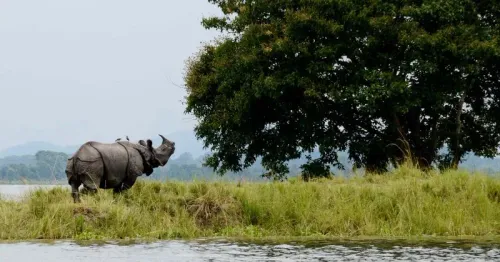
In a message on X, CM Sarma noted that Assam is now recognized as one of the safest habitats in the nation, not only for the one-horned rhinoceros but for a diverse array of wildlife species.
Expressing appreciation to the citizens of Assam, the Chief Minister attributed public support and community engagement as pivotal elements in this conservation success story.
“From 70 tigers in 2006 to 227 in 2022, Assam’s conservation initiatives are a testament to strong commitment and collective effort. Today, our state is among the safest habitats not just for rhinos but for various wildlife. I thank the people for their heartfelt support in this endeavor,” CM Sarma stated.
Over the last two decades, Assam has solidified its position as a vital sanctuary for wildlife conservation in India, with protected regions like Kaziranga National Park, Manas National Park, Orang National Park, and Nameri National Park playing an instrumental role in the protection of endangered species.
Kaziranga, a UNESCO World Heritage Site, is renowned worldwide for harboring the largest population of one-horned rhinos, while Manas has seen a resurgence in populations of species such as tigers and pygmy hogs.
Officials attribute the increase in tiger numbers to an array of strategies, including heightened anti-poaching measures, improved intelligence networks, intensified patrolling, utilization of modern technology like camera traps and drones, and enhanced collaboration between forest departments and security forces.
Community involvement has also proven essential, particularly through eco-development committees and awareness initiatives aimed at mitigating human-wildlife conflicts.
The Assam government has persistently asserted that conservation and development must be complementary. Upgrading infrastructure within protected areas, enhancing facilities for forest personnel, and maintaining vigilant monitoring of wildlife corridors have been prioritized to ensure ecological sustainability.
CM Sarma pointed out that the benefits of conservation extend beyond tigers, noting that Assam’s protected forests have become safer havens for elephants, deer, birds, and other species.
He reaffirmed the government’s dedication to further fortifying conservation measures, stressing that safeguarding wildlife is crucial for preserving Assam’s natural heritage for future generations.
Point of View
I observe that Assam's significant progress in wildlife conservation is commendable. The rise in tiger numbers demonstrates the effectiveness of community engagement and governmental commitment. This success story not only enhances Assam's ecological landscape but also sets a precedent for conservation efforts nationwide.
NationPress
2 Oct 2026
Frequently Asked Questions
What is the current tiger population in Assam?
The tiger population in Assam has increased to 227 as of 2022.
What were the tiger numbers in 2006?
In 2006, Assam had only 70 tigers.
What role do protected areas play in conservation?
Protected areas like Kaziranga and Manas National Parks are critical in safeguarding endangered species.
How has community involvement impacted conservation?
Community participation through eco-development committees has been vital in reducing human-wildlife conflicts.
What measures have been taken to protect tigers?
Measures include stricter anti-poaching operations, improved patrolling, and the use of modern technology.