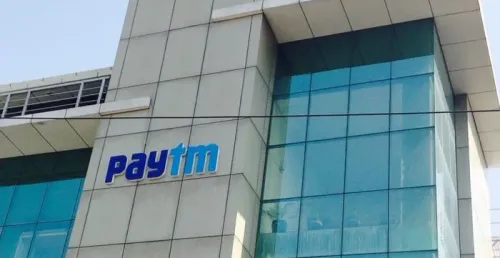
CAIT Backs RBI Move to Cancel Paytm Payments Bank Licence, Demands Data Probe
Synopsis
The RBI has cancelled Paytm Payments Bank's licence over repeated regulatory failures, drawing praise from CAIT which now demands a data probe into billions of consumer transactions. With lakhs of small traders and vendors in the crossfire, India's fintech regulation just hit a defining moment.
Key Takeaways
The RBI cancelled Paytm Payments Bank Limited (PPBL)'s licence on Friday, April 25 , citing repeated regulatory non-compliance and governance failures.
CAIT , representing India's trader community, endorsed the RBI's action and called it a necessary intervention to safeguard public interest.
CAIT National President BC Bhartia demanded a comprehensive probe into the collection, storage, and handling of consumer data accumulated by Paytm's platforms.
The RBI will approach the High Court to begin the winding-up process of PPBL, while assuring depositors their funds are safe.
One 97 Communications , Paytm's parent company, confirmed it has no financial exposure to PPBL and had already impaired its PPBL investment as of March 31, 2024 .
Core Paytm services including Paytm UPI, Paytm app, Paytm Soundbox, and Paytm Payment Gateway will continue to function without disruption.
The Confederation of All India Traders (CAIT) on Saturday, April 25, strongly endorsed the Reserve Bank of India (RBI)'s landmark decision to cancel the licence of Paytm Payments Bank Limited (PPBL), calling it a decisive regulatory intervention in the public interest. The trade body simultaneously demanded a thorough investigation into the platform's data practices and urged authorities to protect millions of small-scale digital payment users from financial disruption.
RBI's Licence Cancellation: What Happened
The RBI on Friday, April 25, formally cancelled the banking licence of Paytm Payments Bank Limited, citing persistent failure to comply with regulatory conditions stipulated under its payments bank licence. The Central Bank announced it would approach the High Court to initiate the winding-up process of the entity, effectively ending its banking operations.
This action did not emerge in isolation. As early as 2024, the RBI had imposed sweeping restrictions on PPBL's banking operations following repeated supervisory warnings. Despite being granted corrective opportunities, the institution reportedly failed to adequately address critical compliance concerns, making the licence cancellation an eventual regulatory inevitability.
CAIT's Strong Endorsement and Key Demands
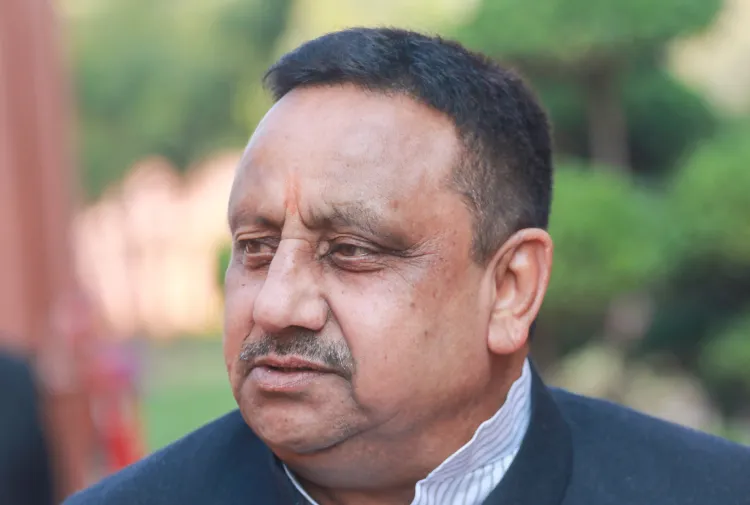
CAIT Secretary General and BJP MP Praveen Khandelwal stated that the RBI's action reflects the gravity of repeated regulatory non-compliance, governance failures, and continued disregard for supervisory directions — language that signals this was not a sudden or arbitrary move but the culmination of a prolonged oversight failure.
Khandelwal welcomed the RBI's assurance to depositors that their funds remain safe and will be returned through due process. He specifically highlighted the vulnerability of lakhs of small traders, shopkeepers, street vendors, hawkers, self-employed persons, and women entrepreneurs who relied on Paytm for daily digital transactions.
CAIT National President BC Bhartia escalated the demand further, calling for a comprehensive investigation into the collection, storage, handling, and geographic location of vast financial and consumer data accumulated by Paytm's platforms over the years. This demand touches on a critical and underreported dimension of the crisis — the data sovereignty angle.
Impact on Small Traders and Digital Payment Users
CAIT had previously cautioned that any regulatory action against PPBL could trigger significant financial inconvenience and transaction disruptions for micro and small users who are deeply embedded in the Paytm ecosystem. The body has urged the government to implement a smooth transition mechanism to prevent unnecessary hardship for this segment.
This concern is not trivial. Paytm's penetration in India's informal economy — particularly among street vendors, kirana store owners, and self-employed women in Tier 2 and Tier 3 cities — is substantial. Any abrupt disruption in payment infrastructure could cascade into lost livelihoods and reduced daily commerce for communities with limited access to alternative digital payment platforms.
Paytm's Parent Company Clarifies Position
One 97 Communications Limited, the parent company of Paytm, moved quickly to distance itself from the banking entity's fallout. In an exchange filing, the company stated it has no exposure to PPBL and no material business arrangements with the payments bank. It further clarified that no services provided by the company are in partnership with PPBL, and that PPBL operates independently with no board or management overlap.
Crucially, the company disclosed that it had already impaired its investment in PPBL as of March 31, 2024, indicating that the financial write-off had been anticipated well in advance. The company confirmed that its core services — including the Paytm app, Paytm UPI, Paytm Gold, Paytm QR, Paytm Soundbox, Paytm card machines, Paytm Payment Gateway, and Paytm Money — will continue to operate without interruption.
Broader Regulatory and Data Sovereignty Implications
The PPBL licence cancellation is a watershed moment in India's fintech regulatory landscape. It signals that the RBI is prepared to take terminal action against entities — regardless of their market size or consumer reach — that persistently defy supervisory norms. This comes amid growing global scrutiny of fintech governance and data handling practices.
The demand for a data probe by CAIT is particularly significant. Paytm's platforms have processed billions of transactions involving sensitive financial and personal data of Indian consumers over more than a decade. Questions about where this data is stored, who has access to it, and how it is protected are of national importance, especially given ongoing debates around India's Digital Personal Data Protection Act.
As the High Court winding-up process gets underway and regulatory scrutiny intensifies, all eyes will be on how swiftly authorities can ensure depositor safety, facilitate a seamless transition for affected users, and whether the promised data investigation materialises into concrete accountability.
Point of View
And their governance has never faced independent scrutiny. The irony is sharp — a platform that positioned itself as the face of digital financial inclusion for India's informal economy may have simultaneously exposed that very population to governance risks they were never warned about. The real test now is whether India's regulatory apparatus has the institutional will to follow through on both depositor protection and data accountability.
NationPress
16 Sept 2026
Frequently Asked Questions
Why did RBI cancel Paytm Payments Bank's licence?
The RBI cancelled Paytm Payments Bank Limited's licence due to persistent failure to comply with regulatory conditions under its payments bank licence, including repeated governance failures and disregard for supervisory directions. The Central Bank had already imposed major restrictions on PPBL's operations in 2024 before taking this terminal action.
Will Paytm's app and UPI services continue after the licence cancellation?
Yes, Paytm's core services including the Paytm app, Paytm UPI, Paytm QR, Paytm Soundbox, Paytm Payment Gateway, and Paytm Money will continue to operate uninterrupted. One 97 Communications, Paytm's parent company, clarified it has no direct exposure to PPBL and no material business arrangements with the payments bank.
Are deposits in Paytm Payments Bank safe?
The RBI has assured depositors that their funds remain safe and will be returned through due process. CAIT has urged authorities to ensure a smooth transition mechanism, particularly for small traders and vendors who relied heavily on the platform.
What is CAIT demanding after the Paytm Payments Bank licence cancellation?
CAIT has demanded a comprehensive investigation into the collection, storage, handling, and geographic location of vast financial and consumer data accumulated through Paytm's platforms over the years. The trade body also called for a smooth transition mechanism to protect lakhs of small traders, street vendors, and women entrepreneurs dependent on Paytm.
What happens next after RBI cancels Paytm Payments Bank licence?
The RBI has announced it will approach the High Court to initiate the winding-up process of Paytm Payments Bank Limited. Regulatory and legal proceedings are expected to follow, while CAIT's demand for a data probe may prompt further government scrutiny into the platform's data governance practices.