PM Modi Highlights Startups and Global Investors Driving Youth Jobs
Synopsis
Prime Minister Narendra Modi on 19 June 2026 said India's startups and global investors are coming together with renewed strength, creating new employment opportunities for youth — reinforcing the government's decade-long push to link startup growth with formal job creation.
Key Takeaways
PM Modi on 19 June 2026 posted on X highlighting the collaboration between India's startups and global investors .
He stated this partnership is generating new employment opportunities for India's youth .
The post is rooted in the Startup India programme launched via the Action Plan of January 2016 , which introduced tax exemptions and a Fund of Funds .
India has seen rising foreign direct investment inflows into technology and services under successive liberalisation measures.
The next Periodic Labour Force Survey data and upcoming Union Budget announcements will be key indicators of progress on startup-led job creation.
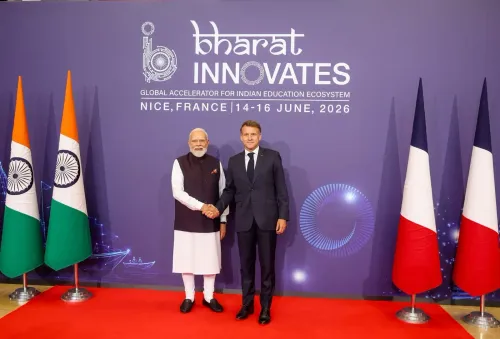
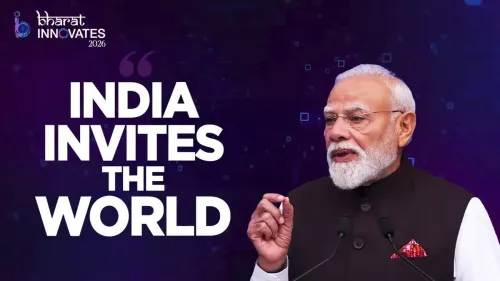
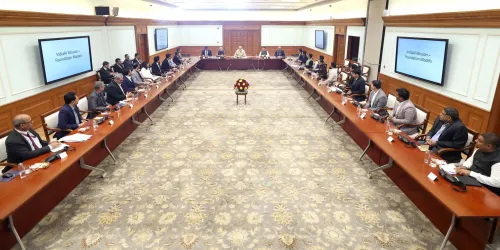
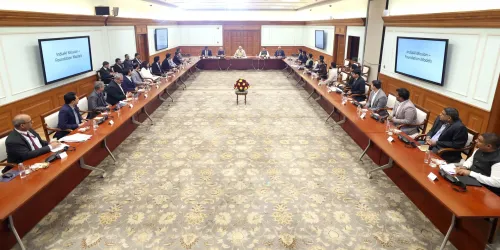
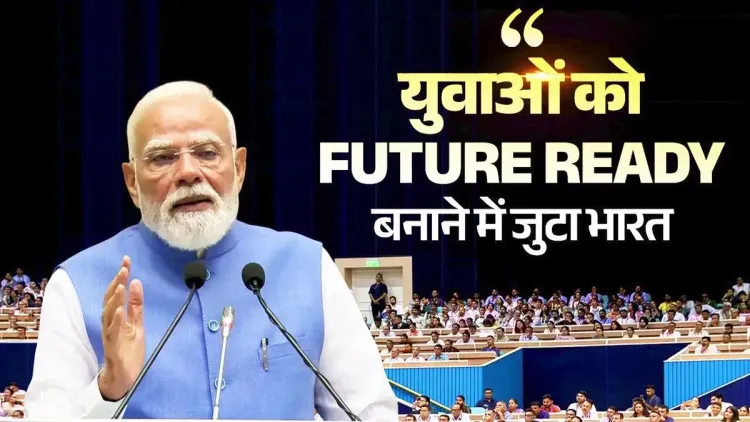
Prime Minister Narendra Modi on Friday, 19 June 2026 highlighted the growing collaboration between India's startups and global investors, stating that this convergence is opening new employment avenues for the country's youth. The Prime Minister shared the message on X, accompanied by a video, underscoring the government's continued focus on startup-led job creation.
Context
In his post, PM Modi wrote in Hindi: 'आज भारत के Startups और Global Investors एक नई ताकत के साथ काम करने के लिए आगे आ रहे हैं।' (Today, India's startups and global investors are coming together to work with a new strength.) He added that this is generating fresh employment opportunities for young people across the country.
The post reflects a recurring theme in Modi's public communication — linking the expansion of India's startup ecosystem directly to youth employment and economic self-reliance. A video was attached to the post, though its specific contents could not be independently verified at the time of publication.
Policy Backdrop
India's startup promotion drive traces its formal origins to the Startup India Action Plan, announced in January 2016, which introduced tax exemptions, self-certification norms, and a Fund of Funds mechanism to support early-stage companies. The programme has since been expanded through successive Union Budgets, including iterative easing of angel-tax rules and extensions of startup tax benefits between 2019 and 2024.
Under the broader Startup India scheme, the government has pursued a dual strategy: simplifying domestic regulations to reduce compliance burdens on founders, while simultaneously courting overseas capital through international roadshows and bilateral investment frameworks. Foreign direct investment into India's technology and services sectors has recorded rising inflows under successive liberalisation measures.
The number of government-recognised startups and the growth of unicorns — privately held companies valued at over $1 billion — have been routinely cited by the administration as evidence that India's demographic dividend is being converted into high-value employment.
Stakeholders and Impact
The primary beneficiaries identified in the government's framing are India's youth, startup founders, and global institutional and venture investors looking for high-growth emerging-market exposure. As India's working-age population continues to expand, job creation in the formal economy remains a critical policy priority.
Startup founders stand to gain from sustained investor interest that drives valuations, enables scaling, and creates downstream hiring. Global investors, in turn, benefit from access to one of the world's largest and fastest-growing consumer and talent markets. The government's role has been to act as a facilitator — reducing friction rather than directing capital flows.
What's Next
Observers will watch the next quarterly employment data from the Periodic Labour Force Survey for evidence of startup-sector job creation translating into measurable gains in formal employment numbers. Any fresh Fund of Funds allocations or changes to startup tax rules in the upcoming Union Budget will also be closely tracked as signals of the government's next policy move in this space.
With global investor sentiment toward emerging markets remaining sensitive to macroeconomic conditions, the depth and sustainability of foreign capital flows into Indian startups will be a key variable shaping the employment outcomes the Prime Minister has highlighted.
Point of View
Rather than a niche technology story. By explicitly linking global investor interest to domestic job creation, the messaging attempts to make abstract capital flows tangible for a mass audience. This framing also serves a political function ahead of the Union Budget cycle, signalling that startup-friendly policy continuity — on taxes, regulation, and public funding — remains a priority. The durability of this approach, however, will ultimately be tested by hard employment data rather than ecosystem optics.
NationPress
19 Sept 2026
Frequently Asked Questions
What did PM Modi say about startups and global investors?
PM Modi said on 19 June 2026 that India's startups and global investors are coming together with new strength, and this is creating fresh employment opportunities for the country's youth.
What is the Startup India scheme?
Startup India is a flagship government programme launched in January 2016 that provides tax exemptions, self-certification norms, and a Fund of Funds to support early-stage companies and build a startup-friendly ecosystem.
How does India's startup growth help youth employment?
As startups scale with domestic and foreign investment, they create jobs in technology, services, and allied sectors, helping absorb India's large and growing working-age population into the formal economy.
What is India's Fund of Funds for startups?
The Fund of Funds is a government-backed vehicle introduced under the Startup India Action Plan that channels public money into venture capital funds, which in turn invest in early-stage Indian startups.
What should we watch next on India's startup policy?
Key indicators to watch include the next Periodic Labour Force Survey employment data, any new Fund of Funds allocations, and startup tax-rule changes in the upcoming Union Budget.