Dr. Jitendra Singh: India's space economy to hit $45 bn

Synopsis
Union Science and Technology Minister Dr. Jitendra Singh, speaking in Bengaluru, projected India's space economy to surge from USD 8–9 billion to USD 40–45 billion over the next decade, citing Chandrayaan-3, PM Gati Shakti, and AMRUT as proof of science serving national development.
Key Takeaways
India's space economy is projected to grow from USD 8–9 billion to USD 40–45 billion over the next decade.
Chandrayaan-3's successful south-pole landing in August 2023 has placed India among the world's leading space-faring nations.
PM Gati Shakti and AMRUT are already using space and geospatial technology for infrastructure planning and monitoring.
Growth will be driven by policy reforms, rising private participation, and an expanding innovation ecosystem, per the minister.
Space sector reforms of 2020 and the National Geospatial Policy 2022 created the regulatory foundation for commercial expansion.
India's indigenous technology achievements have strengthened its standing as a 'trusted technology partner' globally.
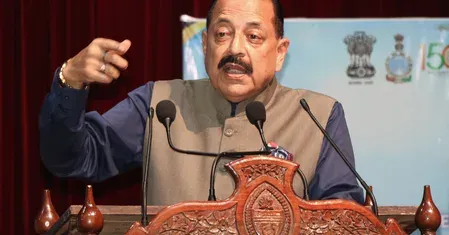
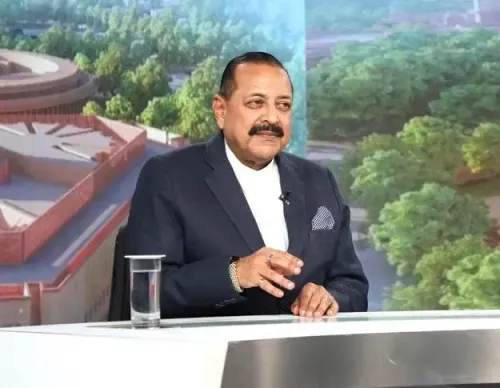
Union Science and Technology Minister Dr. Jitendra Singh on Sunday, 14 June 2026, addressed a press conference in Bengaluru, outlining India's scientific and technological milestones and projecting the country's space economy to grow from USD 8–9 billion to nearly USD 40–45 billion over the next decade.
Context
Speaking at what was tagged as the RISE Conclave 2026 in Bengaluru, Dr. Singh highlighted a deepening relationship between science and society, noting that 'citizens increasingly see themselves as stakeholders in India's scientific progress.' The remarks underscored a shift from viewing science as an elite pursuit to positioning it as a shared national endeavour.
The minister pointed to Chandrayaan-3 — India's landmark lunar mission that achieved a successful soft landing near the Moon's south pole in August 2023 — as the clearest symbol of this transformation, saying it had 'established India among the world's leading space-faring nations.'
Policy Backdrop
Dr. Singh drew a direct line between space capabilities and on-ground development, citing PM Gati Shakti — the National Master Plan for Multi-modal Connectivity launched in 2021 — and the AMRUT (Atal Mission for Rejuvenation and Urban Transformation) urban development programme as examples of how satellite and geospatial data are being used for 'planning, implementing and monitoring infrastructure projects.'
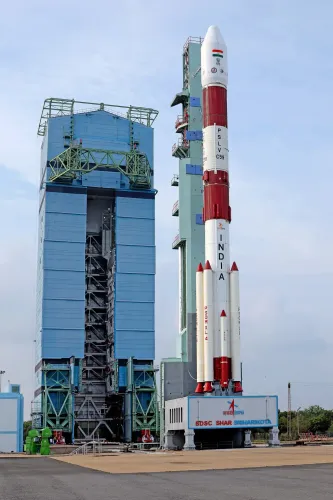
The policy architecture enabling this growth took shape with the space sector reforms of 2020, which created IN-SPACe to open launch and satellite activities to private firms and start-ups. The National Geospatial Policy 2022 further expanded access to satellite imagery for both government planning and private innovation, laying the groundwork for the commercial expansion the minister described.
The projected jump to USD 40–45 billion in space-economy value, according to the minister, will be 'driven by policy reforms, increasing private participation and a rapidly expanding innovation ecosystem.'
Stakeholders and Impact
The beneficiaries of this trajectory span a wide range: private space firms and start-ups stand to gain from a more liberalised licensing regime, while urban local bodies are already using space-derived data to plan and monitor city infrastructure under AMRUT and Gati Shakti. Citizens, the minister argued, are no longer passive recipients but active stakeholders in the country's scientific journey.
Dr. Singh also noted that advanced technologies have 'enhanced the credibility of indigenous technologies and reinforced India's position as a trusted technology partner' globally — a framing that positions India's space programme as both a domestic development tool and a diplomatic asset.
What's Next
The rollout of further private launch licences and deeper integration of space-derived data into additional central schemes are expected to be key markers of progress in the near term. Observers will also watch for how the space economy agenda features in the next Union Budget, given the scale of the growth target articulated by the minister.
With the government signalling continued policy support and private investment accelerating, India's ambition to capture a significantly larger share of the global space economy appears to be moving from aspiration to structured execution.
Point of View
Cities, and citizens. The USD 40–45 billion projection, ambitious by any measure, is designed to signal to private investors and global partners that India's policy liberalisation is durable and commercially serious. By invoking Chandrayaan-3 alongside AMRUT and Gati Shakti in the same breath, the minister is deliberately collapsing the boundary between prestige science and everyday governance. The political calculus is clear: science that builds roads and plans cities is science that wins votes as much as it wins international credibility.
NationPress
20 Sept 2026
Frequently Asked Questions
What is India's space economy target for the next decade?
Union Minister Dr. Jitendra Singh has projected India's space economy to grow from the current USD 8–9 billion to nearly USD 40–45 billion over the next decade, driven by policy reforms and private sector participation.
What is RISE Conclave 2026?
RISE Conclave 2026 is an event held in Bengaluru at which Dr. Jitendra Singh addressed a press conference on India's scientific and technological progress. Detailed information about the conclave's full agenda is not yet publicly verified.
How is India using space technology in infrastructure projects?
India is using satellite and geospatial data through schemes like PM Gati Shakti and AMRUT for planning, implementing, and monitoring infrastructure and urban development projects across the country.
What role did Chandrayaan-3 play in India's space ambitions?
Chandrayaan-3 achieved a successful soft landing near the Moon's south pole in August 2023 , establishing India among the world's leading space-faring nations and boosting confidence in indigenous technology.
What reforms opened India's space sector to private companies?
The space sector reforms of 2020 created IN-SPACe (Indian National Space Promotion and Authorisation Centre), enabling private firms and start-ups to participate in satellite manufacturing and launch activities.