India's space economy to hit $40-45 billion in a decade: Jitendra Singh
Synopsis
India's space economy is projected to grow nearly fivefold to $40–45 billion within a decade, with over 400 startups already reshaping the sector. At RISE Conclave 2026, Minister Jitendra Singh framed this not just as a scientific milestone but as a structural economic shift — one that could define India's technology identity heading into Viksit Bharat 2047.
Key Takeaways
India's space economy is projected to grow from $8–9 billion to $40–45 billion over the next 10 years , according to Minister Dr Jitendra Singh .
India now has more than 400 space startups , up from a handful just a few years ago.
Missions including Chandrayaan-3 and the upcoming Gaganyaan programme have elevated India's standing among leading space-faring nations.
Analysis of the recent PSLV mission anomaly has been completed and corrective measures have been initiated.
The minister spoke at the RISE Conclave 2026 in New Delhi on 14 June 2026 , where more than 125 startups showcased deep-tech and aerospace solutions.
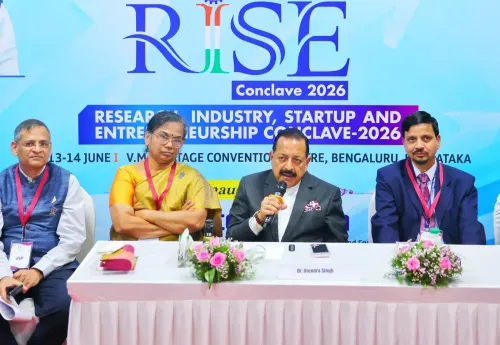
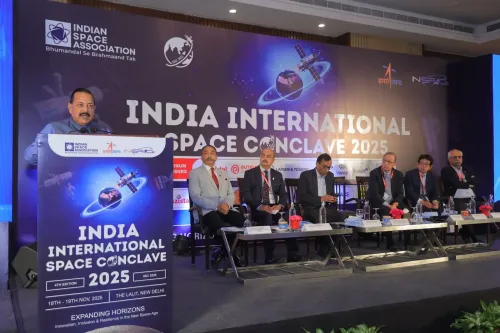
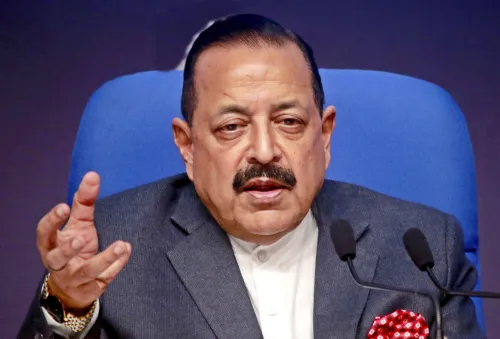
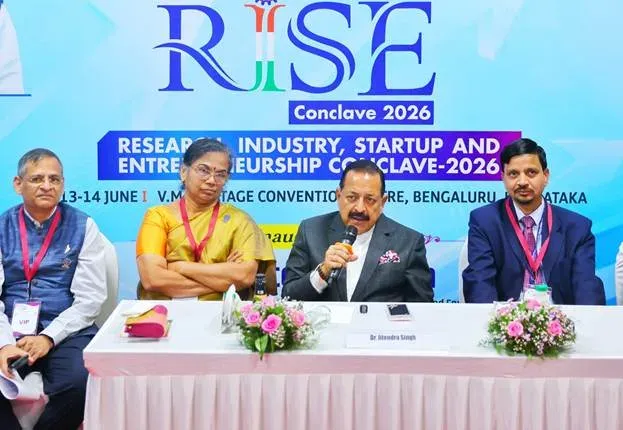
India's space economy is on course to grow nearly fivefold — from the current $8–9 billion to $40–45 billion over the next 10 years — according to Union Minister of State (Independent Charge) for Science & Technology and Department of Space, Dr Jitendra Singh. The minister made the projection on Sunday, 14 June while addressing the media at the RISE Conclave 2026 in New Delhi, crediting policy reforms, rising private sector participation, and a rapidly maturing innovation ecosystem for the expected surge.
Scale of Growth in the Space Sector
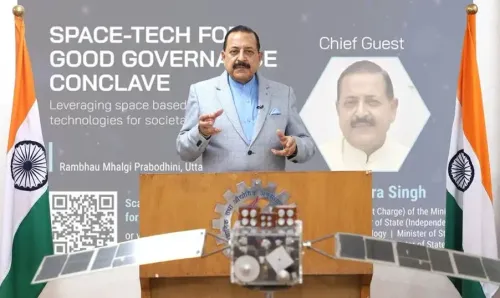
Dr Singh pointed to a striking indicator of momentum: India, which had only a handful of space startups a few years ago, now counts more than 400 space startups actively contributing to the ecosystem. He described the pace of this expansion as evidence of the 'enormous potential' of India's space economy. The minister added that India has successfully integrated space-based applications into infrastructure planning, project monitoring, and public service delivery at a scale rarely seen elsewhere.
Initiatives such as PM Gati Shakti, urban development programmes, and drone-enabled monitoring systems were cited as examples of how space technology is improving planning efficiency and governance transparency.
Chandrayaan, Gaganyaan and India's Global Standing
India's achievements in missions such as Chandrayaan-3 and the forthcoming Gaganyaan human spaceflight programme have, according to the minister, established the country among the world's leading space-faring nations. He noted that the successful first-attempt achievements of Chandrayaan and the Mars Orbiter Mission (Mangalyaan) stand as benchmarks of indigenous capability that have enhanced India's credibility as a trusted technology partner internationally.
Dr Singh also addressed the recent PSLV mission anomaly, stating that analysis has been completed, underlying causes identified, and corrective measures initiated. He said future missions will incorporate these learnings, reinforcing rather than undermining the programme's trajectory.
Policy Reforms and Private Participation
The minister attributed much of the sector's transformation to structural policy reforms that opened space activities to private players — a shift that was largely absent before 2020. He said programmes such as Swachh Bharat, Digital India, Digital Health, the Deep Ocean Mission, and Gaganyaan have collectively repositioned science and innovation at the centre of India's development narrative.
Dr Singh said the growing acceptance of Indian technologies across international markets reflects the depth of the country's scientific capabilities and signals a broader shift in how India is perceived as a technology exporter.
RISE Conclave 2026 and Viksit Bharat 2047
The minister's remarks came during the RISE Conclave 2026, organised under the theme 'Innovation & Entrepreneurship Driven Growth for Viksit Bharat 2047'. More than 125 startups and technology innovators participated, showcasing solutions spanning aerospace technologies, artificial intelligence, deep-tech, and agri-food innovation.
Dr Singh said the growing participation of startups, industry, and research institutions is building an innovation ecosystem capable of anchoring India's long-term ambition of becoming a developed nation by 2047. With corrective measures underway on the PSLV front and a pipeline of ambitious missions ahead, the next decade will test whether policy ambition translates into sustained economic and technological leadership.
Point of View
But the structural conditions are more credible today than at any previous inflection point — 400-plus startups and a liberalised entry regime are real signals, not aspirational ones. What the minister did not address is the concentration risk: much of India's commercial space revenue still depends on launch services and remote sensing, with higher-margin segments like satellite manufacturing and in-orbit services still nascent. The PSLV anomaly, handled with measured transparency here, is a reminder that reliability is the currency of a launch economy. India's next test is not another headline mission — it is whether the startup ecosystem can move from government-contracted revenue to globally competitive commercial contracts.
NationPress
24 Sept 2026
Frequently Asked Questions
What is India's space economy expected to be worth in the next decade?
India's space economy is projected to grow from the current $8–9 billion to nearly $40–45 billion over the next 10 years, according to Minister Dr Jitendra Singh. The growth is attributed to policy reforms, rising private sector participation, and an expanding innovation ecosystem.
How many space startups does India currently have?
India now has more than 400 space startups, a significant jump from just a handful a few years ago. The minister described this as evidence of the enormous potential of India's space economy.
What happened with the recent PSLV mission anomaly?
Analysis of the PSLV mission anomaly has been completed and the underlying causes have been identified, according to Dr Jitendra Singh. Corrective measures have already been initiated, and future missions are expected to benefit from these learnings.
What is the RISE Conclave 2026?
The RISE Conclave 2026 is an innovation and entrepreneurship event organised under the theme 'Innovation & Entrepreneurship Driven Growth for Viksit Bharat 2047.' More than 125 startups and technology innovators participated, showcasing solutions in aerospace, AI, deep-tech, and agri-food sectors.
How has India integrated space technology into governance?
India has deployed space-based applications in infrastructure planning, project monitoring, and public service delivery through initiatives such as PM Gati Shakti, urban development programmes, and drone-enabled monitoring systems. The minister said this integration has improved planning efficiency and governance transparency at a scale rarely seen elsewhere.