Jitendra Singh: India space sector to hit $45 bn in 10 years
Synopsis
Union Minister Dr. Jitendra Singh has shared projections that India's space sector could reach 45 billion dollars in ten years. The forecast reflects a wave of reforms since 2019, including the creation of IN-SPACe and NSIL, designed to open the sector to private players and position India in the global space economy.
Key Takeaways
Jitendra Singh shared projections on 12 June 2026 that India's space sector could reach 45 billion dollars in the next ten years .
ISRO and Ahmedabad were tagged in the post, indicating a possible event or institutional context linked to the city.
NewSpace India Limited (NSIL) was incorporated in 2019 and IN-SPACe was established in 2020 to commercialise and regulate private space activities.
The Indian Space Policy notified in April 2023 clarified roles for ISRO , IN-SPACe , NSIL , and private entities.
The growth target aligns with the government's broader Atmanirbhar Bharat push in strategic technology sectors.
Key milestones to watch include IN-SPACe licensing implementation and the first fully private orbital launches by Indian startups.
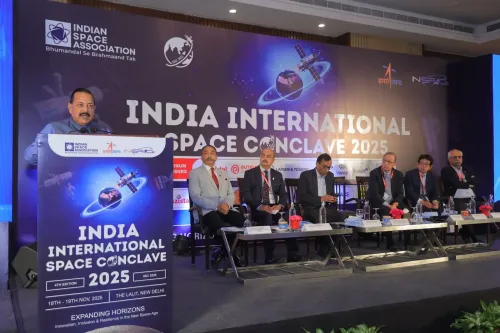
Union Science and Technology Minister Dr. Jitendra Singh on Friday, 12 June 2026, shared projections that India's space sector is expected to grow to 45 billion dollars over the next ten years, citing the country's expanding commercial space ambitions and reform-driven policy environment.
Context
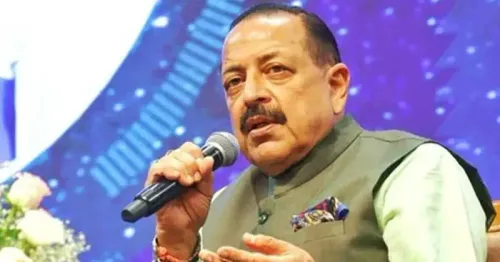
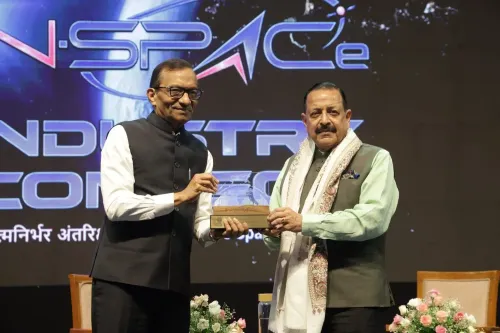
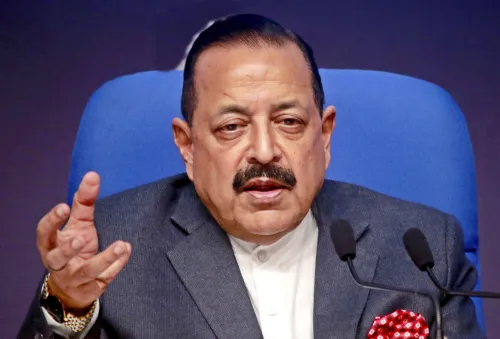
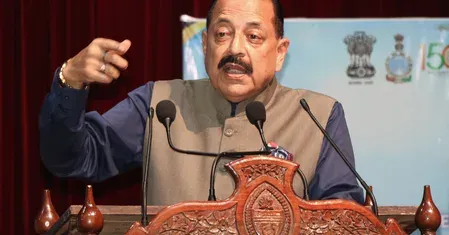
The post, shared in Hindi, relays the headline: 'Bharat ke space sector ka aakaar agle 10 varshon mein badhkar 45 arab dollar tak pahunchne ki ummeed' ('India's space sector is expected to grow to 45 billion dollars in the next ten years'). The minister tagged ISRO and Ahmedabad, suggesting the projection was referenced in the context of an event or development linked to the city. The post also carried an image and linked to a Hindi-language publication's coverage of the forecast.
India's current share of the global space economy is estimated at under two percent, making the projected scale-up — if realised — a significant structural leap for the sector.
Policy Backdrop
The projection sits atop a series of deliberate policy shifts that began in 2019, when the government incorporated NewSpace India Limited (NSIL) as the commercial arm of ISRO to transfer technology and market launch services. A year later, in 2020, the Cabinet approved the creation of IN-SPACe — the Indian National Space Promotion and Authorisation Centre — as a single-window autonomous regulator for private space activities.
The Indian Space Policy, notified in April 2023, formalised the distinct roles of ISRO, IN-SPACe, NSIL, and non-governmental entities, providing a clearer regulatory framework for private capital to enter orbital and sub-orbital markets. These steps collectively represent a shift from a purely state-led model toward a hybrid public-private ecosystem.
Stakeholders and Impact
Private space startups, satellite manufacturers, and technology investors stand to benefit most directly if the sector achieves the projected scale. The reform architecture — particularly IN-SPACe's licensing mandate — is designed to lower entry barriers and allow Indian firms to compete in the global supply chain for launch services, satellite components, and ground systems.
The broader push aligns with the government's Atmanirbhar Bharat strategy in strategic technology sectors, aiming to reduce import dependence and build indigenous manufacturing depth. Ahmedabad's mention in the post may signal the city's growing role as a node in India's emerging space-industrial geography, given its proximity to ISRO's Space Applications Centre.
What's Next
Analysts and industry participants will watch closely for the roll-out of detailed IN-SPACe licensing rules and the execution of the first fully private orbital launches by Indian startups. Supplementary budget allocations and any revision to foreign direct investment norms for the space sector could further accelerate the trajectory.
If India's space economy does reach 45 billion dollars within a decade, it would represent a fundamental repositioning of the country from a cost-effective launch service provider to a full-spectrum space power with deep private-sector roots — a goal that successive policy steps since 2019 have been explicitly designed to achieve.
Point of View
Not merely a scientific endeavour. By tagging Ahmedabad alongside ISRO, the minister signals an intent to regionalise the space narrative — drawing attention to industrial and applications infrastructure beyond the traditional southern launch corridor. The projection, whether or not independently verified, serves as a policy anchor: it sets a public benchmark against which the pace of IN-SPACe licensing, startup launches, and private investment can be measured. For the government, the figure reinforces the Atmanirbhar Bharat arc in a sector where India has genuine comparative advantages in low-cost engineering.
NationPress
19 Sept 2026
Frequently Asked Questions
What is the projected size of India's space sector in the next 10 years?
India's space sector is projected to grow to 45 billion dollars over the next ten years, according to projections shared by Union Minister Dr. Jitendra Singh on 12 June 2026 .
What is IN-SPACe and what does it do?
IN-SPACe (Indian National Space Promotion and Authorisation Centre) is an autonomous single-window regulator created in 2020 to promote, regulate, and authorise non-governmental space activities in India, enabling private companies to participate in the space sector.
What is NSIL and how does it relate to ISRO?
NewSpace India Limited (NSIL) is the commercial arm of ISRO , incorporated in 2019 . It transfers technology, markets launch services, and builds partnerships with private industry to commercialise ISRO's assets.
What is the Indian Space Policy 2023?
The Indian Space Policy , notified in April 2023 , formally defined the roles of ISRO , IN-SPACe , NSIL , and private entities, providing a regulatory framework to attract private capital into India's space economy.
Why is Ahmedabad significant to India's space sector?
Ahmedabad is home to ISRO's Space Applications Centre (SAC) , one of the agency's key research and development facilities focused on satellite payloads and applications, making it an important node in India's space industrial geography.